


Gjør som tusenvis av andre bokelskere
Abonner på vårt nyhetsbrev og få rabatter og inspirasjon til din neste leseopplevelse.
Ved å abonnere godtar du vår personvernerklæring.Du kan når som helst melde deg av våre nyhetsbrev.

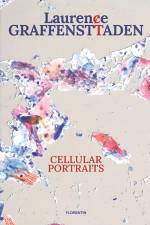
The work of a young French artist (daughter of Brigitte Macron) who combines art and DNA. An exceptional and fascinating journey inside human cells. Text in English and French.
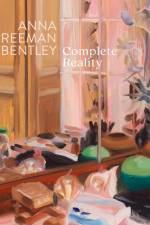
A publication dedicated to Anna Freeman Bentley's latest series of paintings, Complete Reality, which she created after spending time on a film set in Jeddah.
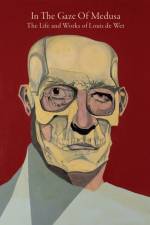
A publication dedicated to the life and work of the artistphilosopher Louis de Wet (1930-2018). Authored by his wife, Gabrielle Drake, the book brings together de Wet's works with detailed biographical information and recollections from those who knew and worked with him, including Vivien Bellamy, Andrew Arrol and Christophe Voros.
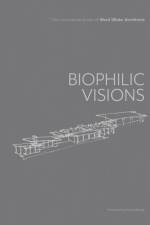
Examining 24 unbuilt projects, Biophilic Visions: The Conceptual Works of Ward | Blake Architects is an invaluable source of thought and creative ideas for those who appreciate modernist design, biophilic solutions, and ingenuity.
This stunningly illustrated monograph immerses readers in Campion Hruby Landscape Architects' enduring and meaningful gardens and reveals the careful thought and intention that goes into the firm's garden design process.
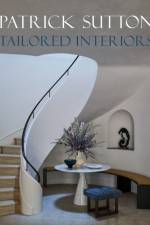
Interior designer Patrick Sutton presents seven beautiful and unique residences, telling the stories of how listening closely to his clients inherently shaped the design.
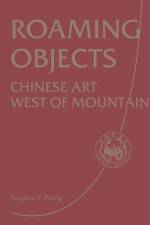
Ancient artworks from Shanxi, China-a cultural crossroads known as West of Mountains-transport us to worlds beyond, with lavish illustration and insightful essays.
People in the Renaissance saw skin differently from how we do today. The Europe of 1500 to 1700 was a world of humours, and skin - the clothing of the body - was thought to be dangerously porous. In this landmark book, Evelyn Welch explores Renaissance skin as a bodily surface, as physical matter and as a generator of new knowledge. Ranging across anatomy, surgery and sausage making, she reveals how skin was managed by physicians as well as by glovemakers, butchers and parchment makers. How did people protect their health in a changing global environment, one where the air itself could be pathogenic? How did they see their bodies in a world where there was suddenly a multiplicity of skin colours and decorations? Addressing these questions and more, Welch show us what happens when you see skin differently, either in the marketplace, where men and women from far-away lands were put on display, or under the microscope. In doing so, she reveals that the past had a distinctive and very different way of understanding bodily experiences.
Applications of Digital Twins and Robotics in the Construction Sector inquires into the transformative impact of futuristic technologies in modern construction.
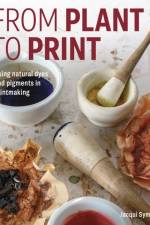
Using plant-based colour for printmaking is a rich and inspiring practice that opens up a fascinating world of colour independent from a reliance on synthetic inks and pastes. From Plant to Print encourages artists, printmakers and anyone fascinated in natural colour to embark on this compelling journey into making their work more sustainable. Packed with practical advice and some 300 images, the book splits recipes into sections, depending on which substrate will be used, and introduces techniques for printmakers on both paper and fabric. It explains procedures and processes in detail, conveying the intricacies, complications and unexpected joy inherent in adopting this intriguing practice.
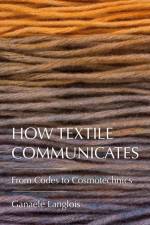
Textile has been used as a medium of communication since the prehistoric period. Up until the 19th century, civilizations throughout the world manipulated thread and fabric to communicate in a way that would astound many of us now. Unlike text and images, textile is haptic and three-dimensional. Its meaning is unfixed, constantly shifting as it circulates between different owners and creators. In How Textile Communicates, Ganaele Langlois dissects textile's unique capacity for communication through a range of global case studies, before examining the profound impact of colonialism on textile practice and the appropriation of this medium by capitalist systems. A thought-provoking contribution to the fields of both fashion and communication studies, Langlois' writing challenges readers' preconceptions and shines new light on the profound impact of textiles on human communication.
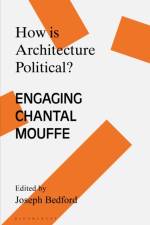
Chantal Mouffe has transformed the contemporary understanding of politics through her re-reading of political theory inspired by anti-foundationalist philosophy-based on Saussure's linguistics, Freud's psychoanalysis and Derrida's deconstruction. Her writings have challenged the centrist, post-political ideology of the 1990s and presciently diagnosed the emergence of right-wing populism seen today with Trump and Brexit. For Mouffe, such populism is the result of the failed centrist conception of politics reduced to technical management. She has called for a "return to politics" on the view that social antagonisms cannot be reconciled but must be channeled into an agonistic form of institutionally stabilized struggle. This book brings Chantal Mouffe's agonistic model of politics into direct dialogue with architecture and inquiries into the role that architecture plays constructing the political order of society, either by concealing or revealing its antagonisms and ideological conflicts. In doing so, it asks in what ways architecture operates politically; whether institutionally, in terms of its spaces and its part in forming cities, or as an aesthetic object with mediatic agency. Through this detailed exchange between Mouffe and four of the world's leading architectural thinkers; Reinhold Martin, Ines Weizman, Pier Vittorio Aureli and Sarah Whiting, a debate unfolds within the book that tests the implications of Mouffe's agonistic model of politics for architectural practice today. Through this, Bedford explores how architectural history, architectural drawing, the making of spectacular monuments, the design and policies behind housing, and the making of public and private space, all potentially contribute to the formulation of the channeling of social conflict into an agonistic form.
This book frames mannerism as an inescapable stage in the creative process. The mannerist phase is usually an adolescent stage of language, preceding the consolidation of thought. It is that period when architects design spaces, not yet knowing what it means to design places.
From ice puppets to robots, from intricate marionettes to abstract forms, Making Meaning in Puppetry investigates the elusive and multifaceted how of how puppets make meaning in performance. It develops a vocabulary for understanding and articulating how the puppet's meaning-making systems work across its three distinct parts.
From ice puppets to robots, from intricate marionettes to abstract forms, Making Meaning in Puppetry investigates the elusive and multifaceted how of how puppets make meaning in performance. It develops a vocabulary for understanding and articulating how the puppet's meaning-making systems work across its three distinct parts.
Abonner på vårt nyhetsbrev og få rabatter og inspirasjon til din neste leseopplevelse.
Ved å abonnere godtar du vår personvernerklæring.