








Gjør som tusenvis av andre bokelskere
Abonner på vårt nyhetsbrev og få rabatter og inspirasjon til din neste leseopplevelse.
Ved å abonnere godtar du vår personvernerklæring.Du kan når som helst melde deg av våre nyhetsbrev.

What do we mean when we call a work of art beautiful? How do perceptions of beauty change with the passage of time? This title explores these questions, showing the vital relationship between our changing notions of beauty and specific works of art. It charts the story of western art, from eighteenth-century Germany to the late 20th century.
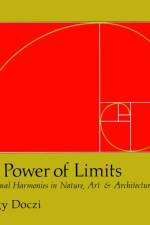
One of the delights of life is the discovery and rediscovery of patterns of order and beauty in nature-designs revealed by slicing through a head of cabbage or an orange, the forms of shells and butterfly wings. These images are awesome not just for their beauty alone, but because they suggest an order underlying their growth, a harmony existing in nature. What does it mean that such an order exists; how far does it extend? The Power of Limits was inspired by those simple discoveries of harmony. The author went on to investigate and measure hundreds of patterns-ancient and modern, minute and vast. His discovery, vividly illustrated here, is that certain proportions occur over and over again in all these forms. Patterns are also repeated in how things grow and are made-by the dynamic union of opposites-as demonstrated by the spirals that move in opposite directions in the growth of a plant. The joining of unity and diversity in the discipline of proportional limitations creates forms that are beautiful to us because they embody the principles of the cosmic order of which we are a part; conversely, the limitlessness of that order is revealed by the strictness of its forms. The author shows how we, as humans, are included in the universal harmony of form, and suggests that the union of complementary opposites may be a way to extend that harmony to the psychological and social realms as well.
Thirty step-by-step demos use brightly colored progressive line art for easy-to-follow instruction. Additional demonstrations cover other fantasy creatures, such as wyverns, basilisks, and gargoyles.
The colourful and stylised kimono, the national garment of Japan, expresses not only Japanese fashion and design taste but also reveals something of the soul of Japan, and is seen by many as a symbol for all that is Japanese - simplicity, elegance and beauty.
A study of one of the most pivotal movements in the art of the 1957. This title seemed like an eccentric manifestation far removed from what was then considered the mainstream of modern art.
In this delightful memoir, Jean Renoir, the director of such masterpieces of the cinema as Grand Illusion and The Rules of the Game, tells the life story of his father, Pierre-Auguste Renoir, the great Impressionist painter. Recounting Pierre-Auguste's extraordinary career, beginning as a painter of fans and porcelain, recording the rules of thumb by which he worked, and capturing his unpretentious and wonderfully engaging talk and personality, Jean Renoir's book is both a wonderful double portrait of father and son and, in the words of the distinguished art historian John Golding, it "remains the best account of Renoir, and, furthermore, among the most beautiful and moving biographies we have." Includes 12 pages of color plates and 18 pages of black and white images.
A summary of mediaeval aesthetic ideas, by Italian novelist and playwright Umberto Eco. Juxtaposing theology and science, poetry and mysticism, Eco explores the relationship that existed between the aesthetic theories and the artistic experience and practice of mediaeval culture.
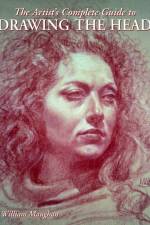
William Maughan demonstrates how to create a realistic human likeness by using the classic and highly accurate modelling technique of chiaroscuro, developed by Leonardo daVinci during the High Renaissance.
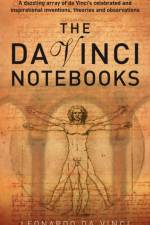
Towering across time as the painter of the "Mona Lisa", forever famous as a sculptor and an inventor, Leonardo da Vinci was one of the greatest minds of both the Italian Renaissance and Western civilisation. This title includes a selection of sketches, diagrams and writings from his notebooks.
The only how-to manual on the subject directed to mainstream owner-builders
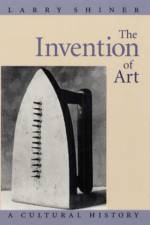
Larry Shiner challenges our conventional understanding of art and asks us to reconsider its history entirely, arguing that the category of fine art is a modern invention.
Pieter Bruegel (1525-1569), generally considered the greatest Flemish painter of the sixteenth century, was described as a supremely comic artist. This book explores the function and production of laughter in the sixteenth century, and also examines the ways in which Bruegel exploited the comic potential of Hieronymus Bosch.
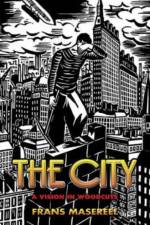
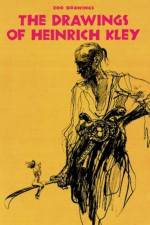
This graphic novel by an Expressionist master offers a stunning depiction of urban Europe between the world wars. First published in Germany in 1925, it presents 100 woodcuts of remarkable force and beauty that depict scenes of work and leisure, wealth and deprivation, and joy and loneliness.
Sacco gradually realized that Neven's own story - a microcosm of the Balkan conflict itself - might be the most compelling of all. Through Neven, Sacco tells the story of the warlords and gangsters who ran the country during the war, but all the time he - and the reader - never know whether Neven is telling the truth.
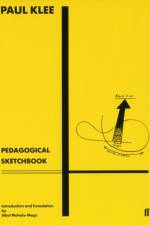
'One of the most famous of modern art documents - a poetic primer, prepared by the artist for his Bauhaus pupils, which has deeply affected modern thinking about art . . . This little handbook leads us into the mysterious world where science and imagination fuse.' Observer
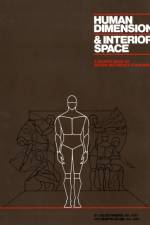
The study of human body measurements on a comparative basis is known as anthropometrics. Its applicability to the design process is seen in the physical fit, or interface, between the human body and the various components of interior space.Human Dimension and Interior Space is the first major anthropometrically based reference book of design standards for use by all those involved with the physical planning and detailing of interiors, including interior designers, architects, furniture designers, builders, industrial designers, and students of design. The use of anthropometric data, although no substitute for good design or sound professional judgment should be viewed as one of the many tools required in the design process. This comprehensive overview of anthropometrics consists of three parts.The first part deals with the theory and application of anthropometrics and includes a special section dealing with physically disabled and elderly people. It provides the designer with the fundamentals of anthropometrics and a basic understanding of how interior design standards are established. The second part contains easy-to-read, illustrated anthropometric tables, which provide the most current data available on human body size, organized by age and percentile groupings. Also included is data relative to the range of joint motion and body sizes of children. The third part contains hundreds of dimensioned drawings, illustrating in plan and section the proper anthropometrically based relationship between user and space. The types of spaces range from residential and commercial to recreational and institutional, and all dimensions include metric conversions.In the Epilogue, the authors challenge the interior design profession, the building industry, and the furniture manufacturer to seriously explore the problem of adjustability in design. They expose the fallacy of designing to accommodate the so-called average man, who, in fact, does not exist. Using government data, including studies prepared by Dr. Howard Stoudt, Dr. Albert Damon, and Dr. Ross McFarland, formerly of the Harvard School of Public Health, and Jean Roberts of the U.S. Public Health Service, Panero and Zelnik have devised a system of interior design reference standards, easily understood through a series of charts and situation drawings. With Human Dimension and Interior Space, these standards are now accessible to all designers of interior environments.
Offers a step-by-step approach to constructing a variety of attractive and functional gear for your boat. This title includes information that boatowner who wants to take needle to fabric needs.
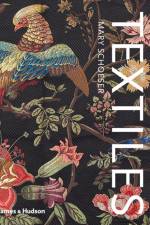
Comprises more than 1,000 images that highlight the beauty, subtlety, simplicity or complexity of textiles created around the world. This title illuminates the ways in which structure or surface decoration or embellishment enhance this most tactile of arts.
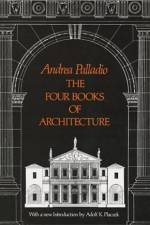
Andrea Palladio (1508-1580) was one of the most celebrated architects of the Renaissance, so important that the term Palladian has been applied to a particular style of architecture that adheres to classical concepts. The wide spread of Palladianism was due partly to the private and public buildings he constructed in Italy, the designs of which were copied throughout Europe. But of even greater consequence was his remarkable magnum opus, I Quattro Libri dell'Architettura; translated into every major Western European language in the two centuries following its publication in 1570, it has been one of the most influential books in the history of architecture. The Four Books of Architecture offers a compendium of Palladio's art and of the ancient Roman structures that inspired him. The First Book is devoted to building materials and techniques and the five orders of architecture: Tuscan, Doric, Ionic, Corinthian, and Composite. Palladio indicates the characteristic features of each order and supplies illustrations of various architectural details. The Second Book deals with private houses and mansions, almost all of Palladio's own design. Shown and described are many of his villas in and near Venice and Vicenza (including the famous Villa Capra, or The Rotunda, the Thiene Palace, and the Valmarana Palace). Each plate gives a front view drawing of the building and the general floor plan. The Third Book is concerned with streets, bridges, piazzas, and basilicas, most of which are of ancient Roman origin. In the Fourth Book, Palladio reproduces the designs of a number of ancient Roman temples. Plates 51 to 60 are plans and architectural sketches of the Pantheon.In all, the text is illustrated by over 200 magnificently engraved plates, showing edifices, either of Palladio's own design or reconstructed (in these drawings) by him from classical ruins and contemporary accounts. >
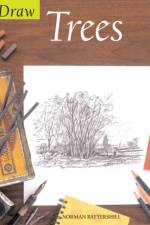
A basic instructional guide to drawing trees. With the aid of step-by-step drawings, it explains how to use pencil, pen and ink, Conte and charcoal to achieve successful drawings of trees.
Human factors research impacts everything from the height of kitchen counters to the placement of automobile pedals to a book's type size. And in this updated and expanded version of the original landmark work, you'll find the research information necessary to create designs that better accommodate human need.
The metropolis of the future -- as perceived by architect Hugh Ferriss in 1929 -- was both generous and prophetic in vision. This illustrated essay on the modern city and its future features 59 illustrations.
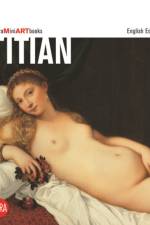
The life, style and colours of the master of the 16th-century Venetian painting. Tiziano Vecellio was a painter, equally comfortable with a range of genres and subjects. Unlike many artists from history whose work has been appreciated only after their death, Titian enjoyed fame and success throughout his career, which spanned over seven decades.
Abonner på vårt nyhetsbrev og få rabatter og inspirasjon til din neste leseopplevelse.
Ved å abonnere godtar du vår personvernerklæring.