





Gjør som tusenvis av andre bokelskere
Abonner på vårt nyhetsbrev og få rabatter og inspirasjon til din neste leseopplevelse.
Ved å abonnere godtar du vår personvernerklæring.Du kan når som helst melde deg av våre nyhetsbrev.

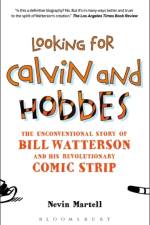
For ten years "Calvin and Hobbes" was one of the world's most beloved comic strips. And then, on the last day of 1995, the strip ended. Its mercurial and reclusive creator, Bill Watterson, not only finished the strip but withdrew entirely from public life. This title traces the life and career of the intensely private man behind Calvin and Hobbes.
During the Song dynasty (960-1278), some of China's elite found an elegant and subtle means of dissent: landscape painting. By examining literary archetypes, painting titles, contemporary inscriptions, and the historical context, Murck shows that certain paintings expressed strong political opinions-some transparent, others deliberately concealed.
This breathtakingly detailed book presents dress patterns, construction details, embroidery and making instructions for fifteen garments and accessories from a seventeenth-century woman's wardrobe. Full step-by-step drawings of the construction sequence are given for each garment alongside photographs of the objects and x-ray photography.
Vignettes from natural settings are accompanied by a series of lessons emphasizing both practical and theoretical considerations. This edition features 23 outstanding plates from the author's "Lessons on Trees."
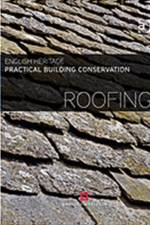
Many materials and systems have been used to provide roof coverings, and the book provides information about their technological evolution, the processes causing deterioration, and ways of assessing problems and solutions.
In this unpublished collection of more than 100 images, Gisele Freund, one of the most highly acclaimed portrait photographers, offers an intimate look into the work and personal life of one of the contemporary art world's most perennially popular artists--Frida Kahlo.
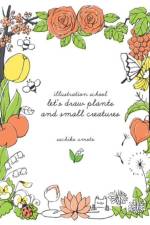
This book is for artists and crafters of all skill levels that want to bring their own illustration to their work.
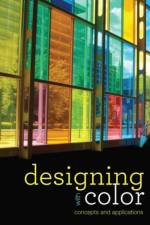
This highly visual textbook/workbook takes an interactive approach to the study of colour and design, highlighting the elemental importance for designers to understand how colour is perceived, experienced, and manipulated in order to be used effectively in their designs.
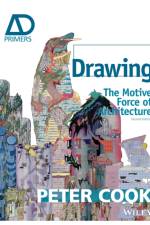
Focusing on the creative and inventive significance of drawing for architecture, this book by one of its greatest proponents, Peter Cook, is an established classic. It exudes Cook's delight and catholic appetite for the architectural. Readers are provided with perceptive insights at every turn.
From comics to video games to contemporary fine art, the beautiful, wide-eyed girl look of shoujo manga has infiltrated pop culture and no artist's work today better exemplifies this trend than Camilla D'Errico's. In this instructional guide, she gives readers a behind-the-scenes look at her character design process.
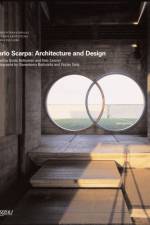
Carlo Scarpa was a virtuoso of light, a master of detail, and a connoisseur of materials. Today he is known as a 20th-century master of architecture. To mark the first centenary of Scarpa's birth, all his works are presented here for the first time. The 250 illustrations cover all 58 of his structures, including the Castelvecchio Museum (Verona), the Olivetti showroom (Venice), and the Brion Tomb in San Vito d'Altivole (Treviso), as well as his important glass designs. The book includes essays by leading architects and architecture critics, offering an extensive overview of Scarpa's life as well as interpretations of his architecture. Known as the "Frank Lloyd Wright of Italy," Scarpa's decorative style has become a model for architects wishing to revive craft and luscious materials in the contemporary manner.
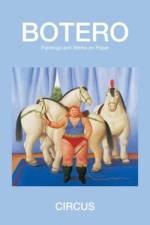
Fernando Botero's distinctive exaggerated forms perfectly complement the exaggerated atmosphere of the circus. Circus, a collection of more than 130 paintings and 50 works on paper, celebrates this rich history of entertainment and astonishment in this assemblage of images never before published as a complete collection.
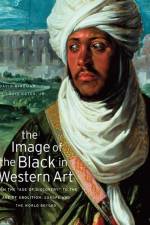
Europe and the World Beyond focuses geographically on peoples of South America and the Mediterranean as well as Africa, but conceptually it emphasizes the ways that visual constructions of blacks mediated between Europe and a faraway African continent that was impinging ever more closely on daily life in cities and ports engaged in the slave trade.
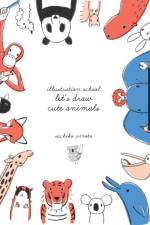
This book is for artists and crafters of all skill levels that want to bring their own illustration to their work.
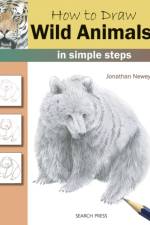
Learn how to draw a lion or a tiger. See how easy it is to draw an elephant.
Explore the A-Z of modern space. From Gio Ponti's colored geometries to Zaha Hadid's free-flowing futurism, this comprehensive overview features more than 280 profiles of architects, styles, movements, and trends that have shaped structures from the 19th to the 21st century.
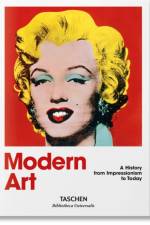
Over 200 paintings, sculptures, photographs, and conceptual pieces trace the story of modern art's innovation and adventure. With explanatory texts for each work, and essays introducing each of the major modern movements, this is an authoritative overview of the ideas and the artworks that shook up standards, assaulted the establishment, and...
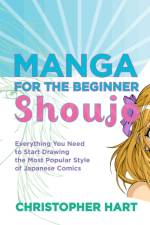
Shows aspiring beginners how to draw the most popular style and widely read genre of Japanese comics.
One of the great classics of modern art: Gauguin's own account of his time in Tahiti, in its original version
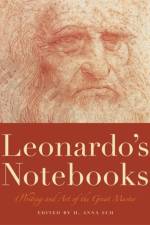
Now in an all new format for this international bestseller Leonardo's Notebooks pairs the great master's most important writings with more than 1,000 sketches, drawings and watercolours in this beautiful and dynamic work.
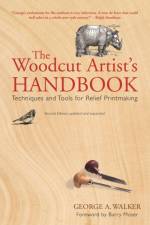
The Woodcut Artist's Handbook provides the basics of the craft with a detailed analysis of its tools and media.
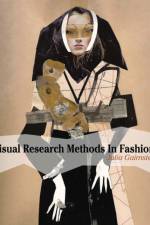
This book is unique in that it covers the visual research process and detail and relates it not only to fashion design but also to all areas of the fashion industry.
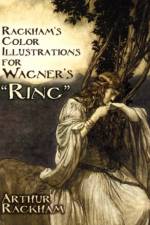
"His pictures, which seemed to me then [aged 13] to be the very music made visible, plunged me a few fathoms deeper into my delight. I have seldom coveted anything as I coveted that book." -- C.S. LewisBefore portraying Wagner's "Ring," Arthur Rackham (1867-1939) had become England's leading illustrator through his interpretations of fairy and fantastic books: Grimm's Fairy Tales, Rip van Winkle, Peter Pan in Kensington Gardens, A Midsummer-Night's Dream. With his insight into elves, twisted oaks, and bearded heroes, Wagner was the logical step: with the "Ring," Rackham brought his talent for ethereal watercolor and line into new realms of adult mythology.This edition reproduces, in full color, all 64 watercolor illustrations from Siegfried & The Twilight of the Gods (1911) and The Rhinegold & The Valkyrie (1912). The original English and American editions also contained black-and-white vignettes and tailpieces, a selection of which appear here: the original text, a dated English translation of the libretto, has been replaced by comprehensive descriptive captions and an introduction by James Spero.Rackham poured all his mature fancy into the "Ring." The gnarled Nibelung Alberich sports with teasing Rhinemaidens, fiery Loge and lordly Wotan tussle with giants and serpents. An ecstatic Brünnhilde is finally consumed on Siegfried's funeral pyre in perhaps the most successful representation of this scene anywhere, either graphically or theatrically. Wagner's Teutonic forests and caves give Rackham free reign for his brooding, haunting nature backgrounds; characters, costumes, and all the tiny details are painted with such textual accuracy and empathy that today's opera companies who wish to return to staging the "Ring" in the traditional manner turn to Rackham's paintings for guidance.The painstaking reproduction of these artworks brings Arthur Rackham's most heroic visions to the many collectors and admirers who cannot obtain the expensive out-of-print editions. With the aid of the clear captions, the Wagnerian cycle may be followed once again in its most time-honored and rich interpretation.
This book serves as an introduction to the key elements of good design. Broken into sections covering the fundamental elements of design, key works by acclaimed designers serve to illustrate technical points and encourage readers to try out new ideas. Themes covered include narrative, colour, illusion, ornament, simplicity, and wit and humour. The result is an instantly accessible and easy to understand guide to graphic design using professional techniques.
An ideal introduction to Kahn's thinking. Over two hundred drawings, most published for the first time in a generous, high-quality volume. A narrative in drawings sheds light on a profound culture of designing.
Stunning photographs spin tales of family traditions and religious devotion, with a special section dedicated to jewellery worn by brides and grooms.
Composed of ten essays and an epilogue that trace the history of contemporary form as an evolving poetic of structure and construction, the book's analytical framework rests on Frampton's close readings of key French and German, and English sources from the eighteenth century to the present.Kenneth Frampton's long-awaited follow-up to his classic A Critical History of Modern Architecture is certain to influence any future debate on the evolution of modern architecture. Studies in Tectonic Culture is nothing less than a rethinking of the entire modern architectural tradition. The notion of tectonics as employed by Frampton—the focus on architecture as a constructional craft—constitutes a direct challenge to current mainstream thinking on the artistic limits of postmodernism, and suggests a convincing alternative. Indeed, Frampton argues, modern architecture is invariably as much about structure and construction as it is about space and abstract form.Composed of ten essays and an epilogue that trace the history of contemporary form as an evolving poetic of structure and construction, the book's analytical framework rests on Frampton's close readings of key French and German, and English sources from the eighteenth century to the present. He clarifies the various turns that structural engineering and tectonic imagination have taken in the work of such architects as Perret, Wright, Kahn, Scarpa, and Mies, and shows how both constructional form and material character were integral to an evolving architectural expression of their work. Frampton also demonstrates that the way in which these elements are articulated from one work to the next provides a basis upon which to evaluate the works as a whole. This is especially evident in his consideration of the work of Perret, Mies, and Kahn and the continuities in their thought and attitudes that linked them to the past.Frampton considers the conscious cultivation of the tectonic tradition in architecture as an essential element in the future development of architectural form, casting a critical new light on the entire issue of modernity and on the place of much work that has passed as "avant-garde."A copublication of the Graham Foundation for Advanced Studies and The MIT Press.
Abonner på vårt nyhetsbrev og få rabatter og inspirasjon til din neste leseopplevelse.
Ved å abonnere godtar du vår personvernerklæring.