






Gjør som tusenvis av andre bokelskere
Abonner på vårt nyhetsbrev og få rabatter og inspirasjon til din neste leseopplevelse.
Ved å abonnere godtar du vår personvernerklæring.Du kan når som helst melde deg av våre nyhetsbrev.

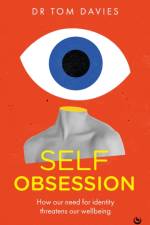
Doctor, writer and mental health advocate Tom Davies breaks down the true problem at the heart of our psychological pain and the growing mental health pandemic, providing effective solutions that anyone can practice to live a more fulfilled and happy life.
This book enables readers to gain knowledge and insight into the ubiquity of competition and its significant role in the evolution of human society across cultures, regions, systems, and eras. It is suitable for everyone across all academic disciplines, as it helps individuals understand their inadvertent involvement in competition arenas.
This book is the outcome of a fruitful dialogue between relational psychoanalysis, neo-Bionian psychoanalysis, and Gestalt therapy on a contemporary growing edge of clinical practice: field theory. With multiple professional perspectives and essential clinical material, this is key reading for psychoanalysts and psychotherapists.
This book is the outcome of a fruitful dialogue between relational psychoanalysis, neo-Bionian psychoanalysis, and Gestalt therapy on a contemporary growing edge of clinical practice: field theory. With multiple professional perspectives and essential clinical material, this is key reading for psychoanalysts and psychotherapists.
Exploring the complex interplay between drug law enforcement and self-legitimacy among police officers, this book, through ten months of ethnographic research in Belgian cities, examines how drug detectives justify their role within a challenging landscape of moral, social, and legal dilemmas.
"e;Everybody's favorite liberated cartoon woman."e; -ElleClassic and loveable Betty Boop is as fashionable, inspiring, and popular as ever! If there's one thing Betty knows, it's how to make a lasting impression. For more than 80 years, the glamorous international icon has sung, sashayed, and "e;Boop-Oop-a-Dooped"e; past rules and conventions, unafraid to take risks or set trends, and proving time after time that she can do anything she sets her mind to! Betty is beloved by millions of fans around the world, who are enchanted not only by her adorable appearance and iconic phrase, but also by her wit, inspiring messages, and ahead-of-her-time wisdom. Here the authors take ten empowering and universally inspiring themes pulled directly from the classic Fleischer Studios Betty Boop cartoons and demonstrate why they're more relevant than ever in today's world by blending them with modern images and timeless wisdom and advice. All-encompassing topics include: Self-confidencePositive thinkingIndependenceKindnessHealthy livingAnd more! Youthful, ambitious, sassy, and confident, Betty Boop seeks to make a positive change in the world around her. She is vibrant and magnetic-she inspires. Betty is stylish and sexy, but never to please anyone but herself. She's got class. She's proud of who she is and won't apologize for it, approaching life with irrepressible moxie. And with her daring look, can-do attitude, and irresistible charm, Betty is ready for anything that comes her way.
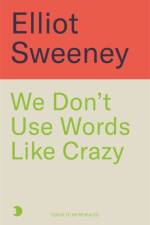
We Dont Use Words Like Crazy is a professional confessional from Elliot Sweeney, a mental health nurse who works on the frontline of mental health services. His touching and often humorous memoir lifts the lid on the realities of the profession, in an attempt to highlight the need for compassion for some of the most vulnerable people in the world, and the very committed people that work with them on a professional basis.This book is for anyone who wants to know what its really like to work in contemporary mental health services in the UK, and why people like Elliot stick at it. Funny, frank and beautifully observed, Elliots memoir explores all aspects of mental health care, including hospital, youth care, post-partum, dementia, community care, and the more extreme experience of working with Broadmoor inmates, highlighting a service that underpins our society and that reflects the full spectrum of humanity.
The Handbook of Gestalt-Theoretic Psychology of Art synthesizes contemporary research in the psychology of perception, cognition, language and hearing to reassess the Gestalt approach to studying the arts.
This book examines the artful mind from an interdisciplinary perspective combining philosophy, empirical sciences, and the humanities. It argues that just as leading-edge theories of cognition can be applied to the arts and aesthetic experience, these topics can serve as a model for interdisciplinary scholarship in cognitive science.
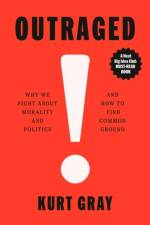
A NEXT BIG IDEA CLUB MUST-READ BOOK • A groundbreaking new perspective on the moral mind that rewrites our understanding of where moral judgments come from, and how we can overcome the feelings of outrage that so often divide us"A riveting read. . . . Overturns widespread assumptions about why we’re divided and reveals how we can come together."—Adam Grant, #1 New York Times best-selling authorIt’s easy to assume that liberals and conservatives have radically different moral foundations. In Outraged, Kurt Gray showcases the latest science to demonstrate that we all have the same moral mind—that everyone’s moral judgments stem from feeling threatened or vulnerable to harm.We all care about protecting ourselves and the vulnerable. Conflict arises, however, when we have different perceptions of harm. We get outraged when we disagree about who the “real” victim is, whether we’re talking about political issues, fights with our in-laws, or arguments on the playground.In this fascinating and insightful tour of our moral minds, Gray tackles popular myths that prevent us from understanding ourselves and those around us. While it is commonly believed that our ancestors were apex predators, Gray argues that for the majority of our evolutionary history, humans were more hunted than hunter. This explains why our minds are hard-wired to perceive threats, and provides surprising insights on the scientific origins of our values and beliefs. Though we might think ourselves driven by objective reasoning, Gray unveils new research that finds our moral judgments are based on gut feelings rather than rational thought, and presents a compelling reminder that we are more alike than we might think.Drawing on groundbreaking research, Gray provides a captivating new explanation for our moral outrage, and unpacks how to best bridge divides. If you want to understand the morals of the “other side,” ask yourself a simple question—what harms do they see?
Abonner på vårt nyhetsbrev og få rabatter og inspirasjon til din neste leseopplevelse.
Ved å abonnere godtar du vår personvernerklæring.