







Gjør som tusenvis av andre bokelskere
Abonner på vårt nyhetsbrev og få rabatter og inspirasjon til din neste leseopplevelse.
Ved å abonnere godtar du vår personvernerklæring.Du kan når som helst melde deg av våre nyhetsbrev.

This handbook highlights the symbiotic relationship between human-centric approaches and organizational success in 21st century business and corporate culture. It explores how integrating human factors and ergonomics strategically can fuel innovation, enhance performance, and deliver a competitive advantage.
Exploring the implications of a novel theory of educational desire on the prevailing modes of educational research and theory, this book contextualises the realm of education studies through the challenging philosophies and theories of Lacan, thereby providing a genuinely alternative approach to the study of education.
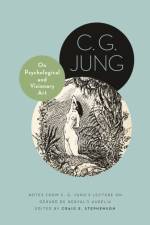
For the first time in English, Jung's landmark lecture on Nerval's hallucinatory memoirIn 1945, at the end of the Second World War and after a long illness, C. G. Jung delivered a lecture in Zurich on the French Romantic poet Gerard de Nerval. The lecture focused on Nerval's visionary memoir, Aurelia, which the poet wrote in an ambivalent attempt to emerge from madness. Published here for the first time, Jung's lecture is both a cautionary psychological tale and a validation of Nerval's visionary experience as a genuine encounter.Nerval explored the irrational with lucidity and exquisite craft. He privileged the subjective imagination as a way of fathoming the divine to reconnect with what the Romantics called the life principle. During the years of his greatest creativity, he suffered from madness and was institutionalized eight times. Contrasting an orthodox psychoanalytic interpretation with his own synthetic approach to the unconscious, Jung explains why Nerval was unable to make use of his visionary experiences in his own life. At the same time, Jung emphasizes the validity of Nerval's visions, differentiating the psychology of a work of art from the psychology of the artist. The lecture suggests how Jung's own experiments with active imagination influenced his reading of Nerval's Aurelia as a parallel text to his own Red Book.With Craig Stephenson's authoritative introduction, Richard Sieburth's award-winning translation of Aurelia, and Alfred Kubin's haunting illustrations to the text, and featuring Jung's reading marginalia, preliminary notes, and revisions to a 1942 lecture, On Psychological and Visionary Art documents the stages of Jung's creative process as he responds to an essential Romantic text.
The smell of leather. The flash of a harness. The snap of a latex glove. Welcome to the radical, vibrant world of sexual fetishists. In 21st century commodity culture, we are all intimately involved with objects: we covet a Birkin bag; we keep trainers box-fresh. We are, in a sense, all fetishists. But occasionally this desire spills into something more subversive. SECOND SKIN offers a tour through the materials, objects and power dynamics commonly fetishised, unpacking their histories, their expressive potential, and the communities they give rise to. Drawing from her encounters with fellow fetishists and kinksters, it is also the story of Anastasiia Fedorova's own journey: of what it means to come to terms with one's sexuality. Brave and searching, SECOND SKIN reveals how what we deem 'taboo' is never static, while asking: do we have the courage to look at these desires directly, and express them unapologetically?
How to identify anxious attachment, banish it, and create true intimacy, in an environment of mutual strength, from the real-life couple behind "Create the Love"It's time for a new template - one rooted in choice, truth, safety, and respect. To get us there, Mark Groves and Kylie McBeath, champions of positive philosophy, provide us a roadmap, one they walked themselves, to step out of protection mode and into connection mode.Groves and McBeath's work-through their Create the Love seminars, workbooks, and consultation programs-have educated a new generation of relationship seekers on the best ways to practice and cultivate love. In Liberated Love, you'll explore your original relationship blueprint and learn how it informs your current relationships (spoiler alert: it's often a pretty direct line), and discover how limitation can be the key to finding freedom and experiencing full, fully-realized love with another person. Equipped with real-life situations and stories, exercises, rituals, and tools that lead to productive self-examination, Groves and McBeath illuminate how to be aware of our most instinctual defenses, survival strategies, and coping mechanisms, how to have conversations about relationships without turning them into "relationship conversations," and how to date in a way that protects your heart as you open it up to new possibilities.In these pages, in a format you'll want to turn to again and again, you'll learn how to begin and maintain relationships that allow true self-expression-to feel safe and to feel real, involving, sustaining love.
This method involves research participants listing what they know or think about the researcher's topic. This book incorporates free-list analyses with other analytical methods and demonstrates their broad applicability. The book starts with descriptive methods, then outlines a predictive statistical framework. The author explains how to collect, clean, and manage free-list data and how to use R to calculate and visualize them.
'This book will profoundly change the way you consider your own mind' Lewis Dartnell, bestselling author of The Knowledge, Origins and Being Human'You will not a find a more up-to-date or more compelling account of how a mind emerges from the brain' Chris Frith - Emeritus Professor of Neuropsychology at University College LondonHow does your brain decide what it's seeing, from the physical world to other people? For decades, scientists have tried to understand how our brains work, not realising that the answer lies much closer to home than it seems.The latest research in neuroscience and psychology suggests that the brain is doing the same thing that the scientists are: using past experiences to build theories of how the world works, and using these models to predict and make sense of it. Through this process, your brain constructs the reality that you live in.In this book Daniel Yon takes the research one step further, uncovering how your brain colours your perception of the world, the judgements you make about other people and the beliefs you form about yourself. With transformative applications for how we engage with other communities and approach mental illness, A Trick of The Mind will revolutionise the way you think.
A portrait of an intense and unusual marriage, and an affirmation of life after suicide.
Abonner på vårt nyhetsbrev og få rabatter og inspirasjon til din neste leseopplevelse.
Ved å abonnere godtar du vår personvernerklæring.