







Gjør som tusenvis av andre bokelskere
Abonner på vårt nyhetsbrev og få rabatter og inspirasjon til din neste leseopplevelse.
Ved å abonnere godtar du vår personvernerklæring.Du kan når som helst melde deg av våre nyhetsbrev.

Parents and children will love learning more about these two delightful characters, Pepi Nana and Moon Baby, from the creator of Teletubbies and In the Night Garden - a real hit for any families with young children. Inspired by tales of toys that come to life when no one is looking Moon and Me tells the comical tale of a special friendship between the two characters - Pepi Nana and Moon Baby.
This book is a critical analysis of microbial technologies and presents comprehensive information on microbial mineral processing techniques. It provides important information on the genomics, proteomics and biogeochemistry of microbial processes involved in metal extraction and mineral beneficiation.
On a November night in 1879 in Boston, Massachusetts, a lecture was given by Chief Standing Bear of the Ponca Tribe. It was attended by a forty-nine-year old woman who sat mesmerized as the dignified Indian told of the injustice that had driven his people from their ancestral lands. The next day the woman sent a cable to her husband at home in Colorado explaining that she would be delayed in returning. ¿Thankful you will be in the east on business next month,¿ she wrote, ¿situation with the Ponca Indians necessitates extended time here.¿ And so began a path that was to thrust Helen Hunt Jackson into the public eye as one of the foremost Indian policy reformers of the 19th century.From that moment in the Brunswick Hotel Jackson was imbued with the indignation that would be the motivating factor in everything she did, thought, or wrote for the rest of her life. ¿I cannot think of anything else from night to morning,¿ she wrote in a letter to a friend in 1880. ¿I shall be found with Indians engraved on my brain when I¿m dead. A fire has been kindled within me which will never go out.¿ Jackson and Chief Standing Bear became fast friends and she used her considerable talents as a writer to pen her most famous work, a book entitled A Century of Dishonor. The book chronicled the injustices perpetrated against Native Americans in the United States after the arrival of European settlers through the famed Indian Wars of the 1870s and their aftermath. Jackson¿s friendship with Chief Standing Bear and her daring efforts to publish a book about the broken promises of the United States government made with the Native Americans is a compelling story. During the three years it took Jackson to write the book attempts were twice made on her life. There was a lot of speculation about who tried to kill her, including many politicians who resented her association with Chief Standing Bear and the book she was working on, but no one was ever charged with the crimes.
Hilton Als grew up in a corner of Brooklyn scarred by riots, racial segregation and sexual prejudice. As a young teenager, he began to glimpse possibility in the different cultures and ways of being he encountered through high school; in the black men and white men who found ways to be together. As a burgeoning writer in a Manhattan pulsing with new culture - with hip hop, Basquiat, nightclubs and new wave - Hilton at last came together with the gay family he had longed for. The timing was not opportune: reports of a 'rare cancer' were beginning to trickle through the press. Part autobiography, part reportage, part cultural criticism, I Don't Remember weaves the impossible story of queer America in the age of the AIDs crisis. It is an elegy like no other for an unsung generation of gay men: of heroic lovers and friends, visionary makers, artists and creators. By turns lyrical, wry, and exquisite in its poetic, rapid-fire storytelling, it sings a song of the necessity of connection, and the grandness of human endeavor, especially when it comes to loving, and being loved, in the face of social limitations, stigma, and unspeakable tragedy.
A children's novel similar to "Swiss Family Robinson," it tells the story of a family shipwrecked on a island. With the help of a sailor, they are able to survive on the island.
After serving for 8 years in the United Kingdom's Merchant Navy, W. Clark Russell turned to writing and is now well known for his novels revolving around life at sea. The Ship-Her Story is one of his later works and was republished in 1899 with the permission of the proprietor of the Pall Mall Magazine. The book is full of anecdotes about important historical ships ranging from the Flying Dutchman to The Confederate Cruiser 'Alabama" and features delightful penciled drawings by Seppings Wright. Informational and sometimes humorous, The Ship-Her Story is a lively ode to what Russell calls "the most beautiful and sentient expression of the handiwork of man-- the sailing-ship."
Frank is a young boy who has been stranded on a desert island with his father's murderer. Growing up on this island and facing brutal treatment from the murderer, Jackson, Frank acts like a "savage". This book tells the story of how Jackson overthrows Jackson and comes to be more civilized.
The Mission tells the story of a man's journey in Africa (from the Cape of Good Hope, to the north). The story documents observations and descriptions of Africa- the land and animals- and also talks about the settlement of the Cape. It was intended for young people. Alexander goes on thrilling, perilous adventures.
Japhet is a young man who knows nothing about his parents or birth. The story documents Japhet's change of fortunes and bad luck as he journeys through the class obsessed England and Ireland. It is a great look into the culture of the time.
Jacob Faithful was born on the river. The book tells of his coming of age, life on the river, education, adventures, and romances.
About the East and its people in power, how people go about obtain power. The book is a chronicle of different observations.
About a man called Joseph Rushbrook who begins as an assistant poacher. He then begins to travel around, working different jobs and staying in different places. It's a glimpse into history through his life.
The story of a young frenchwoman, called Valerie, up to when she is 17 years old. It's supposed to mimick confessions of a young woman through her coming of age and her entrance into the world.
Intended to be for younger readers. Story of English people colonizing Canada. Story with the perils and excitement of exploring a new land and its wilderness.
Reads like a journal. Is a sort of documentation of the western part of what is now the USA (the native Americans etc) from the perspective of a Frenchman who was exploring the area.
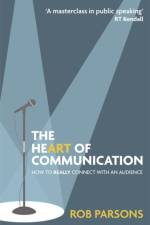
Rob Parsons shares insights from over fifty years of public speaking.
Feeling anxious? Who isn't! Your most irrational (and sometimes rational) fears are hilarious fodder for this sharp and relatable activity book.
How do we grasp existential Europe? How do we explore the social practices, individual dispositions, sentiments and beliefs lying beyond the institutional façade of the European Union's crises? This volume addresses these questions by understanding European law, and EU law in particular, as one of the main social practices which forms our lives in Europe. It examines the ways in which European law shapes and interconnects with the individual's relationship to Europe, political forms and social forms. This thoughtful and reflective book offers an important response to the current upheavals in the EU and EU law.
"I wanted to suggest a conversation among these chairs, which have always seemed to me more like people than objects, with distinct personalities and genders even." With this sentiment in mind, Dayanita Singh went about photographing the many chairs living throughout the houses and public buildings designed by Geoffrey Bawa (1919-2003), whom Singh deems a "tropical modernist" and the most influential architect of the South Asian region. Less still lifes than portraits, Singh's images show how Bawa's spaces engage with the chairs, be they designed or collected by Bawa, or installed after his passing. Made to celebrate the hundredth anniversary of Bawa's birth, Bawa Chairs is constructed as an accordion-fold booklet in the manner of Singh's Chairs (2005), Sent a Letter (2007) and Museum Bhavan (2017), and intended to be unfolded and installed at will-transforming the book into an exhibition, and the reader into a curator.
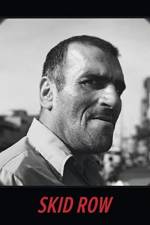
These on-the-spot portraits of "the fallen" were taken to reveal the dignity and unexamined humanity of those who were once intrinsic to the urban experience of American cities of the late 1970s. In Charles H. Traub's own words: "It is my hope that these photographs of the tenants of the streets of Uptown Chicago and the Bowery New York serve as a tribute to the grace of the 'down and out.'" And from Tom Huhn's essay in the book: "What a curious thing to look at, and to look for: whatever there is in each of us-by spying what might be found missing in someone else." Indifference and gentrification have displaced those who once inhabited the missions and shelters that nurtured and held them together in a storied bond. While homeless, they were not wayward; they formed a fabled tribe and were known to their neighbors by their names, eccentricities and their plight. Nelson Algren's famous book A Walk on the Wild Side asks why "lost people sometimes develop to greater human beings than those who have never been lost in their lives." Traub's Skid Row confirms this and these inhabitants' part in the central fabric of the city.
Abonner på vårt nyhetsbrev og få rabatter og inspirasjon til din neste leseopplevelse.
Ved å abonnere godtar du vår personvernerklæring.