








Gjør som tusenvis av andre bokelskere
Abonner på vårt nyhetsbrev og få rabatter og inspirasjon til din neste leseopplevelse.
Ved å abonnere godtar du vår personvernerklæring.Du kan når som helst melde deg av våre nyhetsbrev.

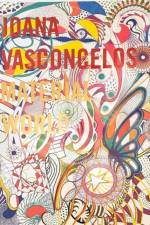
A monograph on Portuguese artist Joana Vasconcelos, focusing on her extraordinary work with textiles Joana Vasconcelos has become one the most respected and sought-after artists of the 21st century. Her forte is using non-traditional materials, and particularly textiles, to create monumental and expansive works that intrigue, inspire and entertain the viewer. She first rose to acclaim when her chandelier decorated with tampons was exhibited at the Venice Biennale in 2005, and has since had solo exhibitions at Versailles and Manchester Art Gallery. She aims to re-present and subvert every-day objects, often manipulating scale and form, and is specially interested in the role of women and objects associated with them. This book focuses on her extraordinary works in textiles, and highlights in particular her 'Valkyries' series, vibrant patchwork extravaganzas that weave together knitting and crochet with silk, velvets, recycled clothes and industrially produced textiles embellished with Portuguese tassels, crystals and beads. Essays by Enrique Juncosa and Crispin Sartwell offer thoughtful and in-depth overviews of her work and its development over the past fourteen years.
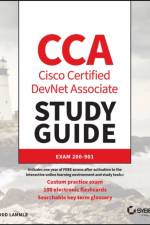
Succeed on the CCA DevNet certification exam and take on a new or expanded role as a developer or network engineer In the CCA Cisco Certified Associate DevNet Study Guide: Exam 200-901, leading Cisco networking and certification authority Todd Lammie delivers an expert guide to success on the challenging DevNet Associate exam. Along with the info you'll need to pass the test on your first attempt, you'll find guidance and instructions to help you hit the ground running on your first day at a new network engineering or technician job. From understanding Application Programming Interfaces (APIs)--including REST APIs--to the implementation of Continuous Integration/Continuous Development (CICD) systems, this book describes the data formats, disciplines (including DevOps), infrastructures, and data models that will enable you to succeed on the exam and in your new role. You'll also find: Intuitive tutorials on the Python programming language, a general-purpose, interpreted language that emphasizes code readability Instructions for using Software Development Kits, platforms for writing programs and applications targeting an API Complimentary access to the online Wiley learning environment, which includes a robust set of interactive tutorials, review questions, a bonus practice exam, flashcards, and a glossary of key termsPerfect for anyone preparing for the 200-901 exam, the CCA Cisco Certified Associate DevNet Study Guide: Exam 200-901 is also a thorough, one-stop resource for current and prospective developers and network engineers seeking to expand their skillset and validate their knowledge in programmability, software, and automation.
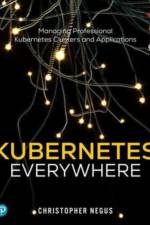
As the mass migration to containerize software applications continues, Kubernetes has overwhelmingly become the platform to run those applications. Cloud providers like AWS, Google, and Microsoft bundle complex Kubernetes services to make it easier to deploy and scale applications. On-premises data centers and devices let companies manage the costs and security of their Kubernetes clusters themselves. Kubernetes can also be found outside of data centers for edge computing, IOT devices, and 5G networks. Kubernetes is literally everywhere. The demand for Kubernetes expertise at a premium as the leading platform for large clouds and small on-premises computing. Kubernetes Everywhere steps you through creating your own on-premises, professional-grade Kubernetes cluster. Along the way, you gain the knowledge to master features such as deployment methods, network setup, storage management, node autoscaling, authentication, and pod and cluster security. You learn ways to obtain Kubernetes certifications, find online resources for trying Kubernetes and participate in the Kubernetes project community. While the book points out quick-start ways of using Kubernetes, the main difference from other Kubernetes instructions is its focus on careful planning and understanding at each step in the process. You learn each topic at the point in the process where you would be setting it up in a real Kubernetes cluster.
12 immersive and original sound meditations for reflection, solace, joy and bliss from the creator of the hit podcast GABA.Head up phone down. I am here to teach you how to bliss. To simply be. To be as happy as a kiss.How to Bliss is a meditative spell that is designed to instil within a sense of bliss. At its heart unfolds a simple philosophy for life; that everything you need to feel happy and content is already contained within you.The book can be enjoyed in its entirety, as a lyrical fable for finding happiness. Or you can choose to return to your favourite chapters as a guided meditation. Through Adam's unique blend of electronic soundscapes, sounds from the natural world, poetry and storytelling, this is next generation meditation as you've never experienced it before.
This book considers the future for teacher education. Should it be removed from universities and consigned to schools under strict government control? Should professional preparation be done away with entirely on the grounds that only subject matter knowledge is needed? Or should it stay in the university context as befits a profession but be governed by the profession?
While Southern California punk bands were saying, "Our band could be your life," Los Angeles's hair metal acts were insisting, "Our band could be your fantasy." They weren't out to change the world as much as conquer it, and no one embodied that more than its breakout stars, Motley Crue. On their sophomore record Shout at the Devil, they invited listeners to let their ids run wild, propping the door open for gender play, sexual abandon, and a healthy distrust of authority. As more women entered the workforce - not only because upper-middle class white women had made this a central demand of their feminism but also because industrial job opportunities for men were declining. This book demonstrates how Shout at the Devil showed men rejecting manual labor in favor of being beautiful, entertaining, and sexually available. What followed were era-defining culture wars about gender roles, sexual expression, and freedom of speech.
FASHION GENERATION is an exhibition and publication that showcases many of the best young designers to have emerged in London over the last thirty years, like Christopher Kane, Charles Jeffrey and Gareth Pugh.
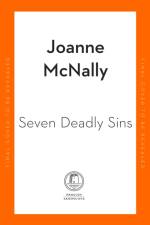
LUST, GREED, PRIDE, ENVY...WHATEVER YOUR SIN OF CHOICE, THIS BOOK WILL SHOW YOU HOW TO DO IT RIGHTIf there's one thing that Joanne McNally knows how to do, it's how to have a good time - and in Seven Deadly Sins, she explores how much fun being bad can be. Using each of the original seven deadly sins as a mirror, she blends stories from her life with wider observations about what it means to be a 'single, unfertilised female in her 30s' living in the modern world.This book is full of everything that the world throws at women with the expectation that they take it in their stride: from observations on celebrity, sex and wine, to stories of being an outcast, facing eating disorders and - yes - being ghosted by your therapist, this book shows that no woman is out there on her own.Raucously funny, relatable and infinitely insightful, Seven Deadly Sins is Joanne McNally's manifesto on womanhood, from an actual human woman, for other human women of every age.
This book focuses on the multiple sites and articulations through which "love" is constructed, articulated and experienced in contemporary India.
Dive into this beautiful ABC of tips to discover the art of tranquillityWhen the pressures of daily life threaten to overwhelm you, immerse yourself in these pages and discover the powerful peace of meditation. With a helpful tip and activity for every letter of the alphabet, this charming A-Z guide will support you on your spiritual journey and instil within you a sense of contentment. Learn how to focus your mind, bring serenity to every day and be present in the moment so that you may find your inner peace.Within these pages, you will find:An A-Z of simple tips to help you cultivate a tranquil mindsetSimple techniques for reducing stress and anxietyAn inspiring collection of uplifting quotes and empowering affirmations to refresh your outlook on lifeWith ideas to benefit your health, happiness and well-being, let this little book help you embrace the power of meditation and enjoy the benefits of a calmer mind every day.
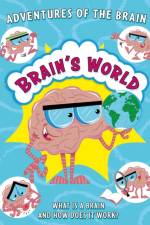
Entertaining insight into the highly complex topic of the brain through a series of brain character comic strips
In Adventures of the Brain: Brain's World, discover what a brain really is and how it is organised in this fun, highly approachable comic-style guide.Each book in this series focuses on a certain aspect, function or area of the brain, using the brain as an approachable cartoon character in a series of relatable everyday situations. This blending of simple scientific explanation with cartoon artwork makes the science highly accessible. Comic strips are interspersed withexplanation spreads to consolidate the learning, too. Perfect for readers age 8+ or anyone wanting their first book about the brain!Books in the series:Brain's WorldBrain's BehaviourBrain's ThoughtsBrain's Emotions
In 1946 Worcester Diner #790 arrived by truck and was installed at 3 Bridge Street in Gardiner, Maine. Under the name of Heald's, it served employees of Gardiner's mills and factories with an emphasis on ample portions served quickly. The diner is still at 3 Bridge Street, still a marvel of efficiency and art moderne design, still a local gathering place, still serving the same warm, flaky biscuit.But under the ownership of Mike Giberson and Neil Anderson since 1988, A1 Diner (as it it now called) draws customers (and restaurant reviews) from far and wide with its wonderfully eclectic menu, its emphasis on fresh, local food, and its upscale deli next door, A1 to Go. This is a small business success story, filled with characters from either side of the counter, packed with recipes and kitchen notes, and enjoyable down to the last bite.
Combining the polish of a turn-of-the-twentieth-century parlor recitation with the rough-and-ready quality of a folk tale, Frost, You Say? is a timeless story told as an old Maine farmer's rambling response to a simple question.
Maine has a rich history of hunting, fishing, and other outdoor pursuits. The First People fished and hunted for their survival, as did the first Europeans to visit the area. Later, the Maine sporting camp was popularized as a place to escape from the bustle and test your manhood against the wilderness of the northern woods. Teddy Roosevelt considered his experiences in the Maine wilds instrumental in developing the man he became. Today, these outdoor sports are as popular as ever, and there is no shortage of talented writers to bring the magic of the hunt or the thrill of landing the big one vividly to life. This anthology collects stories and essays from 20th and 21st century writers, including George Smith, Tom Hennessey, and Edmund Ware Smith. Perfect for camp or home, it will remind readers of past adventures and inspire new ones.
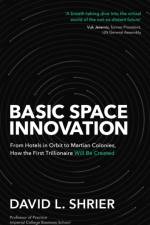
Basic Space Innovation explores the dawn of a new era in business, driven by the groundbreaking advancements in space technology that are set to redefine our future.This book delves into the rapidly expanding commercial space industry and the increasing investments by nations worldwide to build their space capabilities. The race to establish permanent human presence on Mars is just the beginning.Discover how space innovation is unlocking unprecedented insights into our planet, revolutionizing communication networks, and pioneering breakthroughs in material science and biomedicine that could reshape technology and combat diseases. The book also examines how access to extraterrestrial resources might address critical shortages in energy and raw materials, offering solutions to some of humanity's most pressing challenges.
Volume 1 of Edmund Crispin's Gervase Fen novels, collected together for the first time.
Abonner på vårt nyhetsbrev og få rabatter og inspirasjon til din neste leseopplevelse.
Ved å abonnere godtar du vår personvernerklæring.