











Gjør som tusenvis av andre bokelskere
Abonner på vårt nyhetsbrev og få rabatter og inspirasjon til din neste leseopplevelse.
Ved å abonnere godtar du vår personvernerklæring.Du kan når som helst melde deg av våre nyhetsbrev.

If I were a fairy I''d do magic fairy things. Flitting here and there on my twinkly fairy wings.Whoosh! Be a fairy for the day and do all the things that fairies love, like saying magic spells and flying through the air! With chunky novelties and lots of fun things to spot, children will have hours of fun pulling tabs, lifting flaps and moving sliders in this brand new series of board books that are the perfect size for little hands. The perfect push, pull and play novelty board book for little fairies everywhere!Perfect for fans of the Busy series (Campbell).
Popes and the Papal Court, 1503-1655 is the first book-length account of the early modern papal court in English. As well as bringing together art historical, social, and political studies in several languages, it contains a wealth of primary source material, such as advice manuals for cardinals and aspiring courtiers, accounts of Roman festivals, reports of visiting ambassadors and news reports from Rome deposited in the Vatican library. The book argues that during the 16th and 17th centuries, popes were conscious to varying degrees of their responsibilities to conserving and enhancing the status of the monarchy as something larger than themselves as individuals or their families, and as such they exhibited some characteristics of dynastic monarchies. Toby Osborne explores how the culture of the papal court and the ways in which it functioned as a point of contact between the ruler, certain elites, and other princes not only had similarities with dynastic states, but also set the standard for court life around Europe. By bringing to light recent scholarship written by continental historians, Popes and the Papal Court, 1503-1655 represents an important contribution to the scholarly endeavour to better understand the political culture of the papal states and the workings of the papal monarchy. As such, it will be illuminating reading for all students and scholars interested in early modern court history.
These three volumes of Tom Wood's new work, Landscapes, are drawn from the artist's extensive unseen and unpublished landscape work. The first volume concentrates on Wood's photographs made in response to the West of Ireland, County Mayo, the landscape of his birthplace and childhood and an area he has returned to as an artist almost every year since 1975. Taken over decades, views of this wild and remote landscape, many of them glimpsed from the car, bus or train during his journeys there, are combined with fragile fragments of surviving family photographs, video stills, and intimate and affectionate portraits of day-to-day life within a rural community.The second volume consists of Wood's landscapes predominantly made within Merseyside, where he lived and worked for 25 years, from 1978-2003. In this more urban environment, his landscapes encompass pictures of people's homes and gardens, parks, wastelands, and the river Mersey. Wood moved to Wales in 2003 to address what he has referred to as "the matter of landscape." His open and experimental approach to photography means he is constantly pushing its formal and conceptual possibilities.Selected from the photographs he has been making in Wales, the third volume is the most formally abstract of the three books and includes many photographs taken with a panoramic camera - complex, optically rich pictures with multiple points of view and focus.
Schnell und konkret führt Sie dieses Lehrbuch in das Marketing ein. Marcus Stumpf und Susanne Wigger-Spintig erklären Ihnen, was Sie zur Abgrenzung des relevanten Marktes wissen sollten, wie Sie Marketingziele und -strategien formulieren und vieles mehr. Die Autoren erläutern das Wichtigste zur Kalkulation des Marketingbudgets, Festlegung von Marketingmaßnahmen, Schaffung der Implementierungsvoraussetzungen und Marketingcontrolling. Mit Übungsaufgaben samt Lösungen können Sie Ihr neu erworbenes Wissen testen und festigen.
Introduces, debates and extends the arguments surrounding the critical relevance of the terms 'late modernism' and 'postmodernism' for describing cultural products and intellectual contexts from the 1930s to the present.
Offering a comprehensive overview, this volume defines the new Organizational Development (OD), describing where it came from and where it is going. Moreover, it provides a unified resource for bridging theory and practice and provides a panoramic presentation of methods for working at the individual, organizational, and societal levels.
Examines in some detail the various tax regimes affecting the Community and uncovers the links between policy and law-making in a way which should give all readers a firm understanding of the principles of EC tax law.
This book presents a study of the ways in which legislation shapes and develops the law of obligations.
This book provides an essential introduction to the early history of the Labour Party, written by one of most respected historians of his generation.
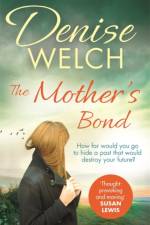
The new, hard-hitting, emotional novel from one of the nation's favourite celebrities.
My major goal is to produce a history that is informed by recent scholarly understandings of American literature and culture, but remains accessible and engaging to an educated reading audience. Thus, the book will have to avoid the mere recitation of names, dates, and facts while still being rooted in the dense texture of history, particularly the history of dramatic change and social turmoil that marks this period. It will have to recognize the achievements of the major literary figures, especially Mark Twain and Henry James, without stooping to the level of literary hagiography or pretending that literary history can be merely the story of great men. The discussion of these figures will not occur in separate chapters but be integrated into the entire book. My goal is to place the work of these and other writers fully into the contexts of the time so that a reader can understand how the various phases of Henry James reflect and respond to the flux of cultural history. Thus, the syntax of James?s major phase needs to be tied to aesthetic movements (especially, the rise of impressionism), political developments (in particular, issues of class and gender), and an emerging science that will challenge moral and epistemological boundaries (reflected perhaps most notably in Freudian psychology). Mark Twain?s career also provides a kind of paradigm for American cultural experience during this period: he began his literary career with an editor named Bliss and ended with one named Paine. The movement from bliss to pain is part of what my narrative will be about. My over-riding aim, however, is to avoid over-simplification while still providing a meaningful guide to the period. This requires that I root the individual texts into multiple cultural contexts. Thus, Twain?s A Connecticut Yankee in King Arthur?s court is best understood when immersed in multiple generic frames, including the international novel (which usually contrasted American democracy and European values), the satire of romanticism in its contemporary form (Tennysonian medievalism), the historical novel (probably the most popular form of the time), and an emerging science fiction (which began to challenge faith in progress and technology). I hope to be able to provide both a lively narrative and a detailed analysis of culture and texts. The overall shape of this history will be marked by three stages: the rise of realism; its complex development into literary forms that struggle to grasp elusive social and psychological realities; and the emergence of naturalism as a literary movement that both extends and rejects the basic premises of realism and that will ultimately culminate in an emerging modernism. Such an overview may seem conventional, but the actual history will challenge some old-fashioned notions of the period. The section dealing with the rise of realism will emphasize the contributions of the New England women who first made regionalism an effective and sometimes powerful literary tool (Stowe, Davis, Phelps, Cooke) and whose best evocations of local life are imbued with the incipient feminism that will finally emerge in Jewett, Freeman, and Chopin. Feminist issues will be important in the discussion of both male and female writers - it is, of course, Henry James who insists throughout his long career that the secret nature of American life is intimately connected with the peculiarities of female identity in our culture. The treatment of local color will confront the sentimentality, nostalgia, and escapism that sometimes mask injustice and bigotry, but it will also explore how regionalism liberated some of the most significant writers of the period, empowering some women to raise troubling questions about the emptiness of domestic life and leading some men as well as some women to confront the contradictions between democratic ideals and American realities. Without lapsing into reductionism, the chapter on regionalism must outline the various traits that distinguish our various regional literatures, thus enabling the reader, for instance, to understand how literary comedy is radically different in the Northeast, South, Midwest, and West and how Mark Twain?s success stems partly from his ability to fuse various regional forms into what will be hailed as American humor. Thus, the text ends up confronting the competing pressures of regional and national impulses that continue to shape American culture. Throughout the history, I attempt to raise the basic contradictions and paradoxes that provide realism with its primary energy - this is the period that discovered the child as literary subject, but our most powerful exemplars, including both Huck Finn and Turn of the Screw are really about abused children and the nature of child abuse. The treatment of realism will need to deal with the form?s long-recognized concern with social issues and political reform, and I hope to give a fuller treatment of the period?s treatment of social class than can be found in most conventional histories. Nevertheless, I also plan to emphasize Howells? recognition that the American literary mind was fundamentally turned inward in ways that made psychological realities of equal importance to social facades. Thus, the period of realism coincides with the great age of the supernatural tale, which exemplifies realism?s underlying epistemological concern with the question of what is real while also providing a powerful literary vehicle for the confrontation with sexual repression and social injustice. The history I propose will be distinguished by its insistence on recognizing the importance of genres that have been unjustly neglected in other treatments of this period, including the ghost story, the historical novel, the adventure tale, detective fiction, and the western. Recent scholarship has begun to unearth more significant poetry than previous scholars recognized, and the history will have to find a way of incorporating these insights and discoveries as well as paying attention to experiments in drama. The history will recognize the importance of race as a subject matter and the rising stature of certain writers, perhaps most notably Charles Chesnutt. While exploring the achievements of Chesnutt, James Weldon Johnson, Dunbar, Dunbar-Nelson, and other African Americans, the chapter focusing on race and immigration will also deal with other ethnic voices (i.e., Sui Sin Far, Abraham Cahan, Maria Mena, Zitkala-Sa) as well as white writers who attacked racism (Cable, Tourgee) or attempted to justify it (Page, Dixon). The concluding section will focus on Naturalism and the relationship to an emerging modernism with emphasis on Wharton, Crane, and London. These three are central to my purpose because they represent most fully naturalism?s uneasy war with the realistic tradition and the varieties of responses that scientific determinism could elicit from writers of talent or genius. Dreiser will be mentioned in passing, but he really represents the start of 20th-century traditions and I expect that he will be important to the author of the next volume of this history. Since I do not have outlines for the other projected volumes, I have to emphasize that I am presuming that some overlap between volumes will be necessary in order to ensure that each volume can stand alone. Of course, attention must be paid to precursors as well as to the ways in which the traditions outlined in my text flowed into twentieth-century literary movements. My proposed volume will begin with the end of the Civil War and include some discussion of Dickinson and Whitman, both of whom will, I presume, receive fuller treatment in the volume immediately preceding mine in the series. It is essential that I briefly discuss the romantic precursors in order to detail the competing ways in which romanticism and realism attempted to define the literary needs of an emerging democratic culture and to dispel the old myth that romantic modes dominate our fictional traditions. The volume will end with a brief discussion of how realistic modes and values became vital to certain modern writers (most notably Fitzgerald, Frost, and Cather) and how the ideas raised by naturalism formed the philosophical underpinnings of much later writing and raised the issues that Eliot, Faulkner, Hemingway, and Ellison would later confront in other ways. The Period: At one time, critics referred to the years between the American civil war and the start of World War I as the ?genteel age? in American literature, but recent scholars agree that it was actually a period of enormous violence as well as astonishing change and radical transformation. The reality of political violence can be represented most acutely by one statistic: three of the seven Presidents elected between 1860 and 1900 were assassinated in office; in other words, of our 43 Presidents, three out of the four who died in office were murdered during this period. At the start of this period, the United States was a relatively young nation attempting to heal the wounds of the most costly and most violent war in our history - (the casualty figures of the American Civil War exceed that of all prior and subsequent American wars combined). In 1865, the nation was primarily agricultural and the bulk of it was unsettled - at least by white Euro-centric standards. Things changed quickly. In 1876, the nation experienced and celebrated its first centennial. By 1890, the frontier, which had once seemed endless, was declared closed and the United States was clearly on its way to becoming a heavily industrialized nation with imperialist ambitions. Jefferson?s idealized agrarian vision was demolished by the early 20th century. Farm life gave way to factory labor. Large cities grew at ferocious rates, packing masses of desperate immigrants into filthy slums. As large-scale poverty became a fact of life for the first time in U.S. history, robber barons and financiers amassed huge fortunes, threatened to dominate crucial markets and industries, and posed new challenges to the ideas and ideals behind American democracy. Labor unions were formed and often violently crushed. It was a period marked by economic turmoil and by corresponding debates on whether the nation should fully commit itself to unbridled capitalism or invest in some form of socialism. Scientific progress provided railroads, automobiles, airplanes, telegraphs, telephones, radio, electricity, and indoor plumbing. Progress was, however, at best problematic. As Americans discovered that the technologies of communication and transportation accelerated at almost frightening rates, they learned those rapid modes of communication and transportation would not give them something meaningful to say or someplace worthwhile to go. Technology would also change writing and publishing. Advances in printing brought about the mass market magazines, which with the rising importance of advertising, would transform publishing into a business that sold marketing access to readers instead of one that sold worthwhile reading material to readers. By the start of the 20th century, the United States was no longer young. Its citizens could no longer pretend to cosmic innocence. The nation had experienced a rate of population growth unparalleled in human history, but it had also experienced economic turmoil, the realities of political corruption, and a world that seemed perpetually on the brink of crisis or even collapse. The political establishment responded to increasing multiculturalism as a threat and created some of the most racist laws in our history. The abolition of slavery gave way to Jim Crow laws and lynching and to a cultural regionalism more engaged in nostalgia than concerned with justice. The major wars against the Native American Indians were fought and largely won during this period. Laws were also passed to stem the tide of immigration especially from Asia, Eastern Europe, and other areas where skin color or religion might differ from white Protestant norms. American democracy was fervent in its desire to cope with change, sometimes violently fervent and sometimes in ways that later generations would find embarrassing, but political reform also became a new fact of American life. Reformers challenged corruption and raised a crusade that would ultimately extend democracy, grant women the vote, create national parks, limit corporations, extend rights to labor, and outlaw alcoholic beverages. BLACKWELL HISTORIES OF AMERICAN LITERATURE Like the volumes proposed for the series on British literature, the Blackwell Histories of American Literature, will be culturally grounded. They will aim to be comprehensive, and succinct, and to recognise that to write literary history involves more than placing texts in chronological sequence. Thus the emphasis within each volume will fall both on plotting the significant literary developments of a given period, and on the wider cultural contexts within which they occurred. Authors will be asked to construe ?cultural history? in broad terms, and address such issues as politics, society, the arts, ideologies, varieties of literary production and consumption, and dominant genres and modes. The emphasis will be on contexts, including a retrospective element on the inheritance of past literature; on texts and authors; and the lasting effects of the literary period under discussion, and incorporate such topics as critical reception and modern reputations. Thisarrangement will help to elicit a full treatment of each period, to establish some conformity between the volumes, to dovetail one with another, and to leave each author with considerable room for manoeuvre. While a thematic, as opposed to a chronological, approach might be tempting in some cases, it would tend to put the subjects treated in this way into a kind of ghetto. We expect anyone writing a volume for a series of this kind to deal with issues of regionalism as well as with African American writing, Native American writing etc. As befits a culturally grounded series, these volumes are first and finally concerned with the plural nature of American culture and how that feeds into American writing. Obviously, in any chronological arrangement, one period shades into and overlaps with the ones before and after. But, in so far as any division into period makes sense, the divisions here may be said to (e.g. many of the great American Modernists were already shifting into gear before the First World War). The effect of each volume will be to give the reader a sense of possessing a crucial sector of literary terrain, of understanding the forces that give a period its distinctive cast, and of seeing how writing of a given period impacts on, and is shaped by, its cultural circumstances. Each volume will recommend itself as providing an authoritative and up-to-date entree to texts and issues, and their historical implications, and will therefore interest students, teachers and the general reader alike. The series as whole will be attractive to libraries as a work that renews and redefines a familiar form. Proposed volumes: Pre-Columbian, colonial, and revolutionary literatures A large stretch of time but a relatively limited quantity of material. Native American narratives and poetry prior to Columbus and the encounter with Europeans, narratives of exploration, conquest and settlement, sermons and diaries, early poetry, drama, and fiction. Literature until the end of the Civil War The emergence and the threatened split-up of the American nation. The writers of the 'American renaissance', sentimental literature, slave narratives and other literature of the slavery debate, writing of and from the West, the search for an American epic. Literature 1865-1914 The transformation of the American economy. The emergence of realism and naturalism, 'local colour' and new western and southern writing. The literature of the women's movement, the poetry of isolation. Literature 1900-1945 The arrival of the US as a 'superpower'. Modernism, its accompaniments and consequences, the literature of the New Deal, new ethnic literatures, the growth of the literature of immigration. Literature 1945-2000 The Cold War and its aftermath. America postmodernism and the new realism, the poetic wars, genre writing, the emergence of American drama, the impact of the visual arts and popular culture.
This richly illustrated guide provides a detailed step-by-step description of the operative techniques employed in selective and radical neck dissection. The complexity of the head and neck region makes this procedure an inherently delicate undertaking for surgeons from different specialties who treat head and neck cancer.
Movement Disorders - Parkinson's, Essential Tremor, Dystonia, etc. - are some of the most common but hardest to definitively diagnose conditions seen by the neurologist.
The Wiley-Blackwell Encyclopedia of Romantic Writers and Writing satisfies the need for a more general and extended representation of authors, their works and concepts informing the practice of Romantic writing, in the form of short entries or miniature essays, depending on the particular author/text/genre.
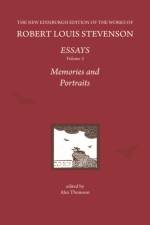
As Stevenson's most complete exercise in the art of the essay and the last of the 3 volumes of essays whose collection, arrangement and revision he planned and executed in his lifetime, this volume shows the brilliance of his mature style.
This dictionary provides authoritative accounts of the lives and work of some 500 notable Scottish authors across all periods, languages and creative genres of Scottish literature and oral culture.
This new publication is the first up-to-date resource on this exciting research area. As one of the few green, energy efficient technologies, magnetic cooling is experiencing a surge in interest and this book brings together the latest research from physics, materials science, engineering and chemistry.
This book analyses the interaction of the constitutional and political orders of EU Member States that exhibit varying degrees of territorial pluralism, their sub-state entities and the supranational organisation to which they belong.
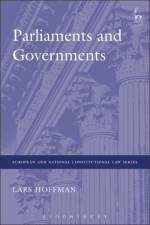
The wider project of which this book is a part, investigated the constitutional structures of the EU Member States. This work sheds light on the intricate interconnections which exist between Member State governments and their national parliaments.
The book explores existing regulatory licensing systems in China and critically appraises them using a law-and-economic approach.
Abonner på vårt nyhetsbrev og få rabatter og inspirasjon til din neste leseopplevelse.
Ved å abonnere godtar du vår personvernerklæring.