







Gjør som tusenvis av andre bokelskere
Abonner på vårt nyhetsbrev og få rabatter og inspirasjon til din neste leseopplevelse.
Ved å abonnere godtar du vår personvernerklæring.Du kan når som helst melde deg av våre nyhetsbrev.

Explore this fascinated illustrated social history of those light keepers throughout Scottish history.
The most comprehensive illustrated field guide to the magnificent birdlife of AngolaAngola is one of the world’s most sought-after birding destinations, home to a spectacular array of endemic birds and habitats ranging from deserts in the south to grasslands in the north and coastal mangrove forests. Birds of Angola is the essential field guide to this birder’s paradise. It covers every species found in the region and features an authoritative text that describes everything from size and distribution to voice, habitat, and status. Compact and field-friendly, this one-of-a-kind field guide is the ideal travel companion for any Afrotropical birder.Covers more than 1,000 species, including Africa’s most stunning endemic speciesFeatures beautiful color plates that depict every distinct plumage and raceConcise species accounts highlight key features for easy identification in the fieldIncludes an up-to-date distribution map for each species
The extraordinary rise of the Neville family on the local and national stage, and the life of the most powerful and most famous member of this family Richard Neville, Earl of Warwick, The Kingmaker.
Subbuteo Close Up: The Beauty of Table Football is a collection of essays that takes you down to pitch level and the wonderful world of association football played in miniature. The book has been lovingly researched, with photos specially curated to bring to life the amazing world of Subbuteo.
England versus Europe tells the fascinating story of the Heineken Cup. It recounts how European club rugby travelled from Cardiff Arms Park to Marseille via Bilbao, Newcastle and many major European rugby stadiums in between. The book gives a full history of the cup as well as accounts of events off the field.
Stunning photographs celebrating the famous Settle to Carlisle railway line and the surrounding scenery.
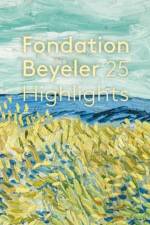
From Rousseau to Richter, from Brancusi to Bourgeois, from Monet to Miró -this volume presents twenty-five inspiring highlights that have transformed art in innovative ways. These works were selected from the more than 400 works held in the collection of the Fondation Beyeler. Whether it is found in the radical light reflected in Monet's water lily pond or in Warhol's Flowers, whether it is found in Mondrian's abstract grids or Rothko'sexpressively luminous color fields, these twenty-five works attest to a visionary power reaching far beyond their present times. Such works are emblematic of the collection of modern art that has been carefully assembled by gallery owners Ernst and Hildy Beyeler and of the museum, which has become one of the most popular and successful venues in Europe since it was founded in 1997.
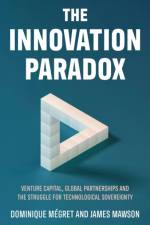
Explains how, against the odds, pioneering start-ups have taken on established firms and revolutionised global commerce--with huge implications for the future of business.
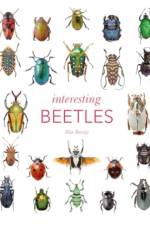
Interesting Beetles showcases portraits of curious and colourful beetles from the collections of London’s Natural History Museum, one of the oldest and most important collections of coleoptera in the world. They include some historic specimens collected by famous naturalists such as Joseph Banks, Henry Walter Bates and Alfred Russel Wallace, and for each one there is a detailed caption explaining its most interesting aspects, whether biological, geographical or sociological.
Artificial Intelligence (AI) is a complicated science that combines philosophy, cognitive psychology, neuroscience, mathematics and logic (logicism), economics, computer science, computability, and software. Meanwhile, robotics is an engineering field that compliments AI. There can be situations where AI can function without a robot (e.g. Turing Test) and robotics without AI (e.g. teleoperation), but in many cases, each technology requires each other to exhibit a complete system: having "smart" robots and AI being able to control its interactions (i.e., effectors) with its environment. This book provides a complete history of computing, AI and robotics from its early development to state-of-the-art technology, providing a roadmap of these complicated and constantly evolving subjects. Divided into two volumes covering the progress of symbolic logic and the explosion in learning/deep learning in natural language and perception, the first volume investigates the coming together of AI (the mind) and robotics (the body), as well as discussing the state of AI today.The second volume goes more in-depth into the history of artificial intelligence, starting with key people and important events that bring us to the present day.Key Features: - Provides a complete overview of the topic of artificial intelligence, starting with philosophy, psychology, neuroscience, and logicism, and extending to the action of the robots and artificial intelligence needed for a futuristic society- Provides a holistic view of AI without bias, and touches on all the misconceptions and tangents to the technologies through taking a systematic approach.- Provides a glossary of terms, list of notable people and extensive references- Provides the interconnections and history of the progress of technology for over 100 years as both the hardware (Moore's Law, GPUs) and software, i.e. generative ai, has advancedIntended as a complete reference, this book is useful to undergraduate and postgraduate students of computing, as well as the general reader. It also can be used as a textbook by course convenors. If you only had one book on AI and robotics, this set would be the first reference to acquire and learn about the theory and practice.
Artificial Intelligence (AI) is a complicated science that combines philosophy, cognitive psychology, neuroscience, mathematics and logic (logicism), economics, computer science, computability, and software. Meanwhile, robotics is an engineering field that compliments AI. There can be situations where AI can function without a robot (e.g. Turing Test) and robotics without AI (e.g. teleoperation), but in many cases, each technology requires each other to exhibit a complete system: having "smart" robots and AI being able to control its interactions (i.e., effectors) with its environment. This book provides a complete history of computing, AI and robotics from its early development to state-of-the-art technology, providing a roadmap of these complicated and constantly evolving subjects.Divided into two volumes covering the progress of symbolic logic and the explosion in learning/deep learning in natural language and perception, this second volume goes more in-depth into the history of artificial intelligence, starting with key people and important events that bring us to the present day.Key Features: - Builds on the insights provided in volume 1 to look into the future of AI and robotics- Provides a holistic view of AI without bias, and touches on all the misconceptions and tangents to the technologies through taking a systematic approach.- Provides a glossary of terms, list of notable people and extensive references- Provides the interconnections and history of the progress of technology for over 100 years as both the hardware (Moore's Law, GPUs) and software, i.e. generative ai, has advancedIntended as a complete reference, this book is useful to undergraduate and postgraduate students of computing, as well as the general reader. It also can be used as a textbook by course convenors. If you only had one book on AI and robotics, this set would be the first reference to acquire and learn about the theory and practice.
Artificial Intelligence (AI) is a complicated science that combines philosophy, cognitive psychology, neuroscience, mathematics and logic (logicism), economics, computer science, computability, and software. Meanwhile, robotics is an engineering field that compliments AI. There can be situations where AI can function without a robot (e.g. Turing Test) and robotics without AI (e.g. teleoperation), but in many cases, each technology requires each other to exhibit a complete system: having "smart" robots and AI being able to control its interactions (i.e., effectors) with its environment. This book provides a complete history of computing, AI and robotics from its early development to state-of-the-art technology, providing a roadmap of these complicated and constantly evolving subjects. Divided into two volumes covering the progress of symbolic logic and the explosion in learning/deep learning in natural language and perception, this first volume investigates the coming together of AI (the mind) and robotics (the body), as well as discussing the state of AI today.Key Features: - Provides a complete overview of the topic of artificial intelligence, starting with philosophy, psychology, neuroscience, and logicism, and extending to the action of the robots and artificial intelligence needed for a futuristic society- Provides a holistic view of AI without bias, and touches on all the misconceptions and tangents to the technologies through taking a systematic approach.- Provides a glossary of terms, list of notable people and extensive references- Provides the interconnections and history of the progress of technology for over 100 years as both the hardware (Moore's Law, GPUs) and software, i.e. generative ai, has advancedIntended as a complete reference, this book is useful to undergraduate and postgraduate students of computing, as well as the general reader. It also can be used as a textbook by course convenors. If you only had one book on AI and robotics, this set would be the first reference to acquire and learn about the theory and practice.
Based on interviews with three generations of three families, this book clarifies why the Cultural Revolution in China (1966-1976) had a uniquely traumatic impact on those affected, and shows the forms this trauma has taken in the lives of their second and third generations at both inter-subjective and intra-psychic levels.As a psychoanalytically-oriented, qualitative study of the aftermath of the Cultural Revolution, this book investigates the role played by the beliefs, practices and narratives which were ideologically formative during the Cultural Revolution, showing their role in the trans-generational transmission of trauma and how they still prevent a collective means of dealing with this trauma today. Instead of a collective remembering, a collective repression prevents the symbolisation of memory on a societal level, and families serve as a space for this unresolved trauma. In this context, psychoanalysis is shown to be an effective way of interrupting and healing the transmission of trauma across the generations. Within a longer historical framework, the book also explores the Cultural Revolution as a defensive compulsory repetition of the traumas that China had previously experienced on a political and cultural level. Bearing witness to a personal process of transforming a wound into work, this first-person account offers in-depth understanding and guidance for psychotherapists and psychoanalysts engaged in interrupting and healing trans-generational trauma.
A fourth-generation soldier tells the story of his father's tank battalion, the "Spearhead," that selflessly led the charge on the front lines from Normandy into Germany--against impossible odds, technologically superior weaponry, and a fanatical enemy on its home turf--and the heroes whose sacrifice won World War II.At twenty-eight, Sam Hogan is one of the youngest lieutenant colonels in the US Army. The West Point graduate from Texas stands in the commander's hatch of his Sherman tank, behind him a steel wedge of seventeen other Shermans of his tank battalion. Two weeks after the now-infamous D-Day landings, Sam is preparing to give the order to advance into the German defenses that enclose the Normandy beachheads. Ahead of Sam lies seemingly impossible odds for survival: technologically superior Nazi tanks, camouflaged anti-tank guns, and infantry armed with new anti-tank rockets. But Sam has prepared for this moment for the past seven years. With a guttural call to move out accompanied by diesel fumes and the squeak of tank treads, Sam and his men begin their long journey to liberate Europe--a journey from which many of them would not return.So begins the story of Sam Hogan and his colorful band of tanker heroes of the Third Armored Division--the "Spearhead"--as they battle on the front lines of some of the war's toughest fights, from Normandy to the Elbe to the Battle of the Bulge. The soldiers of Task Force Hogan come from all walks of life. There are cooks, tankers, infantrymen, salty old sergeants, and wet-behind-the-ears lieutenants. In common, they have a sense of duty to each other and their country, and the struggle against the most sinister enemy modern history has ever produced.In Task Force Hogan, the story of Sam and his band of heroes comes to life through the writing of his son, Will Hogan--aided by never-before-seen letters, military dispatches, journal entries, and interviews with surviving family of the Task Force. These were the soldiers at the tip of the spear, brave enough to lead the charge and fight against insurmountable odds, and often paying the ultimate price, while liberating French villages and concentration camps as they rolled towards Germany to ultimately win the war. In the pages of this book, Will Hogan finally gives these unsung soldiers the voice and memorial that they all deserve.
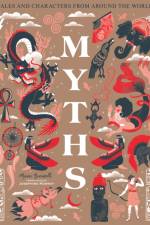
A magical journey to discover the mythological creatures, deities, spirits and heroes that are celebrated throughout the world.
Abonner på vårt nyhetsbrev og få rabatter og inspirasjon til din neste leseopplevelse.
Ved å abonnere godtar du vår personvernerklæring.