












Gjør som tusenvis av andre bokelskere
Abonner på vårt nyhetsbrev og få rabatter og inspirasjon til din neste leseopplevelse.
Ved å abonnere godtar du vår personvernerklæring.Du kan når som helst melde deg av våre nyhetsbrev.

Seven suavely bewitching stories, all with a Machiavellian twist at the end from the highly praised author of A MEMORY OF DEMONS and COINCIDENCE
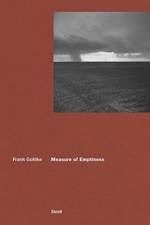
Measure of Emptiness is a meditation on the vast spaces of the Great Plains, the heartland of American agricultural productivity, and the centrality of the grain elevator to its social, cultural and symbolic life. In photographs made between 1972 and 1977 with the support of fellowships from the Guggenheim Foundation and the National Endowment of Art, Frank Gohlke traveled back and forth through the central tier of states from his home in Minneapolis, Minnesota, to the Texas Panhandle, seeking an answer to the puzzle of the grain elevators' extraordinary power as architecture in a landscape whose primary dramas were in the sky."In the United States there is more space where nobody is than where anybody is," said Gertrude Stein. The Great Plains are characterized by this spaciousness, and by the presence of windowless, rumbling, enormous grain elevators, rising above the steeples of churches to announce the presence of the town and to explain, in great measure, the lives of and livelihoods of its inhabitants. Why did their builders choose that particular form to fulfill and practical necessity? And does the experience of great emptiness shape what people think, feel and do?
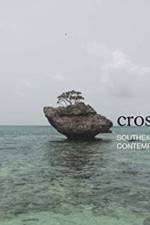
crossing sea presents the diverse practices of photography in Southeast Asia over the past decade. Along with documentary photography, photographic practices have expanded as part of the contemporary arts with new experimental and exploratory approaches ranging from re-contextualizing archives, site-specific installation, performance for the camera and collections of vernacular images. Interspersed between the works of 55 Southeast Asian photographers are research extracts, essays and interviews by historians, writers and curators who have been contributing to the understanding of photography from this region. Featured artists include Andia Yoeu Ali, Agan Harahap, Angki Purbandono, Ang Song Nian, Eiffel Chong, Dinh Q. Lê, Miti Ruangkritya, Piyatat Hemmatat, Wawi Navarroza, Jake Verzosa, Manit Sriwanchimpoom, Genevieve Chua, John Clang, Simryn Gill, Vincent Leong, Robert Zhao Renhui, Wong Hoy Cheong, Wawi Navarroza, Yee I-Lann and Yaya Sung.
In 2017 Rodney "Ferris Bueller" Bailey documented the contents of his old room in his parents' house in Queens, NY-full of ephemera collected while growing up in the late eighties and nineties, and largely untouched since. The result of this cathartic process of sorting and recording is this book: part visual autobiography, part time capsule. "My bedroom ... was my sanctuary because it contained all the things that defined me," recalls Bueller, and his mementos include magazines, posters, photos, collages, T-shirts, concert tickets, a Walkman. His extensive collection of sneakers dominates the book, triggers vivid personal memories (expressed in texts throughout the image sequence), and makes palpable a past where the X-Files, Nirvana and Anna Nicole Smith were still current news. Catharsis is both a chronicle of Bueller's sometimes difficult youth and a "record of life before the Internet or social media, before everyone knew what everyone else was doing all the time. [...] The only things that would connect you were clothes, sneakers and music."
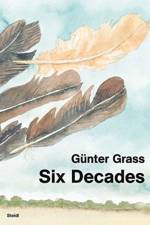
Six Decades grants us a privileged look behind the normally closed door of Nobel Laureate Günter Grass' studio. For well over half a century Grass worked unceasingly as a writer, sculptor and graphic artist. While capturing the pulse of each decade of his long life in his novels, Grass also produced theatre pieces, poems, short stories, essays, etchings, lithographs, drawings and sculptures. He was furthermore politically active in his native Germany, set up several foundations, and was passionately dedicated to issues he saw of artistic, social and humanitarian importance.Combining Grass' writings with over 800 reproductions of his visual art, documents and photographs, Six Decades allows us to follow his working processes from book to book, from year to year. He shares with us moments of private happiness and crises through texts and images, many of which were not originally intended for publication, including preparatory sketches, draft manuscripts, book cover designs and work plans.
This book is intended to be a pictorial atlas of the morphology of the vertebrate skull. The volume will include high-quality images of skulls from all the major groups of vertebrates. Images will be accompanied by explanatory text, and will be supplemented with literature citations to the voluminous literature on the vertebrate skull.
Crime and security expert Vanda Felbab-Brown conducted more than eight years of fieldwork across Mexico analysing policy interventions in key crime and violence hotspots, as well as in control cases. The result is Narco Noir: Mexico's Cartels, Cops, and Corruption, an extensive and unique set of organised crime case studies.
November 18th 1987. Abigail, a mother of two is making her way home to North London from a day's work at Selfridges. At Kings Cross, she gets caught up in the horrendous fire that kills 31 and injures 100. She escapes physically unscathed, but disorientated and desperate to get home to her children - nine year old Robert and six month old Samantha - she slips away from the rescue staff and begins an odyssey that instead takes her further from home. The further she gets, the freer she feels; the longer she's away, the harder it becomes to return.Thirty years pass and Robert and Samantha (now Summer) chance upon a sketch of the two of them, in the window of a bric-a-brac shop in a rundown seaside town in Lincolnshire. It does not take them time to locate the picture's previous owner, living in an isolated cottage. Their Mother.A heartwarming and heartbreaking exploration of family from Jem Lester, author of SHTUM
From the author of Be Happy, this charming little book is full of endearing illustrations and light meditations to help you on your journey to a happy, calm, centered life. We can all use a gentle reminder to take a deep breath, to find calm among the chaos, and to simply be here. Let Monica Sheehan's adorable cartoons and prompts guide you to a more mindful life as you unplug, find time for yourself, live in the moment, an unclutter the mind. In an irresistible package, Be Here is the perfect self purchase or gift for anyone in your life going through a tough time or simply looking to find less stress and more peace.
This book examines how the UN and states provide assistance for the police services of developing states to help them meet their human rights obligations to their citizens, under the responsibility to protect (R2P) norms.
This book presents a series of diptychs of Toshiya Watanabe's hometown of Namiemachi in Fukushima-the first photo showing the subject shortly after the 2011 Tohoku earthquake and tsunami, and the second photo of the same subject from the same viewpoint a few years later.Namiemachi was declared off-limits following the nuclear meltdown in Fukushima, yet when Watanabe did gain permission to return he photographed around his family and friends' homes, his former school route and areas where he played as a child. In some of the resulting diptychs only a short space of time seems to have passed between photos, with little changed besides the weather. In others, entire life phases seem to have come and gone-in one pair, a 7-Eleven first stands proudly before becoming a boarded-up relic; in another, a collapsed building is replaced by a vacant lot covered with foliage. "At first," Watanabe remembers, "I felt like time had stopped. But gradually the town fell into ruin, as if going against the current of history."
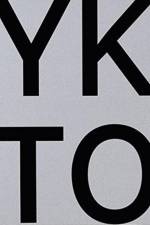
YKTO contains over 1,800 photographs by Tomoyuki Sagami of buildings and houses constructed in Japan soon after World War II. Presenting images taken between 2006 and 2017 in Yokohama, Kawasaki, Tokyo and other cities (hence the book's title), Sagami creates an archive for future generations of idiosyncratic architectural styles that are disappearing due to changing laws and lifestyles, and the ever-growing Japanese metropolis. Sagami adopted a systematic, impersonal method for his project: while employed to post advertising flyers in various neighborhoods, he photographed the particular area he found himself in, block by block, without any prior knowledge of its geography. The resulting images of homes, shops, streetscapes, gardens and alleys are eerily absent of people and free from any personal emotion or inclination on Sagami's part. YKTO is a timely topography of a rapidly vanishing form of urban existence in Japan.
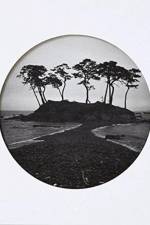
Since the Great East Japan earthquake of 2011, Toru Komatsu has taken photos of trees in places that suffered damage from the earthquake and subsequent tsunami. Fifty of these images comprise A Distant Shore, which documents the eerily beautiful aftermath of the disaster. On his travels throughout Japan Komatsu was particularly fascinated by monumental rocky crags that seem like islands floating on the land. Mostly scattered with pine trees, the crags are landlocked but were once surrounded by the sea. Typically cordoned off by ceremonial ropes, they are today treated as holy areas embedded with the memory of their past-in Komatsu's words, "I imagine that an island floating on the land still hasn't forgotten the ocean that once surrounded it, even if the sea is now many miles away." Circular cutouts placed before each square photo allow the images in the book to be experienced both as cropped circles and the full square layouts, creating a sense of peering through a peephole or a telescope from the wrong end, and transforming the photos into a setting for a dramatic play while commenting on the limits of our fields of vision.
Selfies are today an inescapable part of our visual landscape and our self-expression, and the ultimate dream of many selfie-takers is to snap oneself with a celebrity. Takumi Hasegawa fulfills this dream in this book, which presents him posing with his personal legends of the international rich and famous. From the worlds of fashion (Anna Wintour, Grace Coddington, Riccardo Tisci) and architecture (Rem Koolhaas, Zaha Hadid, Frank Gehry), to the arts (Jeff Koons, Yayoi Kusama, Thom Yorke) and luxury moguls Bernard Arnault and Pierre Bergé, Hasegawa's subjects speak for themselves. Yet the resonance of his project is more complex: in When Takumi Met the Legends of the World, designed as an intimate scrapbook or album of memories, Hasegawa's joy in each shot is palpable, but so is a sense of the seductive, false promise of fame.
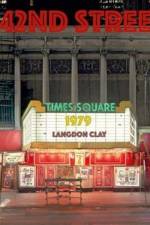
42nd Street, 1979 contains Langdon Clay's 1979 photos of a quintessential strip of 42nd Street near New York's Times Square, showing its gritty neon charm before it became the more Disney/Las Vegas hub for theater concoctions that we know today. Clay recalls the drab and dusty mood in New York City at the end of the 1970s: the once-exciting political sea change wrought by the Vietnam War and the Haight Ashbury drug experiment had given way to a sense of apathy, intensified by the aftermath of an oil crisis and the lingering Cold War. The particular stretch of 42nd Street between 7th and 8th Avenues had now shifted from the glorious home of gilded movie palaces of the 1940s to the shadowy site of porn theaters which many saw as the area's ruin. Yet here real-estate moguls saw potential to transform this heart of Manhattan into a mecca of tourism, framed by skyscrapers and shaped by commerce and fast pleasures. "It was with this coming change written on every wall that I sought to record for posterity that famous block between 7th and 8th Avenues," says Clay, "My only regret is that I didn't do the south side of the street."
Napoleon and The Shroud is the previously untold story of two of the most remarkable giants of the modern world. It is an inspiring account not only of Napoleon's own faith in the one of the greatest military generals searching for answers in the mysterious burial shroud of Christendom's prince of peace shroud and its power but also of how he was able to secretly take possession of the religious relic with the assistance of Pope Pius VII -- who owed his papacy and restoration of the church's role in France to Bonaparte, whose coupe d'état in 1799 halted the anti-Catholic policies of the French Revolution and began the Napoleonic era in which France would come to dominate much of continental Europe. In this first modern history of Napoleon and the Church, Tony Castro carefully demonstrates how Bonaparte's vision of bringing religious and social peace to France solidified among the French his own position as a ruler endowed with divine favor and protection, while also forging a new nation out of the ashes of the revolution in which at least 17,000 had been executed at the guillotine. a biography of Bonaparte's fascination with Jesus Christ, the man and divinity at the heart of his Catholicism, which defined both him and his rule in dramatic fashion that has never been fully explained. Now in this groundbreaking study, Napoleon and the Shroud lays out howChrist's sacred burial cloth shaped and influenced Bonaparte and how he used his obsession with it to maximize his power.
Which enhancements - pharmacological, genetic, technological - should be banned in sport? How can we ensure compliance with a ban on enhancements? What punishment should those who violate the ban receive? This book offers a new theoretical perspective on enhancement, cheating and integrity in sport. It proposes a trust-based model for motivating compliance, to improve upon the incentive-based model currently advanced by the World Anti-Doping Agency, and examines the philosophical bases for our understanding of justification, motivation, punishment, authority and obligation in sport. A fascinating read for anybody with an interest in the ethics of sport, sport governance or applied ethics.
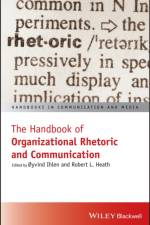
A one-stop source for scholars and advanced students who want to get the latest and best overview and discussion of how organizations use rhetoric While the disciplinary study of rhetoric is alive and well, there has been curiously little specific interest in the rhetoric of organizations. This book seeks to remedy that omission.
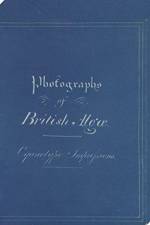
Shortly after William Henry Fox Talbot announced his invention of photography in 1839, the dedicated amateur botanist Anna Atkins, daughter of a prominent British scientist, began to experiment with the new medium. In 1843 she turned to her friend Sir John Herschel's recently discovered cyanotype process to publish her growing collection of native seaweeds-a daring way to introduce photography into book illustration. At regular intervals over the next decade, Atkins printed and issued these bracingly modern, deeply-hued photograms to her "botanical friends" in the form of hand-stitched fascicles of a book she entitled Photographs of British Algæ: Cyanotype Impressions.The first book to be illustrated by photography and the earliest sustained application of photography to science, British Algæ is a landmark in the histories of publishing and photography. Of the nearly two dozen substantially complete or partial copies known to exist, each is distinct in its appearance and often in its number and arrangement of plates. The set of 13 parts she gave to Sir John Herschel-now in the Spencer Collection of The New York Public Library-is especially important and was carefully preserved by generations of the Herschel family exactly as Sir John received it. This sumptuous facsimile edition reproduces the recto and verso of each plate, presenting the work as its creator intended: as bound volumes to lingered over, studied and admired, page by extraordinary page.Co-published with The New York Public Library
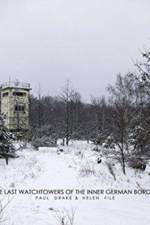
This book is the evocative four-year journey of Paul Drake and Helen File into one of the most secretive and heavily fortified borders in the world. For 37 years over 800 watchtowers monitored the surveillance along the Inner German Border; they were the first line of defense against the West and one of the most infamous sites of the Cold War. Continuous games of binocular warfare were carried out by both NATO and the Warsaw Pact across the 500m Schutzstreifen or, as it was known in the West, "The Death Strip."In the ten months between 9 November 1989, when the borders of the German Democratic Republic fell, and the unification of Germany in 1990, over 700 watchtowers were demolished along the Inner German Border. Through meticulous research and with assistance from guards stationed along the border and Berlin Wall, Drake and File have compiled a concise documentation on the watchtowers of the former border. Once an inaccessible and isolated area, the border is now the largest nature reserve in Germany. Drake and File illustrate these remnants of the Cold War in a compelling set of images showing the remaining 75 watchtowers in their current states.
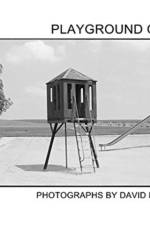
In 2003, as David Freund was driving to Missouri to see a 102-year-old friend, she died. Reflecting on their meeting when he was a child, he stopped in Illinois to photograph an old playground. Besides swings, teeter-totters and slides, there were cannon, war memorials, a picnic area, a cornfield, and a baseball field; evocative and telling, a site of community and play. The moment launched a two-year odyssey to find and photograph such places. Freund soon realized playgrounds were an endangered species. In cities, because of safety and liability concerns, their apparatus, familiar to many childhoods, had largely been supplanted by bright structures of multicolored plastic and enameled steel. Thus, Freund focused on small towns where tradition, inertia and budget often permitted early playgrounds to survive. These were usually unoccupied, so children rarely appear in Freund's photographs, although alluded to in footprints, worn paint, and ruts under swings. Weather, light and viewpoint contribute to suggested narratives, yet the direct preservation aspect of the project is clear. As with other species that vanish, one day they are everywhere, the next, gone.
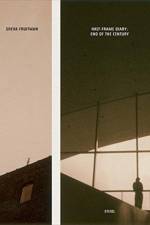
Half-Frame Diary: End of the Century presents a selection of photos made between 1998 and 2000 from artist Sheva Fruitman's decades-long photo-diary project. These images idiosyncratically mirror everyday life at the end of the twentieth century, captured by Fruitman as she traveled the world.Composed as diptychs, the half-frame photos are pairs, with two vertical images in the space of one 35mm frame. Resonances between these sepia-toned streetscapes and interiors link their original contexts and create episodes from layered, incomplete narratives: be it bunches of ripe bananas played against a tarot reader's neon sign of a palm, changing reflections in a shop window, or the linear patterns of buildings and a cherry picker versus those of a subway platform. These once timeless scenes, now published for the first time, are remnants of a not-too-distant world that no longer exists.
Confiscation Law Handbook, Second Edition provides practitioners with a practical, user-friendly guide to this complex area of law. The clear analysis of legislation and proliferating case law allows principles to be quickly identified and understood. A stage by stage explanation of the procedural requirements ensures that required forms and responses are completed well and within time limits. Since the first edition, there have been a number of significant developments, most notably in case law at Supreme Court level which has had a profound impact on the calculation of benefit and the need to achieve proportionality and compliance with the Human Rights Act. There have also been cases, again at Supreme Court level, on apportionment and double recovery. Cases covered in the second edition include: Criminal confiscationSupreme Court case of R v Waya (2012) which has a profound impact on the calculation of benefit and the need to achieve proportionality and compliance with the Human Rights Act 1988 and Article 1 of the First Protocol of the European Convention.Supreme Court case of R v Ahmad and Field (2014), a crucial case on apportionment and double recovery.Court of Appeal case of Shakeel Ahmed (2012) the CA largest ever confiscation order overturned.Civil recoveryPerry v Serious Organised Crime Agency (2012) implications to extra territorial jurisdiction of the Part V powers.
This book analyzes the philosophical "voyages" of the Muslim self through close readings of 20th century South Asian works in the Muslim modernist, Marxist, and postcolonial intellectual traditions. It demonstrates how the legacies of Marxisms and anti-colonial humanisms have shaped Muslim Anglophone literatures of the present.The book concentrates on Indo-Pakistani political and literary forms related to subjectivity by writers who lived in Britain, or who are British, such as Muhammad Iqbal, Ahmed Ali, Zulfikar Ghose, Hanif Kureishi, and Kamila Shamsie. Building on Brennan's new theory of anticolonialism, it emphasizes neglected relationships in both postcolonial and materialist conceptions of subjectivity, such as the dialectic between oral culture and religion.This book offers groundbreaking and innovative new perspectives, consituting a shift to a new generation of postcolonial studies focused on humanism. It will be of interest to students and scholars in Geography, Asian Studies, Literature, and Cultural Studies.
Abonner på vårt nyhetsbrev og få rabatter og inspirasjon til din neste leseopplevelse.
Ved å abonnere godtar du vår personvernerklæring.