




Gjør som tusenvis av andre bokelskere
Abonner på vårt nyhetsbrev og få rabatter og inspirasjon til din neste leseopplevelse.
Ved å abonnere godtar du vår personvernerklæring.Du kan når som helst melde deg av våre nyhetsbrev.

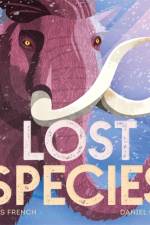
Journey back in time and meet some of the world's most extraordinary lost creatures - from the awe-inspiring woolly mammoth and the ferocious Spinosaurus to the shy Chinese river dolphin and incredibly rare Pinta Island tortoise 'Lonesome George'.
The perfect book for introducing large issues like protecting the environment and and homelessness to a young readership. The book explores the places we call home, building up from our houses, streets, cities and countries to our ultimate home - the Earth. Prize-winning illustrator Hanane Kai sensitively shows how it's important to care for the people we share the planet with and to protect the planet itself.
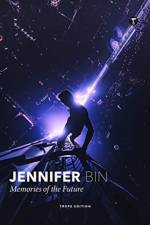
Memories of the Future is a dazzling, fearless look at the futuristic landscape of modern Shanghai as seen by emerging photographer Jennifer Bin.
Explore the town of Kendal in this fully illustrated A-Z guide to its history, people and places.
A look at Eastern Scotland's lost and in some cases still extant railway structures and feats of engineering
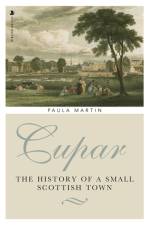
Cupar was created a royal burgh in 1328, though its name is Pictish, suggesting that there had been an important settlement there since the 7th or 8th century if not earlier. Until the 16th century it was among the richest royal burghs in Scotland, but declined in the 17th century, its trade handicapped by its distance from the sea.
Der dritte Band des Handbuchs Anarchismus bietet einen umfassenden Überblick über die Regionen, in denen der Anarchismus wirkmächtig war.
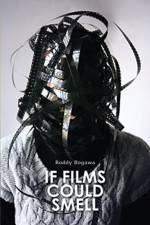
Capturing the 1990s independent film scene and art world through a collection of interviews and writings by Roddy Bogawa along with photographs and other artifacts from his archiveIf Films Could Smell is at once an assemblage of interviews and writings by Roddy Bogawa (born 1962) from his nearly 30 years as a filmmaker and artist, and a time capsule of the independent film scene and art world of the 1990s as told through artifacts, diary entries, letters, emails, photographs, script notes and assorted bric-a-brac from Bogawa's archives. As with many of Bogawa's films, it's a collage that doesn't try to hide its seams, a jumble of ideas both realized and unrealized, an exploded diagram and a manifesto. The title conveys his interests in personal and cultural memory, and how these intersect with one's identity. Bogawa's work has been variously described as "experimental," "Asian American" and "independent cinema." This volume lays out these labels and dissects them, sometimes humorously. Straddling genres, If Films Could Smell is a document of possibility and provocation.
Clinical Handbook of Myofascial Pain aims to fill a void in the current myofascial pain literature. It will provide clinicians with a comprehensive problem-solving handbook that can be used for patients with a variety of pain problems. It provides a new introduction to integrating pain sciences into manual therapy practice. The book is divided in different sections based on region (head/neck/face) and associated pathology and dysfunction (i.e. headaches, low back pain, etc.). This will assist clinicians to quickly consult the publication especially for more complex patient presentations. The publication will give very practical options to better manage patients using a combination of manual therapy approaches, dry needling, and education. For the first time, dry needling and injection approaches will be verified and better supported with high quality sonography images.The book will provide a practical clinical reference for all those practitioners working with patients with myofascial pain. These include physical therapists, massage therapists, body workers, chiropractors, occupational therapists, athletic trainers, neuromuscular therapists, Rolfers, perhaps some physicians. It is suitable for use by those studying on myofascial pain courses, for general technique reference, at schools, and in clinical practice.
This book challenges the orthodox approach to the analysis of unjust enrichment, developed by Peter Birks and adopted by the House of Lords and Supreme Court in a series of later decisions.It does so in 3 ways. First, the book argues that the Birksian model fails to fit some typical situations unless the language of the formula is stretched to the point of being artificial. For example, "enrichment" is now just a term of art.Secondly, the Birksian model fails to provide a normative justification for the courts awarding recovery in unjust enrichment claims. For example, it offers no explanation on the basis on which an "unjust factor" should be categorised as "unjust". Thirdly, and most fundamentally, the book rejects the Birksian approach of adopting a top-down academic theory of unjust enrichment and ignoring the authorities which pre-date its adoption by the House of Lords. Instead, the book seeks to arrive at a theoretical understanding of unjust enrichment by tracing the historical development of this area of the law through the authorities and commentaries from the 18th century onwards, and analysing the reasoning of the judges and scholars.
Abonner på vårt nyhetsbrev og få rabatter og inspirasjon til din neste leseopplevelse.
Ved å abonnere godtar du vår personvernerklæring.