









Gjør som tusenvis av andre bokelskere
Abonner på vårt nyhetsbrev og få rabatter og inspirasjon til din neste leseopplevelse.
Ved å abonnere godtar du vår personvernerklæring.Du kan når som helst melde deg av våre nyhetsbrev.

This book addresses the social, commercial, legal and cultural relationship between fashion and its protection through an interdisciplinary approach to the application of the law.
Focusses on the individual work of successful Swiss architects Bonhote Zapata. Text in English and German.
This book is the career and life story of the A&P heir and American businessman Huntington Hartford (1911-2008), as told by his daughter Juliet Hartford. Huntington Hartford's grandfather founded the Great Atlantic & Pacifi c Tea Company (A&P supermarket) in 1859 and his two uncles built it into the world's largest retail empire. A&P became a beloved staple of American life and Huntington Hartford was a symbol of it.Using a wealth of photographs and visual documents including press clippings and advertisements, the book traces Hartford's life from a boy in Newport, Rhode Island, to his years at Harvard where he was known as the world's richest college boy, his time in the US Coastguard during World War II, his Hollywood career producing movies and opening the Huntington Hartford Theatre, to his founding of the oil shale company Tosco and developing Paradise Island in the Bahamas in the 1960s. In Juliet Hartford's words Huntington Hartford was a cultural and popular hero, "always at the forefront and on the cutting edge. He created a hurricane and walked straight through it, and he changed the world."
The Central Adriatic region of Picenum is a relatively unknown area of Roman and pre-Roman Italy, but it has a rich material culture comparable with that of the Etruscans and spanning the first millennium BCE (ca. 900-268 BCE). This book explores the sacred landscape of the region and interprets the evidence for Picene religion for the first time. The book explores the relationship between the material evidence (votive deposits of figurines and pottery, monumentalised inscriptions), the topographical landscape and the people who used them. It considers how the Picenes may have experienced their environment and given it meaning, with a particular emphasis on sacred sites which have a mountain peak, water feature or cave as their cult focus. The volume will be innovative in bringing together (predominantly Italian) scholarship on varied aspects of Iron Age and early Roman religion, interpreted via a phenomenological approach. This approach reconstructs the physiological responses people would have had to their sacred sites, in particular, how they were experienced through sight, hearing, smell, taste and touch. Through a series of case studies the volume examines the places people imbued with significance, how they represented their gods, and their reasons for investing in religious rituals.
This book analyses legal education from a pedagogical perspective. Using Canada as a casestudy, it sets out the dominant teaching and evaluation methods used in law schools and explains the factors that influence individual law teachersâEUR(TM) pedagogical choices, including their conceptions of teaching, institutional factors such as class size and course type, institutional cultures that insufficiently value teaching and learning, and student expectations and evaluations. The work suggests that learning should be at the centre of legal education, and demonstrates how the lack of explicit attention to learning has many significant consequences. It proceeds to recommend ways in which we can improve legal education by putting learning at the centre of it, both at the levels of the individual teacher and the institution. Whether law programmes aim to educate citizens and jurists or train lawyers, improving student learning will ensure that all of those aims are met. It is hoped that putting learning at the centre of legal education might also alleviate the legal professionâEUR(TM)s concerns about legal education, numerous law professorsâEUR(TM) dissatisfaction with the teaching aspect of their job, and studentsâEUR(TM) lack of motivation and satisfaction.
This book presents mathematical, programming and statistical tools used in the real world analysis and modeling of financial data. The tools are used to model asset returns, measure risk, and construct optimized portfolios using the open source R programming language and Microsoft Excel. The author explains how to build probability models for asset returns, to apply statistical techniques to evaluate if asset returns are normally distributed, to use Monte Carlo simulation and bootstrapping techniques to evaluate statistical models, and to use optimization methods to construct efficient portfolios.
This book presents mathematical, programming and statistical tools used in the real world analysis and modeling of financial data. The tools are used to model asset returns, measure risk, and construct optimized portfolios using the open source R programming language and Microsoft Excel. The author explains how to build probability models for asset returns, to apply statistical techniques to evaluate if asset returns are normally distributed, to use Monte Carlo simulation and bootstrapping techniques to evaluate statistical models, and to use optimization methods to construct efficient portfolios.
This book examines the interplay of professional norms and political accountability in the process of making decisions about whether, how, and how much debt governments should incur. Particular focus is given to the divide between official stipulated norms and implicit negotiated norms shaped by stakeholder expectations.
Modern science has revealed how we can train our brains to make us better at sport and break the 10,000-hour rule
This book offers a Gramscian sociological analysis of the electoral rise and 'fall' of the British National Party (BNP) in the Outer-East London Borough of Barking and Dagenham. Through a critical evaluation of the political-scientific theories that have so far dominated attempts to explain the electoral performance of far right parties, this book will assess the significance of the relationship between political parties and wider civil society.Offering an analysis of the BNP's rise and 'fall' at both the local and the national level, this book will be of interest to students and scholars in the areas of British politics, party politics, and fascism and the far right.
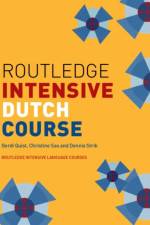
Includes a foundation course in Dutch that is designed for those with no previous knowledge of the language. This work provides students with activities, and draws on a selection of source material from many different media. It develops a working knowledge of the structures of Dutch and practices the four skills of language learning.
During the last decades there have been important changes in the ways that goods are produced and distributed. This book analyzes the spatial outcomes of these changes by addressing key questions such as which places are taking advantage of this new configuration of flows? How do the firms in such places use transport and logistics to increase their power over other firms? This book moves geographically from the global to the local and examines maritime transport and ports as well as logistics and road transport. The results are relevant for any countries where logistics and transport are central to regional development initiatives.
The main objective of the book is to show how the village in Pakistan is intercalated in the grid of national and international capitalism and the impact this feature has on how people work, conduct politics, look at and interact with the world, and the arrival of `development¿ specialists in rural Pakistan.
Providing previously unpublished texts - both in their original Italian and modern English translation - relating to the ceremonial entry of the dogaresse into Venice in 1557 and 1597, this volume provides a fascinating window into Renaissance courtly culture.
This book addresses the issues surrounding the proposed implementation of the new approach to environmental protection posited by the EU Integrated Product Policy initiative and considers some of the key points relating to successful enforcement and the implications for the existing framework of environmental regulation.
The proposed book provides an in-depth analysis of the current legislative (formal and informal) framework and suggests further improvements for effectively combating corruption in international trade.
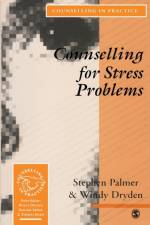
Includes guidelines that show practitioners how they can give their clients the most effective help for their stress problems using a technically eclectic and systematic approach. This book discusses the symptoms and causes of stress and outlines a framework in which stress problems can be understood.
A brilliant collection of the best poker short stories from writers such as Anthony Holden, Patrick Marber, Neil Pearson and Jennifer Tilly
The new edition of this detailed and authoritative practitioner text on the taxation law of the European Union.
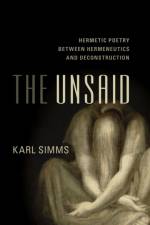
Exploring hermeticism in English, American, and European poetry, this is the only book to discuss hermetic poetry from the Renaissance to the present day. This highly original study makes a significant theoretical advance in seeing the interpretation of hermetic poetry as a paradigm of understanding as such.
Abonner på vårt nyhetsbrev og få rabatter og inspirasjon til din neste leseopplevelse.
Ved å abonnere godtar du vår personvernerklæring.