







Gjør som tusenvis av andre bokelskere
Abonner på vårt nyhetsbrev og få rabatter og inspirasjon til din neste leseopplevelse.
Ved å abonnere godtar du vår personvernerklæring.Du kan når som helst melde deg av våre nyhetsbrev.

With over 500 stickers, fun-filled activities, jokes and pranks, this is the ONLY activity book you'll need this for Easter and beyond!
Covering recent developments in the field, this updated text provides an introduction to the ideas and techniques of differential geometry and topology. In this edition, the applications have been greatly expanded and additional problems have been included. The author examines anomalies in gauge field theories, bosonic string theory, Brane-World cosmology, Seiberg-Witten invariants, and topological quantum computing. A solutions manual is available for qualifying instructors.
This is an innovative book detailing the many challenges of bringing nanomedicines from the bench to the market. Through conversation, stories, descriptions, and personal accounts with leading entrepreneurs who have strived and overcome many of these barriers, readers are given a detailed outline of how nanomedicine can create future realistic solutions in medicine and health. The book takes a strong "how and why" approach.
Contemporary interest in memory projects has much to do with a profound change of our sense of time and space, motivated and caused by factors such as technological change, the information revolution and new global trends in consumption and mobility. With information about all kinds of historical events now freely available, what can geographical sites communicate that is substantially different to that available in other forms (such as books, video, and internet)? As three-dimensional places upon which a certain kind of cultural ritual is enacted, historical sites are more complex than a written or visual source, and less easy to read. The genius loci - the spirit of the site - is often hard to describe, but doubtlessly felt to be perceptible. This essence makes people feel that they share past experiences; as if being in the same space once inhabited by others can, to an extent, collapse time and provide direct access to history. To explore these themes, Paul Williams uses insights from his professional work over the past decade in planning and interpreting heritage sites worldwide located on site-specific places. Each chapter analyses a separate project relating to slavery, the Cold War, political persecution, and terrorism to form a base for an interwoven comparative study and broader discussion. Taken together, they show how concepts of Les Lieux de Mémoire, to use Pierre Nora’s now 30-year old founding concept, have evolved in the twenty-first century.
With the abrogation of the Zen Buddhist Fuke sect during Japan’s modernisation process in the late nineteenth century, the raison d’être for the shakuhachi (Japanese vertical bamboo flute) as a spiritual tool for mendicant monks suddenly vanished. Thereafter, playing the shakuhachi changed from spiritual practice to professional musicianship or musical hobby. The fact that the instrument had been modified and ’improved’ has been a well-kept secret. The old style shakuhachi, now named jinashi shakuhachi, became a marginalised instrument for eccentrics. However, during the past decade it has gained popularity, especially outside Japan, where it is considered to be ’the real thing’ as opposed to the modernised jinuri shakuhachi. Kiku Day examines how the jinashi shakuhachi, although constructed according to the principles current prior to the Meiji Restoration, itself has been modified to adapt to the needs of modern players. In order to place the instrument into the modern world in its own right, the author, a professional jinashi shakuhachi player, describes her recent collaboration with five international composers on a performance project with the aim of creating a new repertoire. This process of cross cultural creation is described against the background of action research, Theory U, and the theory of flow.
Children and young people's food practices and lifestyles are perhaps more visible and contested than ever before. Taking a Science, Technology and Society (STS) perspective, this book offers a groundbreaking and comparative research-based study on how recent 'healthy meals' policies are affecting children's practices both in the UK and in Italy. By looking at the trajectories of connections and disconnections that food makes with children's bodies, other animals and plants, and by examining how these connections are enacted in children's food practices, the book offers insights in the complexities of children's learning about food and in the bio-politics around school meals in the UK and in Italy. It is essential reading for scholars, policy makers and practitioners working in food studies, education, children and youth studies, environmental studies and dietry studies.
Lawyers, learning and the challenge of corruption is designed to clarify our state of knowledge of the pedagogy of this field and create a reference and resource for teaching the generation of lawyers who face the challenge of modern corruption. It develops clear keys to understanding the challenges of an area that is the Wild West of jurisprudence, frequently without workable boundaries of jurisdictional and substantive law. This is a new and rapidly developing area of learning and practice. As such the book examines the experiential elements of teaching, anticipating the need to address the demands of practice. It presents and applies new research and examines emergent international literature representing many disciplines and different spheres of activity. It also contains material to act as exemplars for the development of authentic case studies and other pedagogical devices. The authors draw upon the historical antecedents of corruption, including influences such as colonialism, deregulation and globalisation to provide vital background. The book is informed by a specifically selected international consultative group of practitioners and policy to ensure that the analyses are valid and reflect experience in the real world. It is also supported on the website: www.teachinglegalethics.org where complementary materials are provided along with an interactive discussion facility provided for academics and practitioners to discuss and report on their use of the materials.
Explores the processes and practices involved in the militarization and de-militarization of men and masculinities.
It has been nearly 20 years since Haglund and Sorg introduced taphonomy to the forensic community as a dynamic, multidisciplinary approach to understanding postmortem change. In the past 2 decades, taphonomy has grown significantly in both its importance and its range of applications. This Second Edition reflects two decades of forensic taphonomy research and application. Fully updated with DNA implications, chemical variability in decomposition, microenvironments and a host of topics, the book includes over 50 chapters contributed by top scientists in the field and will serve as the quintessential, must-have resource for pathologists, death investigators, and forensic anthropologists.
Separating facts from myths, his book brings together the widely scattered information that is required to understand firearm related deaths and injuries. It covers the development of firearms and the evolution of relevant government agencies and regulations. It provides a detailed examination of deaths and injuries associated with firearms organized by age. The author also discusses the collection systems and the use of forensic epidemiology methodology.
This book covers the fundamentals, designs, technologies, and measurements of the building blocks of monolithic radio frequency (RF), microwave, and mm-Wave integrated circuits for applications in modern communication and radar systems. It entails an in-depth presentation of all elements needed to design monolithic integrated circuits focusing on the use of III/V semiconductor technologies such as GaAs, GaN, and the like. It includes fundamental design principles and design methodologies and techniques as well as the choice of technology to be used.
First published in 1943. Routledge is an imprint of Taylor & Francis, an informa company.
Written as an aid in obtaining information to solve factory problems, this text explains how to work with the information systems staff to retrieve factory data from the multiple and often incompatible legacy systems they typically reside in. The author examines the three sources of information: direct observation of the situation; interviews with knowledgeable managers, engineers, or operators; and existing data. By presenting solutions for acquiring information, ways to analyze the information, and systems of presentations, the book offers tricks to make the tangle of obsolete and inconsistent legacy systems produce timely answers.
The third edition of this highly successful atlas has been fully updated to provide a truly comprehensive, one-of-a-kind resource. The ten expanded sections feature a total of 140 maps, all of which have been revised to give the most accurate picture of the world language situation, and redesigned for greater ease of use.With an emphasis on the contemporary world linguistic situation, the Atlas of World Languages features:* new information on population density, immigrant language use, and contemporary linguistic practices as found in global business activity, diplomatic work and internet language use * over 25 brand new maps, plus a selection of pie charts indicating language diversity in key cities around the world* an entirely new Meso-American section featuring 12 maps giving both historical and contemporary language informationDeveloped by the leading experts from around the world, this new edition of the Atlas is undoubtedly an important and unique work in its field.
The classical Greek symposion provided a unique social opportunity for aristocratic, male elites to gather together in small groups, to drink, sing, recite poetry and discuss a range of topics within a relaxed atmosphere. Focusing on the functions that images and songs played within the context of the Late Archaic symposion, this book examines both those who were actively included in the event, and those who were irrevocably excluded from it. The analysis leads to numerous innovative interpretations, relating not only to the institution of the symposion itself and its relationship with Archaic Athenian society, but also to wider issues relating to definitions of democracy, aristocracy, equality and inequality in a time of profound social and political change. Divided into five chapters, the book begins by exploring the setting and course of the symposion, reconstructing its usual circumstances, the backgrounds of its participants, its principal rules and its various entertainments and activities. Chapter two then deals with the various functions of sympotic vases, offering an analysis of the words inscribed on drinking vessels. Chapter three is devoted to the interactions between songs and pictures, and considers the possible effects of painted pottery on the symposiasts. In chapter four, the correlation between the political and social changes of late sixth- and early fifth-century Athens, and the ambitions of the artists who produced Athenian vases is discussed. It argues that the latter group, though excluded from the symposia, often behaved as if they were participants by representing themselves as revelers among the aristocratic members of Athenian high society. The final chapter jumps forward in time, to explore the influence of the symposion on Roman (eastern and western) society around the first century A.D and, in particular, how the new Christian communities dealt with the problem of inequality at table. As well as considering differences between the Greek symposion and the Roman convivium, the chapter focuses on the different views expressed on the convivium by pagan, Jewish and Christian cultures. First published in Italian in 2010, this translated and updated addition will be welcomed by both classicists, and those interested in the history of the reception of Greek culture by later generations.
Examining the rise of Irish crime novels in the twenty-first century, Maureen Reddy argues that writers such as Ken Bruen, Benjamin Black, Tana French, Niamh O¿Connor, Cormac Millar, Stuart Neville, Brian McGilloway, Declan Hughes, and Declan Burke are collectively working through the problem of defining Irishness and grappling with deep anxieties about a society that is rapidly changing in the face of a globalized, late capitalist culture.
A common ethical dynamic between Jane Austen and George Eliot and the realist novel, Rose Pimentel argues, both emerged from an emphasis on reflection as introspection that was widespread in the eighteenth century. She reads both authors as part of this reflective tradition, placing their novels in a rich and reflective dialogue that views neither the reflective tradition nor the development of the novel as teleological.
Learn the proper tools, techniques and methods used by the pros, along with many tips and tricks to achieving amazing character creations. Readers will also gain an understanding of the processes, workflows and methods used in a studio pipeline from an Art Director's point of view. This book demonstrates multiple approaches that take you through processes using a variety of top tools used by professional game artists, including comparing the results. The optimization methods demonstrated in this book are tried and true, and game production tested. Included are student and instructor resources as well as video tutorials.
Visual Literacy is the ability to interpret, negotiate, and make meaning form information presented in the form of an image (be it font, photographs, paintings, or infographics). While most Visual Literacy textbooks concentrate on theory, few concentrate on application, and most texts are outdated, not even covering the impact that technology has had on the image. Show What You Mean is the answer to these obsolete titles, combining abundant theory, with relevant practice, updated to meet today's digital, visual culture. This book surveys the basics from how one perceives and interprets an image to how one constructs and uses an image.
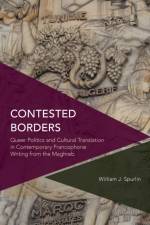
Contested Borders broadens understandings of dissident sexualities in Africa through focusing specifically on the Maghreb. It examines new representations of same-sex desire emerging in new francophone life writing, memoir, and literature from Algeria, Morocco, and Tunisia.
In the conventional wisdom the scientist is seen as a data gatherer, but scientific creation is really more complex and inspiring. This beautifully written work was hugely influential when first published and continues to inspire today. As V.S. Ramachandran says, 'it makes science seem like a grand, romantic adventure yet also fun'.
Abonner på vårt nyhetsbrev og få rabatter og inspirasjon til din neste leseopplevelse.
Ved å abonnere godtar du vår personvernerklæring.