









Gjør som tusenvis av andre bokelskere
Abonner på vårt nyhetsbrev og få rabatter og inspirasjon til din neste leseopplevelse.
Ved å abonnere godtar du vår personvernerklæring.Du kan når som helst melde deg av våre nyhetsbrev.

Shigeo Shingo was the foremost Lean methods authority and documenter. His books were the first analyses of the Toyota Production System.The Shingo Prize, which is administered by the Shingo Institute, was established in 1988 and endorsed by Dr. Shingo.The Shingo Prize is a global program that acknowledges enterprises that excel in Lean culture, systems, and results. The model upon which the Shingo Prize is based, as well as its guiding principle and identification of related insights of enterprise excellence (namely that ideal results require ideal behavior, beliefs and systems drive behavior, and principles inform ideal behaviors) have evolved from Shingo's texts and anlyses of excellence.
In this book, the author presents recent, somewhat unexpected, findings on the thriving cult of bone relic stupas and the ritual role of the materiality of the dead amongst contemporary Jains. Based on extensive fieldwork in India, clear evidence is offered for the ubiquity of bone relic stupas and relic veneration across the Jain sectarian spectrum, although classical Jain doctrine rejects the worship of material objects.
This book offers an original approach to the theoretical debate between universalists and relativists in terms of human rights and cultural diversity. Michael Addo demonstrates how a distinct legal standard of human rights exists from over half a century of practice in the international human rights institutions, and that this legal approach recognizes the complimentarity between modern human rights norms and cultural diversity. Referring to this as the compatibility approach, the book shows how these institutions have successfully developed standards and principles for reconciling cultural diversity with universal human rights ideals set out in international human rights law.
Orthodox Pilgrimage in Contemporary Russia is a systematic attempt to consider the mixture of piety, politics, and history at work in the revival of post-Soviet Orthodox Christian pilgrimage. Stella Rock contributes to our understanding of this phenomenon by analyzing concepts of authenticity, invented tradition, and sacredness; the relationships between travel and place, heritage, and identity; and the role of institutions in the development of pilgrimage practices.
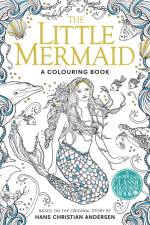
A fabulously decorative colouring book based on Hans Christian Andersen's iconic tale The Little Mermaid.
This book explores the self-proclaimed Islamic State¿s (IS) perspectives of and violence against women.
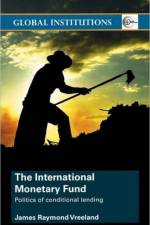
Provides an introduction to the International Monetary Fund (IMF) and an overview of its debates and controversies. This book addresses questions, such as: Where did the IMF come from? What does it do? Why do so many governments participate in its programs? And what are their effects? How can we best reform this key global institution?
Explores the distinctive forms of women's political engagement in democratic politics in contemporary India. This book provides an example of how women have adapted to the modern political climate in which underdevelopment and inaccessibility of state institutions often make this role essential in everyday life.
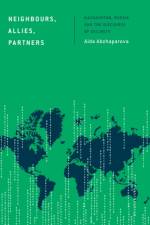
This is the first book to apply discourse analysis to the nation state of Kazakhstan. It offers an original and innovative contribution to the field of International Relations, Critical Security Studies, and Central Asian Studies, providing a unique perspective on the construction of Kazakhstani Identity in relation to Russia.
Colour your way to an inspired life with this selection of words full of meaning, beautifully designed with intricate fonts and backgrounds to give you hours of colouring-in relaxation.
This book provides a basis to interpret acoustic emission (AE) as damage processes in stressed rock, with applications to stress measurements, size effects, source mechanisms, and fracture mechanics. Basic features of an AE monitoring system will be covered, with some background on the sensor, pre-amplifier, and data acquisition. Several examples of AE monitoring will include both lab and field applications ranging from element testing to hydraulic fracturing. Intended for geologists, geophysicists and mining, petroleum and civil engineers dealing with rock stress and rock damage processes.
"This is an extraordinary work--comprehensive, penetrating in its analysis of freedom, and deeply challenging. The perspective is strikingly original and the voice is utterly distinctive. Julius's book is an important contribution to its subject and will be widely read by moral and political philosophers."--Charles Beitz, Princeton University"A stylistic gem, Reconstruction is utterly original--this is a book with a voice all its own. It is an exhilarating read and we would be poorer without it."--Niko Kolodny, University of California, Berkeley
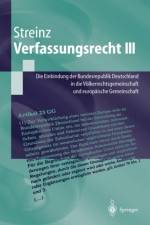
Die Verzahnung des Verfassungsrechts mit dem internationalen und supranationalen Recht gewinnt zunehmend an Bedeutung. Im Europarecht sind dessen Grundzüge daher als Pflichtstoff eingestuft. Das Lehrbuch behandelt lern- und praxisgerecht die Schnittstellen zwischen Verfassungsrecht und Völkerrecht/Europarecht, speziell die verfassungsrechtlichen Grundlagen der Einbindung Deutschlands in die Völkerrechtsgemeinschaft. Im Mittelpunkt stehen aktuelle Fragen wie Gewaltverbot, Interventionspolitik und Friedenspflicht, internationale Strafgerichtsbarkeit. Eine Übersicht über besonders prüfungsrelevante Bezugsmaterien ergänzt den Stoff.
Unlikely recipes introduced by Dracula in a book with space to record your own plus a high quality cotton apron to preserve your clothing when things get a bit messy
A look at The Highlands' lost and in some cases still extant railway structures and feats of engineering
This volume, which is based on the Terry Lectures delivered at Yale University in 1935, deals with the problem of the unity of natural knowledge. It considers the cleavage between the inorganic and biological sciences, and between the theology of intelligibility and that of inexplicability. Under the heading "The Nature of Biological Order" it considers some of the opinions which biologists, physicists, and philosophers hold regarding the form of organization which living things exhibit. The discussion is continued under the headings "The Deployment of Biological Order" and "The Hierarchical Continuity of Biological Order," and the conclusion is reached that "the profounder our insight into the nature of organic form, the clearer does the unity of science become." "It is an erudite volume, intended for the serious student of the philosophical aspects of biological science. To such it brings the product of a mature and discerning mind, well-versed in all the devious ramifications of a profoundly significant vein of thought." -Scientific Book Club Review
Dr. Jennings states that his purpose in The Universe and Life is to "try to show what positive outlook on life and the world is given by the study of biological science; and how this differs, if at all, from the outlook based on physics, or from the outlook presented in some of the religions of the world." He believes that the study of biology aids in getting a unified view of the universe and of man in his relations with it, and that it helps particularly in the problems of managing life, the problems of conduct, and in the determination of our attitude toward the world. Did life always exist? Does development produce what is really new? Do feelings, ideas, and knowledge have a function in the world? Was what occurs today predictable before life came into the world? Is man indispensable to the advancement of life? Does the study of biology lead to the belief that life tends toward a goal that is already existent? Does it lead to the divine right of the aristocrat? Do individuals continue to live after the event we call death? Professor Jennings sets forth his answers to these and other provocative questions in simple and clear-cut style, and concludes that life "is progressing in the present as it has in the past. In the future it may be expected to advance as it has done in the past-to heights that no one can predict, to which no one can set limits."
Abonner på vårt nyhetsbrev og få rabatter og inspirasjon til din neste leseopplevelse.
Ved å abonnere godtar du vår personvernerklæring.