






Gjør som tusenvis av andre bokelskere
Abonner på vårt nyhetsbrev og få rabatter og inspirasjon til din neste leseopplevelse.
Ved å abonnere godtar du vår personvernerklæring.Du kan når som helst melde deg av våre nyhetsbrev.

This book disentangles the complex processes of democratic transitions where regime change also requires a shift from a command economy to one based on private ownership. The author focuses on the liberalization of Cuba in the 21st century, and how Cuba's economic identity crisis directly affects the daily lives of its citizens.
Inside one of the world's biggest humanitarian crises
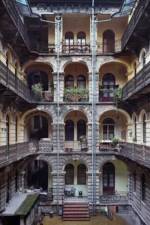
Between 2014 and 2016, Yves Marchand and Romain Meffre visited 400 of the more than 4,000 internal courtyards in Budapest. Their large number and variety of styles incorporating different facets of classicism and modernity make them a remarkable architectural phenomenon-a charming second city within the city.Marchand and Meffre systematically documented these courtyards, producing a typological series that describes this particular form of collective housing and reflects the city's tumultuous history, its changing political regimes and economy. Budapest Courtyards allows us to delight in the crumbling grandeur of the courtyards, and observe the developments and personal strategies of adaptation which they evidence.
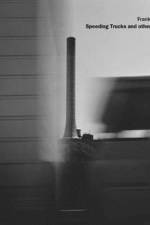
In the summer of 1971 Frank Gohlke moved with his wife and young daughter from Middlebury, Vermont to Minneapolis, Minnesota. His vocation as a photographer had begun four years prior, but he had yet to define the subject that would occupy him for the next 45 years: the landscapes of ordinary life.The three bodies of work brought together in Speeding Trucks and Other Follies were all made between Gohlke's arrival in Minneapolis and the end of 1972 when he began photographing grain elevators, a project that first established his renown. In different ways these early series obliquely describe Gohlke's process of adjustment to his new surroundings.The "Speeding Trucks" photos of the first section began when Gohlke noticed how the shadows of the elm trees that once lined most Minneapolis streets were momentarily materialized on the bodies of passing trucks. The travel trailers in the second section were all found in a Minnesota State Park on one of the family's infrequent camping trips, while late-night rambles through Gohlke's Minneapolis neighborhood led organically to his series of dramatic night pictures in the last section. Notwithstanding their various subject matter, Gohlke's photos in this book collectively perform a kind of timeless alchemy on the everyday stuff of visual experience.
This handbook provides a comprehensive survey of codes and sequences, ranging from mathematical foundations to applications in various areas and bridging the gap between theory and practice. Each chapter contains the contributions of leading researchers in the field.
SAMPLING TECHNIQUES FOR MODERN MUSICIANS
This volume covers significant and latest global research on mycotoxins and their prevalence in a wide variety of food and feed commodities.
In the first edition of this book, the authors introduced a method to measure and improve on information flow for knowledge workers in the modern office. They showed how to adapt the factory-derived Lean body of knowledge into today''s service economy and highlighted several useful software tools and trends in collaborative and cloud services. Since the original publication, several other tools have emerged that more closely match the ideas in the book. This second edition builds on its popular predecessor with updates to the software sections and provides refined predictions for the Lean office.
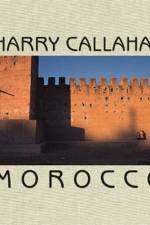
One of the foremost American photographers of the twentieth century, Harry Callahan explored the expressive possibilities of both color and black-and-white photography from the outset of his career in 1938. Following his retirement from teaching at the Rhode Island School of Design in 1977, however, he decided to dedicate his practice exclusively to the color medium and pursue travel to foreign locales. The twenty-three photographs in this publication, taken in Morocco in 1981, are the product of Callahan's shift to a strictly chromatic palette and demonstrate his continued interest in the visual intrigue of the everyday urban landscape and the passersby who occupy it. Depicting his familiar subjects of architectural facades, random patterns of street activity, and isolated fi gures lost in thought, the images transcend Morocco's exoticism by exploring the formal and pictorial potential of the country's environment.
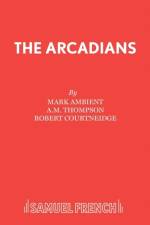
Who could tell, in the first decade of the twentieth century, what strange adventures might befall those who ventured to travel by the new-fangled aeroplane? A forced landing, perhaps, in some long-forgotten land where time has stood mercifully still. James Smith, of the well-known London catering concern, drops in on Arcadia, where no-one tells lies, or grows older, where money is unheard of and unemployment a permanent attraction. Far from impressed by what Smith tells them of the joys of life in London his hosts despatch him, with missionary zeal-and two agelessly beautiful Arcadian nymphs-to convert the wretched metropolis. Things do not always go as planned.11 women, 13 men
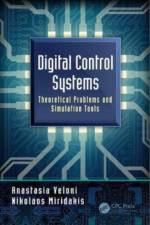
Completely revised and updated, written to be understandable for students, and practical in its coverage, this new edition features a range of new engineering applications, such as control of unmanned aerial vehicles (UAVs), wind turbine energy systems, and robotic systems.
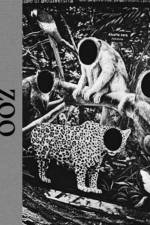
Zoo is a wild ride through Anders Petersen's oeuvre, a racy edit of his work that has animals as its central theme. Whether they be conscious portraits of animals or a haphazard photographic encounter with a woman's legs in python-print tights, Petersen draws out the animal and animalistic in all that he sees. At a typical zoo we are the spectators, peering in on creatures as they go about their existence, mostly oblivious to our presence. Yet in Zoo we find ourselves both behind and before the bars of the cage-with Petersen as the delighted zookeeper.
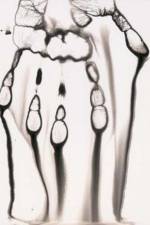
This book contains more than 400 pictures of Gunnar Smoliansky's hands, each a spontaneous composition crafted by the photographer in his traditional darkroom. The inspiration for this series was unexpected and Smoliansky pursued it with an artist's rigor, creating a complex series, each image a nuanced variation on a theme. Some pictures are deceptively simple, hardly recognizable abstractions; others are realistic, revealing even the texture of Smoliansky's palm; while others still are almost violent inky overlappings. By bypassing the tool of the camera and reinterpreting the photogram, Smoliansky revisits one of the earliest means of photographic picture making and creates a gestural space between photography and drawing.
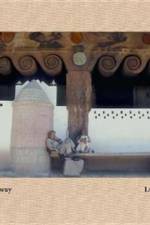
Asia Highway is Luke Powell's photographic examination of Iran and particularly Pakistan, acknowledging the destruction these cultures have undergone while emphasizing the beautiful and good that Powell discovered on his travels. The photos in the first chapter were taken in Iran in 1974 and include the historical bazaar of Tabriz (a crucial center on the Silk Road and since 2010 a UNESCO World Heritage Site), while the succeeding chapters depict northern Pakistan. The story of the book's origins orbits around various political events: Powell photographed a series on Pakistan's Swat district after he had left Afghanistan just ahead of the Taraki coup in 1978; and in 2000 the Taliban invited him to return while restricting his subsequent movements, prompting Powell to travel to Pakistan and work in Chitral and Gilgit. Other chapters explore Peshawar and the Kalash people in Chitral.
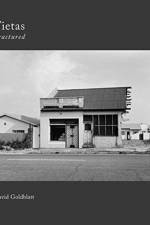
This book presents photos by David Goldblatt taken between 1952 and 2016 of Fietas in Johannesburg, with an emphasis on his 1976-77 images of the suburb's last Indian residents before they were forcibly removed under apartheid. Known affectionately by its inhabitants as Fietas, though officially called Pageview, this was one of the city's few "non-racial" suburbs, where Malay, African, Chinese, Indian and a few white people lived. Composed of narrow streets and small houses of two rooms and a kitchen for up to 15 people, here different races and religions formed a strong, safe community where children played in the streets. There were two mosques, Hindu, Tamil and Muslim schools, cricket, soccer and bridge clubs, and 170 shops-customers came from all over the Witwatersrand.In 1948 the National Party came to power and made the clearance of all "non-white" inhabitants of Pageview an immediate objective. Some 5,000 Africans and other people of color were evicted or "persuaded" to leave by the promise of better townships, while under the Group Areas Act the Indians were to move to Lenasia, an apartheid creation 35 kilometers from the city. For 20 years the remaining Indians fought against removal, principally in the courts, but in 1977 police and their dogs finally forced them out, except for a few. Almost all buildings were destroyed and in their place new houses for lower-income whites built. Today these are occupied by a mix of people from Africa, Europe and Asia; no sense of community remains except that of the homeless sheltering in the spaces left by demolition.
Lesser Known presents Bruce Davidson's photos made between 1955 and 1993 that have been overshadowed until now. Consisting of 130 images that have been consistently overlooked throughout Davidson's long career, the book is the result of a year-long undertaking by the photographer and his studio to examine 60 years of contact sheets and edit individual images into a singular work that plots his professional and personal growth. Lesser Known showcases Davidson's perpetual versatility and adaptability as a photographer through a focus on early assignments, the intimate documentation of his family life and smaller series such as unpublished color photographs from major bodies of work including "East 100th Street" and "Campers."
Midnight Tweedle is Zhang Lijie's personal portrait of China's complex cultural and political history. Juxtaposing diverse and seemingly unrelated images with a collage technique, Lijie explores the depths of Chinese collective memory in a process she describes as "whispering to herself ... to understand where we come from and where we are going."This book combines materials as varied as found and original photos, posters, illustrations and even a meal ticket from the planned economy time which Lijie either collected from antique markets, newspapers and the Internet, or created herself. Here smiling families and uniformed civilians during the Cultural Revolution mingle with key historical figures such as the Empress Dowager Cixi and Mao Zedong, all interspersed by recent landscapes and photos as unexpected as a still life of mangoes. Lijie believes that "all kinds of identities and labels are nothing but fragments of history," and in this book she creates a new whole from these pieces.
Though born in Snow Hill, Alabama in 1917, Noah Purifoy lived most of his life in Los Angeles and Joshua Tree, California, where he died in 2004. The exhibition of his work, Junk Dada, at LACMA in 2015 as well as the recent publication by Steidl of his notebooks and essays in High Desert, have contributed to the legacy of this long-overlooked artist who first came to prominence with sculpture assembled from the debris of the Watts Rebellion of 1965.In the last fifteen years of his life Purifoy lived in the Mojave Desert where he created large-scale sculptures spread over ten acres. On visiting this site Hannah Collins made a series of exquisite black-andwhite photographic studies of Purifoy's work. Her rigorous aesthetic stance is unwittingly reminiscent of the formality of Walker Evans, who would have greatly appreciated Purifoy's transformation of discarded materials into grand yet vernacular forms.Message from the Interior, Walker Evans' photographic study of 1966, which through the selection of a handful of pictures of interiors suggests a wide and disparate landscape, became a model for the publication of Collins' work from Purifoy's site. Her 18 photographs are presented here in a format that exactly echoes Evans' publication, both typographically and spatially. The intention is not imitative, but refers to the grandeur and scale achieved by Purifoy. Cumulatively his work becomes a transitory monument inevitably destined to decay into the desert itself.
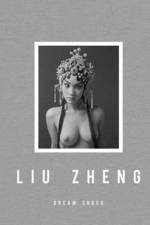
The "dream shock" of Liu Zheng's title refers to an awakening as if from a deep sleep. There is a moment between sleep and consciousness in which the dream state and conscious reality collide. It is a fertile, erotic and sometimes violent area of the mind, in which both exquisite and tortured imagery may surface.Liu Zheng is one of the few Chinese photographers whose work has reached the West. The exhibition of his extensive series The Chinese at ICP in New York in 2004 and the accompanying Steidl book indicated he was working on the borders between the documentary tradition and the extended portrait school of August Sander. His background on the Workers' Daily suggests his grounding as a photojournalist. Yet Liu Zheng's vision does not echo the common view of China, characterized by anonymity in the sheer mass of the population or by the momentum of industry. Frequently the subjects of his portraits are those on the fringes of Chinese society; his outsiders contribute to an unfamiliar collective portrait of a nation.Dream Shock brings us to another space that exists in the mind itself. Some of the characters, such as a beautiful Peking Opera singer, may be half-familiar, but the historical references to a brutal occupation and the sexual explicitness take us into unprecedented territory. Elaborate scenes are delicately choreographed in a series of terrifying tableaux. The directness of photographic evidence exists alongside studio staging that is pure and unsettling theatre. We enter a wholly new domain.
This atlas of mammalian skeletal morphology fills an important gap in the literature via its illustration of mammal bones by relating anatomy to ecology and evolutionary history. It is organized by element, and readers can compare the morphologies of the same part of the skeleton between organisms of diverse ancestry and ecology.
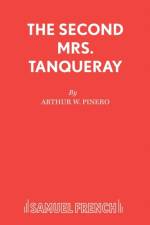
When Aubrey Tanqueray marries for the second time, he knows that his new wife, Paula, is a 'woman with a past'. But he has no idea how that past will catch up with him in the end. More probing than Oscar Wilde, more accessible than Ibsen, Pinero's The Second Mrs Tanqueray (1893) is one of the masterpieces of the Victorian theatre: sexy, dramatic, funny and very moving.-6 women, 5 men
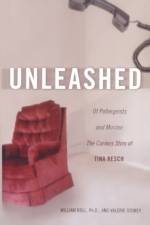
One scientist''s account of the poltergeist case that made headlines across the country -- and the riveting examination of a child''s mysterious murder. When she was just fourteen years old, Tina Resch became the center of the best-documented case of poltergeist activity of the twentieth century. During the spring of 1984, Tina''s home in Ohio was thrown into chaos: appliances turned themselves on without electric current, objects flew through the air, furniture scooted across the floor. Censured endlessly by her adoptive family and thrust into the eye of a media twister thanks to one reporter''s photographic evidence of a flying phone, Tina was propelled into a downward spiral that led to an abusive marriage, a divorce, and the birth of a child -- all before her twentieth birthday. Three years later she was charged with that child''s murder, and she is currently serving a life sentence for a crime as controversial, mysterious, and complex as the accused herself -- a crime she maintains she did not commit. Unleashed is Tina''s story as told by a parapsychologist who witnessed striking paranormal phenomena in Tina''s presence. Examining the destructive powers of thwarted emotions from a scientific perspective, William Roll sheds remarkable light on the case of Tina Resch -- and boldly confronts our cultural responses to events that cannot be easily explained.
Judicial institutions are directly involved in law making and law enforcement. Despite numerous investigations of how far courts intervene in policy making, little has been revealed about the impact law making processes have on courts the judicial system. This book examines the law making process that unfolds in the context of judicial reforms.
Abonner på vårt nyhetsbrev og få rabatter og inspirasjon til din neste leseopplevelse.
Ved å abonnere godtar du vår personvernerklæring.