









Gjør som tusenvis av andre bokelskere
Abonner på vårt nyhetsbrev og få rabatter og inspirasjon til din neste leseopplevelse.
Ved å abonnere godtar du vår personvernerklæring.Du kan når som helst melde deg av våre nyhetsbrev.

This textbook serves a market need as a primary text offering the latest developments in the maritime security sector for the growing number of courses in the area.
This Handbook provides an extensive survey of the dissemination and reception of Marx's Capital throughout the world. The cast of international experts explore, and critically reconsider, the history of the dissemination of Marx's Capital in all the languages in which the book was entirely translated.
In this ground-breaking work, Karen Emmerich challenges the assumption that original or source texts have a fixed identity. The textual makeup of a 'source text' is no more stable than its meaning. Originals are not given but made and translation is a process by which foreign works of literature are transformed into 'originals' through the creation of the supposedly derivative works we call translations. Karen Emmerich establishes this argument by bringing recent works in the field of textual scholarship to bear on discussions of translation. She explores multiple forms of textual instability and the translation strategies that have and can be employed in dealing with them. The scope of the discussion is broad covering ancient works, oral works, unfinished or fragmentary works, multilingual works, and works that straddle the divide between translation and 'original' creation, drawn from a range of languages, periods, genres, and literary traditions. This timely book also engages such issues as the politics and ethics of translation, how aesthetic categories and market forces contribute to the establishment and promotion of particular 'originals,' and the role translation plays in the formation, re-formation, and deformation of national and international literary canons. This is essential reading for students and scholars working in the areas of literary translation studies, comparative literature and world literature.
New Technologies and Creativity in the Secondary School examines what we mean by teaching young people to be creative, and how technology ¿ central to young people¿s lives ¿ can be used to encourage and enhance creative thinking and learning. Engaging with the underpinning theory and latest research in the field in an accessible, applied way, this book provides a sound introduction to the nature of creativity in education and why technology is a powerful tool for its development.
Late medieval Anatolia was characterised by widespread political instability. Yet despite these difficulties, the cities themselves were relatively stable spaces populated by complex and syncretic communities, and managed by various models of grass roots, urban self-governance. Rachel Goshgarian here offers the first social history of the region in this period to draw on Armenian sources. She reads these alongside other locally-written texts, primarily those in Arabic, Persian and Turkish, and uses recent scholarship on medieval Iberia and the convivencia paradigm - the method by which social cohesion and coexistence could be created between different ethnic and cultural communities - to offer a fuller and vital picture of the region's cities. Focusing on the thirteenth and fourteenth centuries, The City in Late Medieval Anatolia addresses a wide range of timely debates - including inter-faith interaction, urbanism, social history and the politics of space.
The human body has been under-researched in the field of Minoan archaeology and understandings about the Cretan Bronze Age have often relied on data not directly related to the human body, such as pottery and architecture. While methodologically important, these data offer an incomplete picture of Minoan societies. Furthermore, current modernist research categories (such as osteoarchaeological, microglyptic and linguistic studies) create artificial divisions which impede a more holistic approach to the human condition in Minoan Crete. What is currently lacking is a contribution which recasts the human body as a central archaeological informant, in its various manifestations such as human remains, frescoes and figurines. This book redresses this imbalance by combining analysis of biological and represented bodies from Minoan Crete. As such, this book is neither an exhaustive account of people in Bronze Age Crete nor a treatise on the themes it explores. It is, rather, an archaeological and anthropological study on how current debates on social, economic and political change in the Minoan Age can be enhanced through exploration of the diversity and corporeal experience of its populations. Ultimately, the book aims to provide a stimulus towards re-evaluating Minoan archaeology through embodiment and will be a springboard for furthering debates on gender, political complexity and social change, as well as stimulating discussion on class, hybridity and bodily regionalism. This work will have wider methodological ramifications, because its debate transcends the boundaries of Minoan archaeology and can be applied to archaeologies of other regions and eras.
Explores the policies and practices employed in the management of people working in the tourism, hospitality and events industries. This title considers the nature of these industries and the varied approaches that organizations take with the handling of matters such as recruitment, health and welfare and remuneration.
Comparing the paths taken by different ethnic groups in Croatia and Macedonia this book offers a comprehensive analysis of how different rebel groups made the change from soldiers to politicians. Using empirical data from national and sub-national elections over the entire post-conflict period and gathered during extensive interviews members of different ethnic groups, armed groups, political parties, civilians and journalists the text explores the reconstruction of minority politics after ethnic conflicts and analyses the integration of former combatants into the political sphere.
Scholars have long recognised that "nature" is mediated, constructed and represented by culture, as also is technology, nature's "unnatural" counterpart. This book explores how changes, potential and actual, in conceptualizations of nature and technology are mediated and represented in Japan. It considers Japanese reactions to natural disasters, examines the tensions between traditional ways of life, rooted in nature, and the technologies of modernity, and discusses various art forms and literature which focus on nature and technology. Overall, the book assesses how far Japanese people see Japan itself as being in harmony with, or at odds with, nature.
In the spring of 2016 the exhibition "1001 Steidl Books" was held at DECK in Singapore, an independent platform for art and photography. On the occasion of the exhibition artists from across Asia were invited to submit book dummies for the Steidl Book Award Asia. A single award was planned, but from the many books Gerhard Steidl finally chose eight: "The submissions were all so strong, so surprising and varied, that it would have been unfair to just choose one." Together with the co-founder and director of DECK Gwen Lee, and the creative director of WERK Theseus Chan, the eight photographers came to Steidl in Göttingen in January 2017 to make their books."Eight Books for Asia" is a limited-edition set containing all the winning books along with additional printed literature on the project, presented in a screen-printed cardboard box.
Beginning in 1985 the Manchester-based Documentary Photography Archive (DPA) commissioned photographers to record aspects of British society in the north of England. Tom Wood's The DPA Work explores the life and demise of two major institutions near Liverpool, Rainhill Psychiatric Hospital and Cammell Laird shipyard.Opened in 1851 as a lunatic asylum for long-term patients, by 1936 Rainhill was the largest hospital complex in Europe. Wood began photographing there in the 1980s when UK government policy had shifted from institutions towards "Care in the Community." By then Rainhill had diminished in size and wards were often combined, mixing a range of patients. The DPA and the mental-health charity Mind, which described conditions at Rainhill as "wholly unacceptable," asked Wood to record the hospital's closure and the movement of its patients into the community.Cammell Laird shipyard's illustrious history dates back to the 1820s, and includes the building of many famous warships and aircraft carriers such as HMS Ark Royal. When Wood photographed the yard it was facing closure, with a demoralized workforce fighting to save their jobs while HMS Unicorn, the last Upholder-class submarine, was being completed and launched.The two main volumes of The DPA Work include archive material related to the history of Rainhill and Cammell Laird, while a third book features a series of late nineteenth-century photographs of patients at Rainhill. Together these volumes document a time of upheaval in Liverpool in the midst of industrial decline, the breakdown of communities and changes in healthcare whose consequences are still felt today.Co-published with the University of Chester
Microstructural Characterization of Radiation Effects in Nuclear Materials provides an overview into experimental techniques that can be used to examine those effects (both neutron and charged particle) and can be used by researchers, technicians or students as a tool to introduce them to the various techniques. The need to examine the effect of radiation on materials is becoming increasingly important as nuclear energy is emerging as a growing source of renewable energy. The book opens with a discussion of why it is important to study the effects of radiation on materials and looks at current and future reactor designs and the various constraints faced by materials as a result of those designs. The book also includes an overview of the radiation damage mechanisms. The next section explores the various methods for characterizing damage including transmission electron microscopy, scanning transmission electron microscopy, analytical electron microscopy, electron backscatter diffraction, atom probe tomography, X-ray scattering techniques and ion beam analysis techniques. Lastly, a brief introduction into modelling radiation effects in materials, and the synergy of experiments and modelling to provide an atomic-scale to macro-scale understanding of damage processes is included. Focuses on structural analysis techniques, describing their instrumentation, and introduces specific case studies showcasing the techniquesCovers the fundamental aspects of TEM as well as the specific aspects of radiation damageDiscusses the characterization of real materials systems that have been neutron irradiatedEncompasses sample preparation and statistical analysis into the individual technique chaptersWritten by well-known experts in the field of materials characterization
Written in a conversational style that will appeal to clinicians and academics, this book provides a historical treatment of the cultural context of African Americans, as well as clinical treatment guidelines and practice-based, evidentiary approaches.
Written in a conversational style that will appeal to clinicians and academics, this book provides a historical treatment of the cultural context of African Americans, as well as clinical treatment guidelines and practice-based, evidentiary approaches.
An analysis of the nature of the coup d'etat and the conditions under which they succeed. Focusing on the relationship between constitutional law and coups, the book demonstrates that although coups d'etat are always in defiance of law, often the law provides usurpers with a degree of assistance.
Most salespeople and sales leaders who marvel at the consistent year in and year out performance of sales superstars are blind to the real reason for their success. Unwilling to accept that the foundational root of all success in sales is a fanatical focus on prospecting, they waste time tilting at windmills on their quixotic pursuit of fads, silver bullets, and secret formulas they believe will deliver them into arms of success with little effort. Fanatical Prospecting Playbook will be an essential tool for leaders that aids and coaches sales people to become more effective prospectors. For salespeople, this book will explain the how and why behind the most important activity in sales and teach the skills and techniques required to become both effective and efficient at prospecting.
Inside one of the world's biggest humanitarian crises
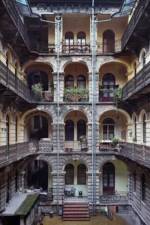
Between 2014 and 2016, Yves Marchand and Romain Meffre visited 400 of the more than 4,000 internal courtyards in Budapest. Their large number and variety of styles incorporating different facets of classicism and modernity make them a remarkable architectural phenomenon-a charming second city within the city.Marchand and Meffre systematically documented these courtyards, producing a typological series that describes this particular form of collective housing and reflects the city's tumultuous history, its changing political regimes and economy. Budapest Courtyards allows us to delight in the crumbling grandeur of the courtyards, and observe the developments and personal strategies of adaptation which they evidence.
In the summer of 1971 Frank Gohlke moved with his wife and young daughter from Middlebury, Vermont to Minneapolis, Minnesota. His vocation as a photographer had begun four years prior, but he had yet to define the subject that would occupy him for the next 45 years: the landscapes of ordinary life.The three bodies of work brought together in Speeding Trucks and Other Follies were all made between Gohlke's arrival in Minneapolis and the end of 1972 when he began photographing grain elevators, a project that first established his renown. In different ways these early series obliquely describe Gohlke's process of adjustment to his new surroundings.The "Speeding Trucks" photos of the first section began when Gohlke noticed how the shadows of the elm trees that once lined most Minneapolis streets were momentarily materialized on the bodies of passing trucks. The travel trailers in the second section were all found in a Minnesota State Park on one of the family's infrequent camping trips, while late-night rambles through Gohlke's Minneapolis neighborhood led organically to his series of dramatic night pictures in the last section. Notwithstanding their various subject matter, Gohlke's photos in this book collectively perform a kind of timeless alchemy on the everyday stuff of visual experience.
This handbook provides a comprehensive survey of codes and sequences, ranging from mathematical foundations to applications in various areas and bridging the gap between theory and practice. Each chapter contains the contributions of leading researchers in the field.
SAMPLING TECHNIQUES FOR MODERN MUSICIANS
In the first edition of this book, the authors introduced a method to measure and improve on information flow for knowledge workers in the modern office. They showed how to adapt the factory-derived Lean body of knowledge into today''s service economy and highlighted several useful software tools and trends in collaborative and cloud services. Since the original publication, several other tools have emerged that more closely match the ideas in the book. This second edition builds on its popular predecessor with updates to the software sections and provides refined predictions for the Lean office.
Abonner på vårt nyhetsbrev og få rabatter og inspirasjon til din neste leseopplevelse.
Ved å abonnere godtar du vår personvernerklæring.