









Gjør som tusenvis av andre bokelskere
Abonner på vårt nyhetsbrev og få rabatter og inspirasjon til din neste leseopplevelse.
Ved å abonnere godtar du vår personvernerklæring.Du kan når som helst melde deg av våre nyhetsbrev.

Is at the heart of village life, and marks the beginning of the Squire's land. It is the rescue of Squire Ingham's son by the Irish servant-girl which creates the uneasy bond between Sarah, the respectable family into which she marries, and the Squire's family. But it is Kate, the foundling Sarah adopts, whose doomed, forbidden love for the young Squire forces the families into explosive confrontation. A grand saga, set in all the beauty and pride of Yorkshire, amid the power and excitement of the Victorian era.
An unhappy wife is found dead in her bed, in circumstances that point to murder. Her husband, Roderick Strood, is arrested and put on trial. But before this happens we have become intimately acquainted not only with the Stroods and their problems, but with the individual members of the jury on whose verdict Roderick's fate is to depend. We see them first in their private lives, each unaware of the others' existence; watch them enter the jury-box; and finally go with them into the jury-room and hear them debating the issue of life and death. What is the truth? And what will the verdict be?
Ana would never fall in love - at least, so she thought. But an invitation to spend the summer with an old school friend changed that idea rapidly. Her friend had a husband.And from the moment they first met, Ana knew that Anthony Hambledon was somebody she would not, could not, forget. The path of true love never runs smooth, and this was no exception. But neither of them could have foreseen the pain and ultimate tragedy that lay ahead...
Rosie took herself off to the pub. She had to escape from the supercilious highbrows on whom she was billeted. To them she was "common," middle-aged and homeless. She knew that, but nevertheless she was happy. She still had her memories and she still had young Joe, her Air Force officer son. Rosie's childhood was spent in the carefree atmosphere of the theatre, with Dad (a Comedian) as hero. She had a bad time after his death with her mother's melancholia and the contempt of her sister (who had successfully snared a peer as a husband). After that came the best years of her life-her marriage with old Joe, landlord of the Crown, a big boisterous fellow, but the most gentle, unselfish husband any woman could imagine. The last war ended their happiness. Old Joe was killed; their son was born soon after. From that moment nobody and nothing mattered except young Joe. She was dead set on making a gent of him. She skimped her little luxuries to send him to a "posh" school. What wonder that they gradually grew apart, that he seemed to prefer "high life" and a chromium-plated flat to his homely mother and the old-fashioned Crown? Then came the second war and his enlistment in the Air Force. Rosie sat in the pub thinking how her life had changed; bombed out of the Crown, her livelihood gone, an unwanted evacuee. But everything was all right, for young Joe would come on leave. The war and the R.A.F. had brought him back to her.
'I am,' writes Mr. Pritchett, 'an offensive traveller'-meaning not that he is rude to porters, but that his praise of a country has sometimes been taken by its inhabitants as abuse or ridicule. Be that as it may, his book, which is based upon sojourns in Spain, Turkey, Persia, and the Iron Curtain countries, will delight every English reader. Pritchett's alert eye and relaxed manner, his flair for meeting new places and people without any warping preoccupations, produce the most felicitous results, particularly with the 'Peoples' Democracies', which most travellers approach with a bias to left or right. 'The Communist countries are like schools: the population is trained, and like school-children have their own ways of getting round authority.' The low heels and low rents of Czechoslovakia; the high spirits and out-spokenness of the Polish; Bulgaria, where the water is delicious and roses grow everywhere; Romania, so obdurate beneath its Latin sur-face-wherever he goes Pritchett uner-ringly picks out significant details, giving us the genius loci, sharing with us his curiosity about ways of life different from our own, im-parting to us the warmth of his own response to them.
Children begin by loving their parents. After a time they judge them. Rarely, if ever, do they forgive them...
Harry Antlers, a once-successful theatre director, falls obsessively in love with Viola Windrush when she comes to New York for an audition. There follows a wild pursuit, taking him to her Norfolk house and to London, where she is decorating for her uncle. Finally, Harry is driven to desperation.
Quiet, clever, sensible Virginia Fly, still a virgin at thirty-one, harbors erotic thoughts of an intensity and vividness unimagined by her suburban parents, her unassuming elderly suitor Hans or even her virile American pen-friend of twelve years, Charles Whitmore Oakhampton Jr - Charlie. When Charlie announces that he is, at last, to visit England, it seems too much to hope that he should make Virginia's dreams of passion reality. Yet his arrival coincides with her appearance on a television documentary and suddenly Virginia is presented with a bewildering variety of opportunities to rid herself of her virginity. The only question remaining seems to be whether any of them - even the suave and delicious stranger Ulick Brand - could possibly fulfill her considerable expectations.
This is an imaginative reconstruction of the mind of the young girl who was to become Queen Elizabeth I of England, that effulgent, daunting, and perplexing figure, one of the most influential women in history.
Our story begins with the birth of Mary Hanskye in 1841 as the Industrial Revolution is changing the face of pastoral England. While still a child, Mary comes under the influence of her uncle, one of England's great shipbuilders. Soon she is a young woman involved in a loveless marriage arranged by a father she has hardly known. Though tragedy and disappointment follow her like shadows, The Lovely Ship is a story of the survival of a strong woman as we follow her through marriage, childbearing, family crisis, and her ultimate ascent to the throne of power in the great shipbuilding company.
Completely devoted to this most important technique in electrochemistry, this practical guide covers the fundamentals, explains how to set up experiments, and also shows how to avoid the common pitfalls.
Globally, there are numerous infectious diseases, normally found in vertebrates other than humans, that have been documented to be transmitted to humans and cause human infections. These "zoonotic infections" are the topic of this book.This book is arranged to have chapters by the type of animal. Within each chapter is information on the animal(s), the normal flora of the animal(s), and the diseases that have been transmitted from this group of animals by bites and/or scratches, contact (including transmission via ectoparasites such as fleas and ticks), ingestion of the animal, and other documented transmission, such as infestation by members of the genus Sarcoptes as has been documented in humans exposed to dogs with "mange," in "cavalryman itch" from horses, from contact with dromedaries, etc.There are a number of additional issues that takeoff from a fundamental knowledge of zoonotic infections. These include a working knowledge of many of the agends of bioterrorism, as the events of 2001 demonstrated of the use of Bacillus anthracis spores in mailed letters. Another area of importance is that of emerging infections. An analysis of 335 origins of emerging infectious diseases between 1940 and 2004 revealed that these are dominated by infections that are zoonotic in origin, comprising some 60.3% of the emerging infections. Of these, 71.8% originated in wildlife.Given the importance of this topic in our understanding of infectious disease, a timely source is a necessary addition to the current available literature
Covering the scope of current water research from the physical chemistry viewpoint, this long-awaited book focuses on the structure, dynamics and properties of water and solutions. Each topic is treated from both an experimental and theoretical perspective.
This is a treatise and commentary on French arbitration law including the updates brought in by the 2011 Decree. It follows the logical structure of the new decree itself, providing detailed analysis of both domestic and international arbitration law conducted under French arbitral procedure.
A complete practitioner reference text on general limitation in a range of specialist contexts, giving guidance on the defence of limitation and the application of time limits.
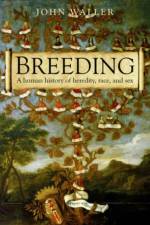
John Waller presents a history of one of the most important concepts in western thought: heredity. Tracing the development of our understanding of inheritance from the ancient Greeks to the advance of modern genetics, he presents the story of a remarkable set of scientific achievements.
The principles according to which an international tribunal with a limited jurisdiction may apply law other than the law specific to its jurisdiction when resolving a dispute are heavily debated in international law. This book is the first to examine this issue. It analyses the relevant case law and develops rules to solve applicable law disputes.
What is a business corporation and where do they come from? This book provides an account of the nature of the business enterprise (including the corporation) as a social institution that has become as important as political states and families in modern society.
The Libyan civil war of 2011 created several unique questions for international law and diplomacy which required responses not previously seen. This book takes 30 key topics as case studies, providing detailed insights into how the problems caused by the conflict were addressed and discussing the fresh challenges it raised for international law.
Kinetics in Condensed Matter and at Surfaces covers the basic concepts of mean force and diffusion, response to external fields and to driving forces, stochastic descriptions, and classical dynamics simulations. It also deals with energy and electron transfer, reactions in liquids and solids, photoinduced kinetics, and kinetics at surfaces.
Why does the discourse of immorality and corruption form such a ubiquitous presence in the written sources of the fourth century Roman Empire? Most modern scholars have viewed such language either as a direct description of the workings of a central government rapidly expanding in size and scope; or else as a reflection of the anxieties of traditional elites over their loss of influence in an increasingly bureaucratic society. Tim W Watson argues, by contrast, that such rhetoric served as an important means of integration, assimilation and social control in an era of unprecedented social mobility. Examining the writings from the period of four figures with diverse religious backgrounds - Quintus Aurelius Symmachus; Libanius; Gregory of Nazianzus; and Ambrose of Milan - the author shows how their emphasis on virtuous conduct over criteria such as wealth and birth created a space for 'new men' in the hierarchies of church and state: but on their terms. It was this focus on virtue and vice that helped established discourses adapt to the fluid worlds of Western Christendom and the Byzantine Empire.
This important new edition presents Konitza's short history of Albania up to the exile of Ahmet Zogo - 'King Zog' - in 1939 together with some of Konitza's other key writings, analysing of the character of the Albanian people as well as their language, literature and religion.
Abonner på vårt nyhetsbrev og få rabatter og inspirasjon til din neste leseopplevelse.
Ved å abonnere godtar du vår personvernerklæring.