










Gjør som tusenvis av andre bokelskere
Abonner på vårt nyhetsbrev og få rabatter og inspirasjon til din neste leseopplevelse.
Ved å abonnere godtar du vår personvernerklæring.Du kan når som helst melde deg av våre nyhetsbrev.

VIRUS is a Dark Fantasy role-playing game centered around plague and virus themes. Character creation and combat is simple to focus more on the story. The Storyteller centers adventures around delivering antidotes, healing sick villagers, stopping magical curses, killing ravaging plague beasts, etc. All you need for this role-playing game in terms of dice is six-sided dice. A sample of the Continent of Corovia setting is also provided at the end of this book. This Micro-RPG is best suited for 4-5 players and one Storyteller. This book is great for one-off adventures at game conventions, or to introduce new people to the Fantasy RPG hobby.
J.W. Dunne's Sunshine and the Dry Fly is one of the great classics of fly-fishing. First published in 1924, it was written as much to engage and enthuse as to inform, and it succeeded. Its author went down in history as "one of the prophets of old."The book breaks down into two halves, the first describing the art of dry-fly fishing for trout, the flies they eat and his efforts to develop artificial copies, the second a primer on how to make these copies for yourself.This extended third edition is published in its 100th year. It includes a number of lost and hard-to-find treasures, not least two short but lyrical essays aimed at the beginner, recipes for four more dry flies which he had intended for the second edition but mislaid, more complete detail on his fly-dressing materials and three unique archive images.
This is a reprint of articles from the Special Issue published online in the open access journal Viruses (ISSN 1999-4915) entitled "Novel Antiviral Agents: Synthesis, Molecular Modelling Studies and Biological Investigation".
From the Pulitzer Prize-winning journalists who uncovered the Panama Papers, a gripping, real-life thriller following the authors' attempt to uncover the truth about one of the world's most wanted men. Karl Lee, alias Li Fangwei, plays a key role in the secret struggle between the world powers, bypassing Western sanctions to supply dictators with the weapons they need to wipe out their neighbouring countries - or even to trigger a third world war.For almost two decades, intelligence agencies have been hunting for Karl Lee. The FBI has put a $5 million bounty on his head, but nobody has been able to catch him. Now, four award-winning investigative journalists set out to find him.Following the routes of his deliveries and his money, the authors track down Karl Lee's businesses in China and uncover his network of shell companies. During their investigation, they get embroiled deeper and deeper in the shady world of the Chinese phantom, and realise that Karl Lee is just a pawn in a much bigger game of modern warfare and international espionage.
A captivating exploration of how underwater animals tap into sound to survive, and a clarion call for humans to address the ways we invade these critical soundscapes - from an award-winning science writer.For centuries humans ignored sound in the 'silent world' of the ocean, assuming that what we couldn't perceive, didn't exist. But we couldn't have been more wrong. Marine scientists now have the technology to record and study the complex interplay of the myriad sounds in the sea. Finally, we can trace how sounds travel with the currents, bounce from the seafloor and surface, bend with temperature, and even saltiness; how sounds help marine life survive; and how human noise can transform entire marine ecosystems.In Sing Like Fish, award-winning science journalist Amorina Kingdon synthesises historical discoveries with the latest research in a clear and compelling portrait of this sonic undersea world. From plainfin midshipman fish, whose swim-bladder drumming is so loud it keeps houseboat-dwellers awake, to the syntax of whalesong, from the deafening crackle of snapping shrimp, to underwater earthquakes and volcanoes, sound plays a vital role in feeding, mating, parenting, navigating, and warning. Meanwhile, our seas also echo with human-made sound, and we are only just learning how these pervasive noises can mask mating calls, chase animals from their food, and even wound creatures.Intimate and artful, Sing Like Fish tells a uniquely complete story of ocean animals' submerged sounds, envisions a quieter future, and offers a profound new understanding of the world below the surface.
Firsthand accounts of the life, practice, and teachings of pioneering Aikido master Robert Nadeau, direct disciple of Aikido founder Morihei Ueshiba
In this important book, Rebecca Carson develops the concept of "immanent externalities" to grasp the non-capitalist life processes produced by-and necessary for-capitalist reproduction. Immanent Externalities thus considers the category of reproduction by means of a philosophical re-reading of the three volumes of Marx's Capital. In doing so, the book locates capitalism's fundamental contradiction as that between the reproduction of profit-driven activity and ecologically situated human life, suggesting new orientations for theory and practice today.
This is a companion book to the text Dwelling Place Spiritual Cleansing. It is the training handbook for certification and licensing to become a Dwelling Place Spiritual Consultant. It contains the seven lessons in the course of study leading to certification and license. Spiritual Consultant is a new occupation and ministry business for people of faith who are connected to the local church.
This book highlights the photogalvanic effects at low dimensions, surfaces, and interfaces, more specifically 2D materials, such as graphene and monolayer transition metal dichalcogenides. Although the phenomenology of the photogalvanic effects, which can be simply seen as photoresponse nonlinear-in-electric field, have been well-established, the microscopic understanding in each material system may vary. This book is a quick reference and a detailed roadmap starting from phenomenology and continuing with the ultimate low dimensional materials, in which the photogalvanic effects can offer a rich platform at the second-order response to an electric field. A general phenomenology of photogalvanic effect is provided in the first chapter, together with the photon drag effect which also generates a photocurrent like the photogalvanic effect, but with some distinct features, as well as somewhat puzzling similarities. Next two chapters explain these effects in graphene, starting with a necessary related background on graphene, then a particular focus on its specific phenomenology, microscopic theory, and experimental results. In a similar fashion, in chapters four and five, a necessary background for the photogalvanic effects in monolayer transition metal dichalcogenides, with symmetry analysis, microscopic theory, and experimental results is presented, along with the Berry curvature dependent photocurrent, which can also play an important role in 2D semiconductors. The second-order photogalvanic effects that have been covered so far in graphene and monolayer transition metal chalcogenides have already excited the 2D semiconductor optoelectronic research community by several means. It seems that the interests on the photogalvanic effects will continue to escalate in near future.
This book provides comprehensive coverage of the development of new pharmaceuticals and the enhancement of existing ones. It offers a comprehensive understanding of pharmaceutical biotechnology, including its underlying principles and practical applications from an industrial standpoint. While introducing the roles and applications of biotechnology in drug design and development, the book describes how developments in other fields, like genomics, proteomics, and high-throughput screening, have facilitated the discovery of novel therapeutic targets and drug development methods. It included concepts that are essential to biotechnology and apply to protein therapies.The book provides a thorough overview of the ways in which biotechnology influences drug development, production, and regulation, and is a valuable resource for those seeking to enhance their understanding in this area. This book is designed to support educators in their teaching efforts and offers a reader-friendly exploration of the various stages involved in developing new pharmaceuticals through biotechnology. This book is a valuable resource for individuals in various academic and professional careers, including undergraduates, graduates, pharmaceutical scientists, clinicians, and academic researchers. It provides convenient access to current practices in pharmaceutical biotechnology, making it particularly useful for those working in the interdisciplinary field of biochemistry, pharmacology, biopharmaceutics, and biotechnology. This book's concise and impartial content structure may also benefit corporate researchers.
This book aims to establish a systematic theory on the synchronization for wave equations with locally distributed controls. It is structured in two parts. Part I is devoted to internal controls, while Part II treats the case of mixed internal and boundary controls. The authors present necessary mathematical formulations and techniques for analyzing and solving problems in this area. They also give numerous examples and applications to illustrate the concepts and demonstrate their practical relevance. The book provides an overview of the field and offers an in-depth analysis of new results with elegant proofs. By reading this book, it can be found that due to the use of internal controls, more deep-going results on synchronization can be obtained, which makes the corresponding synchronization theory more precise and complete.Graduate students and researchers in control and synchronization for partial differential equations, functional analysis find this book useful. It is also an excellent reference in the field. Thanks to the explicit criteria given in this book for various notions of controllability and synchronization, researchers and practitioners can effectively use the control strategies described in this book and make corresponding decisions regarding system design and operation.
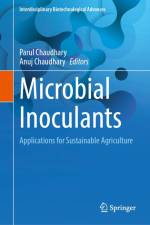
This book discusses the role of microbes in agriculture for plant attributes, soil fertility, and bio-remediation, which aid in sustainable agriculture. Nowadays, due to increase in human population, it is essential to increase food productivity in the near future, but exhaustive non-sustainable agricultural practices such as the usage of agrochemicals threaten food security, the economy, and the environment globally. Soil deterioration is the most serious environmental threat to food production, resulting in poverty and hunger in developing countries. As a result, the global community has faced challenges regarding the development of ecologically sound, efficient, and long-term alternative options to meet rising food requirements. Therefore, to contribute to food security, the advancement of sustainable and innovative modern agriculture aimed at addressing environmental, economic, and social challenges connected with present intense non-sustainable agriculture practices is required. As a result, beneficial microbial inoculants will be widely used in the development of new strategies to increase sustainable food production. Bioinoculant application helps to provide nutrients that directly support soil health and sustainable food production. Hence, this book offers the role of microbial inoculants for better agronomical performance for sustainable advancement in agriculture and also pays attention to soil health improvement for extensive period benefits. The book will be highly recommended for agriculture microbiologists, agronomists, plant pathologists, and related areas.
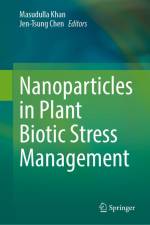
This book provides new insight and a better understanding of nanotechnology in mitigating crop biotic stresses.It covers crop diseases and different nano-based management strategies used to manage pathogens and plant-parasitic nematodes damaging crops. Nanoparticles have the potential to revolutionize crop yield and can control plant biotic stress. Nanotechnology in plant pathology is a new frontier among various nanotechnological applications. Nanotechnology applications include the development of nano-based pesticides and nanoformulations of chemicals for crop improvement by reducing biotic stress. Different nanomaterials like ZnONPs, SiO2NPs, CuONPs, AgNPs, and TiO2NPs have been examined for their impacts on plant growth and biotic stress management. This book deals with the advanced use of nanotechnology in managing the biotic stress of crops and improving crop production. It covers these issues and many more. Each chapter focus on one particular topic. Incorporate chapters provide detailed information on nanotechnology and may help in future research. This book will be useful for researchers, professors, and postgraduate and undergraduate students, especially concerning agriculture and plant pathology.
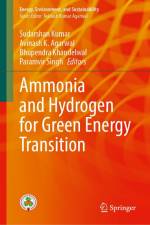
The subject of this book pertains to the applicability of zero-carbon vector fuels, such as ammonia or hydrogen, in a practical scenario. This monograph extensively discusses the applicability or challenges associated with ammonia fuels for both IC-engine and gas turbine applications. It provides insights into ammonia cracking through catalytic membrane reactors for hydrogen production. This book also discusses NOx mitigation techniques for ammonia combustion, such as MILD combustion, two-stage combustion, porous assisted combustion, plasma combustion, and high-pressure combustion. This book also provides details on the chemical kinetics of ammonia and hydrogen combustion. The book can be a valuable reference for researchers and professionals interested in green energy and allied fields.
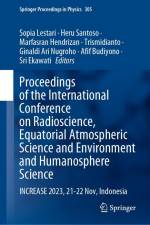
This book includes peer-reviewed articles from INCREASE 2023, Indonesia. It highlights research in the field of Radioscience, Equatorial Atmospheric Science and Environment organized by the Research Center for Climate and Atmosphere (PRIMA) of the National Research and Innovation Agency (BRIN). The symposium aims to provide a scientific platform for students, teachers, and researchers to discuss ideas and current issues in the areas of atmosphere and ocean observation, and prediction, climate change, urban climate, and sustainable development, atmospheric chemistry and air quality, atmosphere-ocean interaction and climate variability, atmosphere and space interaction, paleoclimatology, cloud physics and its application, and atmospheric dynamics and hydrometeorology.
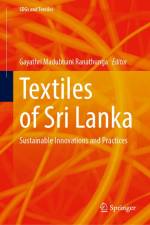
This book highlights the role of sustainable development in ancient practices to modern innovations in the textiles of Sri Lanka. It reveals the textile of Sri Lanka from the historical age to current tech-fabrics. Supporting the sustainable development goals, this book covers the most sought-after concepts and practices in textile industry of Sri Lanka such as of maximum utilization, zero waste, eco-friendly production process, reuse, upcycling, recycling, and longevity. Various topics covered in this book are indigenous cultural textiles, women empowerment, agro-waste utilization, secondhand-fashion consumption, and many more. The book is a valuable reference for beginners, university students, researchers, and professionals interested in sustainable development in textiles and allied fields.
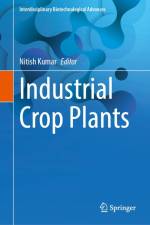
Industrial crops offer farmers new market opportunities to increase their revenue by producing high-value products, focusing on fiber, forest, and energy crops, industrial oilseeds, rubber and resins, pharmaceuticals, and more. Technological innovations in agriculture have facilitated higher yields, but conserving crop genetic resources and diversity remains crucial for sustainable agricultural production. This poses a challenge that can be addressed through modern tools of biotechnology and genomics, utilizing the wealth of sequenced plant genomes. This book addresses the need for knowledge in managing the risks and conservation of genetic diversity associated with advanced technology. It provides comprehensive coverage of plant genomics and biotechnology, catering to post-graduate students, researchers, employees of seed and biotechnology companies, as well as instructors in plant genetics, breeding, and biotechnology fields.
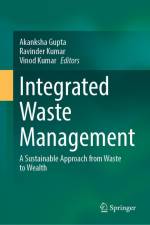
This book explores a diverse spectrum of waste materials, encompassing industrial hazardous and non-hazardous waste, agricultural waste, biomass waste, radioactive waste, municipal solid and liquid waste, as well as e-waste, and investigates their adverse impacts on the environment. It is an exciting exploration of various approaches to waste management, highlighting the importance of adopting sustainable practices such as the 7Rs principle, utilization of nanomaterials and photocatalysis, zero waste management techniques, recycling and upcycling techniques, and IoT-enabled strategies. It provides a critical assessment of the challenges and opportunities in transforming waste into value-added products for the industry. This book is designed to provide constructive insights for researchers, environmentalists, policy makers and professionals engaged in enhancing waste management, fuelling the circular economy, and paving the way for a sustainable future.
This book explains the advancements of plant biotechnology and advanced molecular biology and explores the details of influential tools that complement conventional breeding and accelerate the development of plants resilient to adverse agroclimatic conditions and biofortified plants. Plant biotechnology from the basic sciences to current applications, such as pathway engineering, precursor feeding, transformation, elicitation with biotic and abiotic elicitors, and scaling up in bioreactors, have been included in these chapters to improve the production of secondary metabolites from different medicinal plants. It also highlights important factors often overlooked by methodologies used to develop plants' tolerance against biotic and abiotic stresses and in developing special foods, bio-chemicals, and pharmaceuticals. This book is valuable for researchers or students working on biosciences. It is also an updated and advanced reference material for the agriculture and pharmaceutical industries.
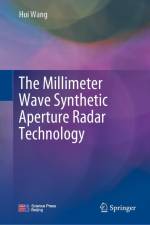
This book highlights the basic theories and technical principles of the synthetic aperture radar (SAR), aiming to bridge theories and applications for readers. Supported by the practical experience of the author's dedicated research, this book also constructs the SAR theoretical system from multiple perspectives.The synthetic aperture radar (SAR) is a weather-independent microwave remote sensing device that involves a number of multidisciplinary fields such as signal processing and image information processing. Written by experts in remote sensing and signal processing, the book explains the signal echo modeling, imaging principles and algorithms, image quality control methods, and image applications. Readers are provided with concise descriptions of commonly used imaging algorithms for SAR in multiple regimes, modes, and applications, including the Range Doppler Algorithm (RDA) and the Frequency Scaling Algorithm (FSA). Continuous wave/pulse regime SAR technology, inverse synthetic aperture radar (ISAR) technology, digital beam forming (DBF), interferometry, and moving target detection methods are discussed in detail.The book is a must-read and comprehensive reference for researchers and engineers engaged in the R&D of the SAR and for graduate students interested in the field.
This book has been groundbreaking for scholars of the Cultural Revolution, but hitherto was only available in Japanese and Chinese. This edition allows English-language readers to access the work for the first time. The author explains how political struggles within the state, competing sectarian interests, and other complex factors intertwined to produce various forms of collective violence that had a major impact on the political, economic, and social order of the time.
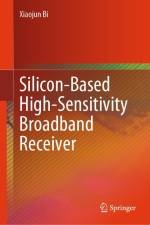
This book presents various design theories and methodologies for silicon-based high-sensitivity broadband receivers, including millimeter-wave radiometer chips and photoelectric receivers, which are core elements in imaging systems, data centers, and telecommunication infrastructures. As a key module in application systems, the high-sensitivity broadband receiver, not only attracts the attention of engineers and researchers in the radio-frequency and optoelectronic fields, but also garners significant interest from other disciplines, including optics, communications, and security. The book introduces various silicon-based critical design technologies aim to overcome the limitations inherent in silicon devices, distinctly enhancing sensitivity with a broad bandwidth. These innovative design methodologies, initially proposed and subsequently validated through meticulous measurements, represent a pioneering contribution. The book provides readers with detailed insights into design intricacies and considerations. Its audience includes undergraduate and graduate students with a specific interest in RF/optoelectronic receiver technology, along with researchers and engineers engaged in the study of imaging systems, data centers, or other communication applications.
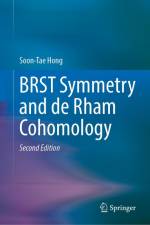
This book provides an advanced introduction to extended theories of quantum field theory and algebraic topology, including Hamiltonian quantization associated with some geometrical constraints, symplectic embedding and Hamilton-Jacobi quantization and Becchi-Rouet-Stora-Tyutin (BRST) symmetry, as well as de Rham cohomology. This extended new edition offers a multifaced insight into phenomenology of particles such as baryons and photons, in terms of extended objects. In particular, in the second edition, the baryons are described in hypersphere soliton model, and the photon properties are additionally included in stringy photon model and in Dirac type relativistic quantum mechanics for a photon.It offers a critical overview of the research in this area and unifies the existing literatures, employing a consistent notation. Although the results presented apply in principle to all alternative quantization schemes, special emphasis is placed on the BRST quantization and its de Rham cohomology group which contribute to a deep understanding of constrained physical theories. The book describes how solitons and other models subject to constraints include rigorous treatments of the geometrical constraints which affect the predictions themselves. The book is intended for use by any graduate-level student with quantum field and relativity theories, and it also serves as a useful reference for those working in the field. An extensive bibliography guides the reader toward the source literature on particular topics.
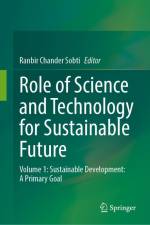
The book explores the pivotal role of science and technology in achieving the sustainable development goals (SDGs) outlined in the agenda 2030 for sustainable development. It emphasizes the importance of integrating science and technology into developing strategies to promote a sustainable and prosperous global future. The book highlights the universal acceptance of the SDGs by United Nations member states, subnational governing bodies, and international organizations. It emphasizes that all stakeholders, including governmental bodies, private enterprises, and civil society, have a responsibility to contribute to the achievement of the SDGs. Science, technology, and innovation are identified as the three pillars essential for achieving the SDGs.The book emphasizes the critical role of science and technology in addressing complex issues such as climate change, biodiversity loss, resource depletion, poverty reduction, health, education, gender equality, clean energy, sustainable cities, responsible consumption, and climate action. It helps to develop innovative solutions to promote economic growth, social inclusion, and environmental sustainability. And provide the necessary knowledge and tools to develop effective policies and strategies in these areas.Furthermore, the book highlights the potential of science and technology in promoting innovation and entrepreneurship, leading to the creation of new businesses and industries that align with sustainable development principles. This fosters economic growth, job creation, and environmental sustainability. It advocates for continued investment in science and technology and their integration into development strategies. The book aims to provide insights into the role of traditional and emerging areas of science and technology in meeting the goals outlined in the SDG document, with a specific focus on India.The book serves as a great source of information for researchers, teachers in basic and applied sciences /social sciences research and policymakers.
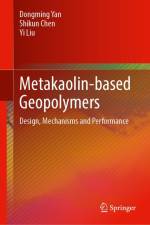
This book offers a comprehensive overview of the design, mechanisms, and performance of metakaolin-based geopolymers (MKG), with a focus on uncovering the underlying mechanisms that differentiate MKG from ordinary Portland cement (OPC). Covering a wide range of topics surrounding MKG, from the early stages of geopolymerization to the final mechanical performance of MKG concrete, this book provides fundamental insights into the performance of MKG-based materials and their relationship with the composition and microstructure of MKG. The findings presented in this book may serve as a guide for the design and application of MKG in civil engineering constructions. Targeted at scientists and engineers in materials science and civil engineering, this book is intended for those interested in adopting MKG as a sustainable technology for a greener future.
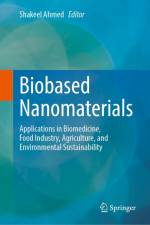
This book comprehensively covers various aspects of biobased nanomaterials, including their types, fabrication methods, characterization techniques, and applications in different fields. The book starts with an introduction to biobased nanomaterials, highlighting their significance in various fields due to their unique properties. The first few chapters cover the different types of biobased nanomaterials, their properties, and how they are extracted from various natural sources. The methods of fabrication of biobased nanomaterials are discussed in detail, including the techniques for controlling their size, shape, and composition. It then delves into the characterization of biobased nanomaterials, discussing the different techniques used to determine their properties, including their morphology, size, structure, and composition. The subsequent chapters explore the various applications of biobased nanomaterials in different fields such as environmental applications, wound healing, tissue engineering, food industry, agriculture, sensing technology, biomedical applications, and energy storage devices. The advantages of biobased nanomaterials over traditional nanomaterials are highlighted, including their biodegradability and sustainability. The environmental concerns associated with biobased nanomaterials, as well as the health and safety concerns, are also discussed. The book concludes by looking at the prospects of biobased nanomaterials and how they can contribute to sustainable development. Overall, the book is an informative and comprehensive book that provides a thorough understanding of biobased nanomaterials and their various applications. It is a valuable resource for researchers, students, and professionals in various fields such as materials science, chemistry, biology, and environmental science. alike.
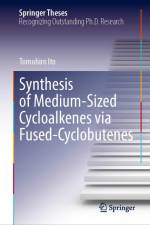
This book explains the existence of the intermediate using two approaches: computational chemistry and coordination chemistry. In this book, the author has developed new methods for synthesizing medium-sized cycloalkenes by utilizing the 4¿-electrocyclic reaction of fused-cyclobutenes. The fundamental and most important strategy and feature of the work are as follows: first, cyclobutene is used as a readily available raw material with high-strain energy to generate more strained medium-sized cis,trans-cycloalkadiene molecules. Second, by judiciously selecting the reaction conditions, the short-lived intermediate (medium-sized cis,trans-cycloalkadiene) can be converted to medium-sized cis- or trans-cycloalkenes. For the former, the generation of the medium-sized cis,trans-cycloalkadiene intermediate is greatly affected by the substituent on the cyclobutene, and there are few examples of its generation confirmed at room temperature. Regarding the latter, the synthesis of trans-cycloalkenes is noteworthy in terms of establishing a new synthetic methodology and providing one of the few asymmetric synthesis methods, which has not been achieved before. Readers of this book can gain novel insights into strained molecules involved not only in small-sized cycloalkenes but also in medium-sized ones.
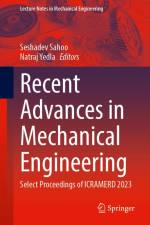
This book presents select proceedings of the fourth International Conference on Recent Advances in Mechanical Engineering Research and Development (ICRAMERD 2023). The contents focus on latest research and current problems in various branches of mechanical engineering. Some of the topics discussed include fracture and failure analysis, fuels and alternative fuels, combustion and IC engines, advanced manufacturing technologies, powder metallurgy and rapid prototyping, industrial engineering and automation, vibrations and control engineering, automobile engineering, fluid mechanics and machines, heat transfer, composite materials, micro and nano-engineering for energy storage and conversion, and modeling and simulations. The book is useful for researchers and professionals in mechanical engineering.
Abonner på vårt nyhetsbrev og få rabatter og inspirasjon til din neste leseopplevelse.
Ved å abonnere godtar du vår personvernerklæring.