














Gjør som tusenvis av andre bokelskere
Abonner på vårt nyhetsbrev og få rabatter og inspirasjon til din neste leseopplevelse.
Ved å abonnere godtar du vår personvernerklæring.Du kan når som helst melde deg av våre nyhetsbrev.

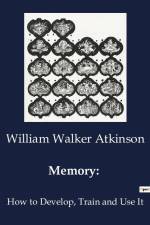
"Memory: How to Develop, Train and Use It" is a book written by William Walker Atkinson. William Walker Atkinson (1862¿1932) was an American author, editor, and attorney who wrote extensively on New Thought and self-help topics. The book focuses on memory improvement and techniques for developing and utilizing memory effectively.Published in the early 20th century, "Memory: How to Develop, Train and Use It" is a self-help guide that likely provides practical advice, exercises, and strategies for enhancing one's memory. Atkinson may have drawn on psychological principles and memory training methods available during his time.While the specific techniques may reflect the understanding of memory from the early 1900s, the book could still contain valuable insights and methods for those interested in memory improvement. If you're interested in the history of self-help literature or exploring different approaches to memory enhancement, Atkinson's work might be of interest.
/9791041985265MToxicology (¿¿¿¿¿¿¿ poison, and ¿¿¿¿¿ discourse,) is that branch of medical science which treats of the nature, properties, and effects of poisons. It appears scarcely possible to give any definition of a poison which will bear a critical examination; insomuch that some have preferred to deal with the evil effects of any substance, that is poisoning, rather than with the substance itself, the so-called poison. Most medicines are poisonous in improper doses; and even common salt (chloride of sodium) has caused death. Dr. Guy defines a poison to be any substance which, when applied to the body externally, or in any way introduced into the system, without acting mechanically, but by its own inherent qualities, is capable of destroying life. A cherrystone may cause death by becoming arrested in the vermiform appendix, and thus producing peritonitis; boiling water may cause death also; but neither are poisons: the one acting mechanically, the other by its heat merely.
Zwischen 1933 und 1945 dokumentierten zahlreiche Geflüchtete ihre Erfahrungen mit dem NS-Regime, um die (Welt)-Öffentlichkeit über dessen Verbrechen aufzuklären. Mittels rhetorischer und narrativer Verfahren und dem gattungsspezifischen Referenzversprechen implizieren diese Texte eine komplizitäre Rezeptionshaltung, die konstitutiv für ihre Poetik ist. Die vorliegende Studie bringt auf innovative Weise Ansätze aus der Exilforschung, der internationalen Autobiographie- und Life Writing-Forschung sowie der literaturwissenschaftlichen Pragmatik zusammen. Dabei entwickelt sie das Konzept der ¿Komplizenschaft¿ als eine rezeptionsästhetische Analysekategorie, die den komplexen und weitaus unterschätzten Poetiken der testimonialen Exilautobiographik Rechnung trägt. In eingehenden Fallstudien werden Autobiographien von Stefan Zweig, Sebastian Haffner und Catherine Klein untersucht.
Die Auswirkungen der Insolvenz konzernverbundener Unternehmen auf das zugrundeliegende Konzernverhältnis und auf eine etwaige steuerliche Organschaft sind bis auf den heutigen Tag ungeklärt. Zur Lösung dieses Problems verfolgt Lara Schwarz einen rechtsgebietsübergreifenden Ansatz, der das Konzern-, Steuer- und Insolvenzrecht miteinander harmonisiert. Lara Schwarz zeigt auf, dass die bislang angestellten Überlegungen in der rechtsgebietsübergreifenden Gesamtschau zu widersprüchlichen Ergebnissen führen und zu einem zu späten Zeitpunkt ansetzen: Sie knüpfen für die Frage, ob ein Konzernverhältnis aufgelöst ist, an den Zeitpunkt der Eröffnung des Insolvenzverfahrens an. In der steuerlichen Organschaft dreht sich die Diskussion um den Zeitpunkt der Bestellung eines vorläufigen Insolvenzverwalters. Die Frage, ob ein Konzern weiterbetrieben werden darf und ob die Organschaft endet, stellt sich jedoch bereits im Stadium bloßer Insolvenzreife, spätestens ab Verletzung der Insolvenzantragspflicht.
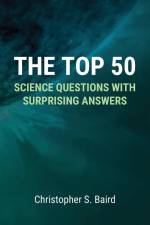
When will the planets align? Can it rain fish? How can you unlock the 90% of your brain that you never use? The actual answers to such questions may be different from what you would expect. In fact, the answers to many science questions can be quite surprising. In 2012, Dr. Baird began writing a series of immensely popular online articles for his website Science Questions with Surprising Answers, which were written for a general audience. He has now written over 350 of these articles. Each article takes the form of a highly-accurate answer to a particular science question, with information drawn from peer-reviewed journals, professional scientific organizations, university textbooks, and Dr. Baird's own first-hand expertise as a scientist. These articles do a marvelous job of making complex scientific concepts interesting and understandable to the average non-scientist. Of these 350+ online articles, this book contains the fifty most popular articles, as determined by the average number of article views per month. This book presents the articles in countdown fashion, ending at the number-one most popular surprising answer. Additionally, for this book, Dr. Baird has edited and expanded each of these science answers and added a bonus chapter. This ranked compilation of science questions and answers is an interesting representation of the science questions and answers that the world finds the most intriguing.
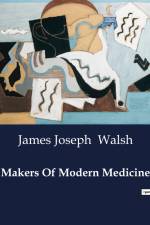
"Makers of Modern Medicine" is a book written by James J. Walsh. James Joseph Walsh (1865¿1942) was an American physician, historian, and author, known for his works in the history of medicine and science.Published in 1927, "Makers of Modern Medicine" likely profiles key figures and contributors to the field of medicine, highlighting their achievements and the impact they had on the development of modern medical practices. The book could cover a range of medical pioneers from various periods, providing insights into the evolution of medical knowledge and practices.If you are interested in the history of medicine and the individuals who played crucial roles in shaping the field, "Makers of Modern Medicine" by James J. Walsh could be a valuable resource. It may offer biographical information and historical context, showcasing the progress and challenges in the world of medicine up to the early 20th century.
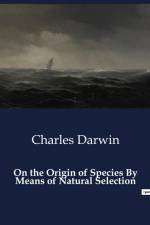
"On the Origin of Species by Means of Natural Selection" is a seminal work written by Charles Darwin. First published in 1859, this book represents a landmark in the field of biology and is considered one of the most important scientific works ever written.In "On the Origin of Species," Charles Darwin presents his theory of evolution by natural selection. The central idea is that species evolve over time through the differential survival and reproduction of organisms with advantageous traits. Darwin provides a wealth of evidence from various scientific disciplines, including paleontology, embryology, and biogeography, to support his theory.The publication of this book had profound implications for the understanding of the diversity of life on Earth and challenged prevailing scientific and religious views at the time. Darwin's work laid the foundation for modern evolutionary biology and continues to influence scientific thought to this day.
For some years, much of my leisure time has been devoted to the study of the anatomy, development, and habits of the Annulosa, and especially of Insects, on which subjects I have published various memoirs, chiefly in the Transactions of the Royal, Linnæan, and Entomological Societies: of these papers I subjoin a list. Although the details, of which these memoirs necessarily for the most part consist, offer little interest, excepting to those persons who are specially devoted to Entomology, still there are portions which, having reference to the nature of metamorphoses and to the origin of insects, are of a more general character. I have also briefly referred to these questions in a Monograph of the Collembola and Thysanura, recently published by the Ray Society, and in the Opening Address to the Biological Section of the British Association at Brighton in 1872. Under these circumstances, it has been suggested to me that a small volume, containing, at somewhat greater length, in a more accessible form, and with the advantage of illustrations, the conclusions to which I have been led on this interesting subject, might not be altogether without interest to the general reader. The result, which has already appeared in the pages of _Nature_, is now submitted to the public, with some additions. I am well aware that it has no pretence to be in any sense a complete treatise; that the subject itself is one as to which our knowledge is still very incomplete, and on which the highest authorities are much divided in opinion. Whatever differences of opinion, however, there may be as to the views here put forward, the facts on which they are based will, I believe, be found correct. On this point I speak with the more confidence, on account of the valuable assistance I have received from many friends: to Mr. and Mrs. Busk and Dr. Hooker I am especially indebted.
"How to Read Human Nature" is a book written by William Walker Atkinson. Published in the early 20th century, Atkinson's work often delves into topics related to New Thought philosophy, mysticism, and self-help. "How to Read Human Nature" likely explores the art of understanding and interpreting human behavior and characteristics.William Walker Atkinson was a prolific writer and one of the key figures in the New Thought movement. His writings often blended elements of psychology, philosophy, and spirituality. In this particular book, readers can expect insights into human behavior, personality traits, and potentially methods for better understanding and interacting with others.As with many works from this period, the content may reflect the cultural and philosophical ideas prevalent during the early 1900s. If you have an interest in the historical development of self-help literature or the New Thought movement, "How to Read Human Nature" could provide an interesting perspective from that era. Keep in mind that the scientific rigor of such works may vary, and the ideas presented may be more reflective of the beliefs of the time than contemporary psychological understanding.
The ancients laid down the laws of literary form in prose as well as in verse, and bequeathed to posterity works which still serve as models of excellence. Their poets and historians continue to be read for the sake of the narrative and beauty of the style; their philosophers for breadth and depth of thought; and their orators for judicious analysis and impassioned eloquence. In the exact sciences, too, the ancients were conspicuous leaders by reason of the number and magnitude of the discoveries which they made. You have only to think of Euclid and his "Elements," of Apollonius and his Conics, of Eratosthenes and his determination of the earth's circumference, of Archimedes and his mensuration of the sphere, and of the inscription on Plato's Academy, Let none ignorant of geometry enter my door, to realize the fondness of the Greek mind for abstract truth and its suppleness and ingenuity in mathematical investigation. But the sciences of observation did not advance with equal pace; nor was this to be expected, as time is an essential element in experimentation and in the collection of data, both of which are necessary for the framing of theories in explanation of natural phenomena.
We live in and form part of a system of things of immense diversity and perplexity, which we call Nature; and it is a matter of the deepest interest to all of us that we should form just conceptions of the constitution of that system and of its past history. With relation to this universe, man is, in extent, little more than a mathematical point; in duration but a fleeting shadow; he is a mere reed shaken in the winds of force. But as Pascal long ago remarked, although a mere reed, he is a thinking reed; and in virtue of that wonderful capacity of thought, he has the power of framing for himself a symbolic conception of the universe, which, although doubtless highly imperfect and inadequate as a picture of the great whole, is yet sufficient to serve him as a chart for the guidance of his practical affairs. It has taken long ages of toilsome and often fruitless labour to enable man to look steadily at the shifting scenes of the phantasmagoria of Nature, to notice what is fixed among her fluctuations, and what is regular among her apparent irregularities; and it is only comparatively lately, within the last few centuries, that the conception of a universal order and of a definite course of things, which we term the course of Nature, has emerged.
The literature of Botany can be traced back to a quite respectable antiquity, to the period of Aristotle (b.c. 384-322) who seems to have been the first to write of plants from the truly botanical point of view. Unfortunately, his special treatise on plants¿¿¿¿¿¿¿ ¿¿¿¿ ¿¿¿¿¿¿is lost; and although there are many botanical passages scattered throughout his other writings (which have been collected by Wimmer, Phytologiae Aristotelicae Fragmenta, 1836), yet none of them gives any indication of what his ideas of classification may have been. An echo of them is perhaps to be found in the works of his favourite pupil, Theophrastus Eresius (b.c. 371-286), who among all his fellows was the most successful in pursuing the botanical studies that they had begun under the guidance of the master. Theophrastus left behind him two important, though incomplete, treatises on plants, the oldest that have survived: the more familiar Latin titles of which are De Historia Plantarum and [De Causis Plantarum]. The latter is essentially physiological, touching upon agriculture to a certain extent: the former is mainly morphological, structural, descriptive, and it is here that the first attempt at a classification of plants is to be found. In writing the Historia, Theophrastus was endeavouring, as a Greek philosopher rather than as a botanist, to "give account of" plants; and in order to do so he found it necessary to arrange them in some kind of order.
It is the wire age. Modern life, in all its intricate bearings, runs on wire. Wire everywhere; in the heavens above, the earth beneath and the waters under the earth. In all the legerdemain of science, which has put nature in bondage, wire is the indispensable agent. A curious, slow, finical little trade at which the smiths of forgotten races toiled and pottered and ruined their eyesight for unnumbered thousands of years has become, within less than a century, under the spur of modern need and modern driving power, the pack-bearer of the world and the mainspring of every activity from the cradle to the grave. Wire still makes toys and gewgaws as it always did, but it is no longer the plaything of vanity alone. Cancel wire and wire rope and their concomitant, ¿flat wire,¿ from the inventory of human assets tomorrow, and the world would stop stock-still.
"Man's Place in the Universe" is a book written by Alfred Russel Wallace, a British naturalist, biologist, and co-discoverer of the theory of evolution by natural selection. The book, published in 1903, explores Wallace's thoughts on the significance of humanity in the context of the cosmos.In "Man's Place in the Universe," Wallace discusses topics related to the nature of the universe, evolution, and the unique attributes of human beings. He considers philosophical and scientific questions about the place of humans in the grand scheme of existence, addressing both the biological aspects of evolution and the broader implications for human consciousness and purpose.Alfred Russel Wallace's work contributed significantly to the development of evolutionary theory, and "Man's Place in the Universe" reflects his broader interests in natural philosophy. The book provides insights into the worldview of a prominent 19th-century naturalist and the intellectual climate of the time.
My Wide World of Sports captures the contests and personalities through the eyes of one person -- a sportswriter, magazine editor and most importantly a fan. Unique experiences and special individuals are captured and celebrated.
The Climate Change Debate: A Reference Handbook provides an in-depth look at climate change facts and statistics. It also discusses debate surrounding the scientific consensus.The Climate Change Debate: A Reference Handbook covers the topic of climate change from the earliest days of planet Earth to the present day. Chapters One and Two provide a historical background of climate change and a review of current problems, controversies, and solutions. The remainder of the book consists of chapters that aid readers in continuing their own research on the topic, such as an extended annotated bibliography, chronology, glossary, noteworthy individuals and organizations in the field, and important data and documents.The variety of resources provided, such as further reading, perspective essays about climate change, a historical timeline, and useful terms in the climate change discourse, differentiates this book from others in the field. The book is intended for readers of high school through the community college level, along with adult readers who may be interested in the topic.
This text was originally published in 2004 as a provisional road map gesturing to a plan of action for liberation at the level of the idea vitally compulsory to dismantle the hegemony of the white world order of power in the 21st century. Since 2004 deconstruction of the oeuvre of Frantz Fanon, Michel Foucault, Derek Walcott, the discourse of massa of African enslavement in the Caribbean and the Thought of Xi Jinping for the New Era have been published, which has changed the nature of the road map today versus that of 2004. An extensive revision of the text of 2004 was now necessary which focuses on the the nature of hallucinatory whiteness that afflicts non-white peoples under the hegemony of massa white world order of power, thereby rendering them incapable of liberating themselves at the level of the idea. The need now was to uncover hallucinatory whiteness as it constitutes human action and how the nature of this action is the product of hallucinatory whiteness hence it reinforces white hegemony over the non-white person at the level of the idea. To this end a deconstruction of the writings of Toussaint L'Ouverture of the Haitian Revolution, George Jackson of the African Revolution of Amerikkka and skin bleaching in the Caribbean in the 21st century are presented as case studies illustrating potently the debilitating power hallucinatory whiteness wields over the mind of non-white persons who insist they are champions of liberation, which drives the resilience of massa hegemony over non white peoples of the world.
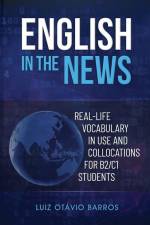
Master English news vocabulary in months, not years.>But there's a solution: English in the News. English in the News is your comprehensive guide to news-related vocabulary, created by the author of the best-selling title The Only Academic Phrasebook You'll Need, which has helped more than 50,000 students worldwide. As the first and only book of its kind, English in the News will dramatically improve your understanding of English news and your ability to engage in conversations about current events. Here's what makes English in the News a unique and essential resource: Real-world vocabulary: Learn dozens of words and expressions commonly used in news stories, but often ignored by other books.Self-study made easy: Explore hundreds of headlines adapted from authentic sources and explained in simple, everyday English.Flexible learning: Use the book on demand, as a mini dictionary, or one lesson at a time to gradually increase your word power.Focus on collocations: Understand how words are used in real life, based on data from the 19-billion-word News on the Web corpus. Plus: Pronunciation tipsAudio support via QR codesReview exercises English in the News is not just another vocabulary book. It's a tool to help you stay on top of global news. Tap/Click on "read sample" to embark on your journey to mastering news vocabulary.
This book highlights the contribution in the very recent past made by Indian scientists in India. This Volume proves-detail and up-to-date chapters about the advancement of biochemistry and biotechnology. This book contains chapter such as Current Changing Scenario of Biotechnology and Biochemistry; Recent Developments in Chondrocyte Cultures and Cartilage Engineering; Human Granulocyte-Colony Stimulating Factor: A Therapeutic Protein; Chemical Analysis of Leaves of Cestrum diurnum (L) (Solanales: Solanaceae) and Seasonal Variation of Some Primary and Secondary Biochemicals; Protein Folding Pathways; Its Kinetics and Related Functions; Recombinant Therapeutic Proteins from Bacteria, Animal and Plant Cells; Programmed Cell Death: An Overview; Biocatalysis: An Emerging Field in the Synthesis of Eenatio-Pure Compounds; Use of Immunostimulant in Aquaculture; Application of Environmental Biotechnological Tools in Water Resource Development; Induced Breeding Techniques for Aquaculture; Pharmacogenomics Based Emerging Drug Discovery Strategies. This book will be of immense value to the researchers, both the postgraduate and undergraduate students desirous of replenishing latest information on advance of Biotechnology and Biochemistry
The book Biology: Fundamental Principles is designed to serve as a text book for B.Sc. (Agricultural & Traditional University) students and would be of help to those in M.Sc. This book covers origin of life and its evidences, classification and taxonomy of plant & animals. In this book also includes basic biology principles viz., cell & its division and germination of crops. As far as possible, the examples are drawn from Indian experience. The book is written in simple language and even complex concepts have been reduced to early understandable discussions. The authors are attempted incorporate the recent developmental information in field of biology without sacrificing the simplicity of language or style. Discussions on nomenclature, introduction to Genetics and plant systematics-study of families are unique features of this book.
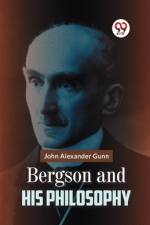
"Bergson and His Philosophy" by John Alexander Gunn is a landmark work that provides a detailed analysis of Henri Bergson's philosophical beliefs, a notable French philosopher of the late nineteenth and early twentieth century. Gunn dives deeply into Bergson's philosophical views, clarifying his thoughts on time, intuition, and the essence of reality. He delivers Bergson's ideas in a straightforward and understandable manner, making them accessible to both scholars and ordinary audiences. Bergson's concept of "duration," a major part of Bergsonian philosophy, is one of the central subjects Gunn investigates. He investigates how Bergson's ideas challenged conventional views of time and provided a fresh look at human awareness and the meaning of existence. Furthermore, Gunn places Bergson's work in historical context, offering insight on the intellectual atmosphere of the time and the influence of thinkers such as Immanuel Kant and Arthur Schopenhauer on Bergson's philosophy. In "Bergson and His Philosophy," John Alexander Gunn not only provides a clear explanation of Bergson's views, but he also exhibits his own intellectual ability. The book is an invaluable resource for anybody seeking to comprehend Henri Bergson's significant and original contributions to the realm of philosophy.
Enrico is an author, illustrator, actor, and martial artist based in Miami and New York City. He began his martial arts training at the age of eleven with his uncle who was a student of Ron Van Clief. Chinese Goju was his first martial art. He later picked up martial arts again as an adult under the instruction of Tracy Tyler, a past student of the Jujitsu master Moses Powell. After two years of training with Tracy he attended City Wing Tsun in Manhattan earning a black belt in 2019. He currently trains in both the William Chung and Lung Ting lineages.Enrico Miguel Thomas earned a BFA from his alma mater, Pratt Institute in Brooklyn, New York two years ago, ending his studies there with an exhibition about construction equipment and industrial spaces. After graduating he decided to continue in this artistic genre by extending his ideas into the New York City Transit System. Eventually Enrico would use the actual New York City Subway map as his drawing paper, resulting in a most interesting collaboration of his signature architectural style with the abstract quality of the subway map.
"Prepared for the Department of the Air Force."
Henry and Parker canoe the Middle Fork of the Koyukuk River in the Gates of the Arctic National Park above the Arctic Circle in Alaska.
Dive into the strategic world of flag football with Jordon Replogle, a seasoned gridiron veteran with a passion for the game that spans playing fields and coaching sidelines alike. In this comprehensive playbook, Replogle shares his wealth of experience, providing readers with a tactical roadmap to elevate their flag football game."Flag Football 6v6 Playbook" is not just a guide; it's a treasure trove of insider knowledge derived from Replogle's remarkable journey through high school, college, semi-pro, and arena football. As a coach with eight seasons of flag football under his belt, Jordon seamlessly translates his on-field prowess into a resource that caters to players and coaches at all levels.Inside this playbook, readers will find a dynamic array of sample plays that have been battle-tested on the field. From clever offensive formations to strategic defensive setups. The book also features a sample practice outline, allowing coaches to structure their training sessions effectively, maximizing player development and team cohesion.One unique highlight of the playbook is the inclusion of play sheets and wristband plays, providing practical tools for immediate implementation on the field. Replogle's meticulous attention to detail ensures that both novice and experienced players can grasp the intricacies of flag football strategy.Whether you're a player looking to up your game or a coach aiming to refine your team's approach, "Flag Football 6v6 Playbook" by Jordon Replogle is your indispensable guide to mastering the art of flag football. Get ready to take your plays, formations, and overall understanding of the game to the next level with the wisdom of a true football aficionado.
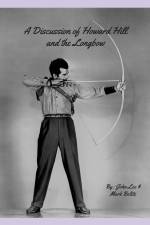
The "King of Archery," "The World's Greatest Archer," "One-Shot," all names referring to Howard Hill -the champion of the longbow. No matter the title, Howard Hill was legendary, and his success led to the promotion of traditional archery and a surge of interest in the American Semi-Longbow.Howard Hill viewed the longbow as the most perfect hunting weapon. His modification of the English longbow to suit his needs, became the American Semi-Longbow. The American Semi-Longbow is synonymous with a Hill-style longbow -the bow that led him in his success.Today there are many versions of the American Semi-Longbow. In a quest to find the features that Howard Hill demanded in his own bows, a weapon that he perfected, was the impetus of this study. We can identify his standards by how his bows were built, what he insisted on in his own line of bows offered to the public, and what he taught to the bowyers employed by him. By examining Howard's original bows and following the progression of design until he perfected this weapon, we understand the qualities necessary in a Hill-style longbow. If you would like to know more about the equipment and the bow that led to his success, then you will enjoy this book.Metadata may include Howard Hill, John Schulz, Traditional Archery, Bamboo Bows, Stick Bows, Self Bows, ASL, Hill-Style Longbow, Archery Hunting, Archery History in America, Hunting with the Bow and Arrow, and Hunting the Hard Way.
Abonner på vårt nyhetsbrev og få rabatter og inspirasjon til din neste leseopplevelse.
Ved å abonnere godtar du vår personvernerklæring.