





Gjør som tusenvis av andre bokelskere
Abonner på vårt nyhetsbrev og få rabatter og inspirasjon til din neste leseopplevelse.
Ved å abonnere godtar du vår personvernerklæring.Du kan når som helst melde deg av våre nyhetsbrev.

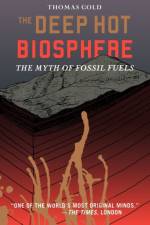
This book sets forth a set of truly controversial and astonishing theories: First, it proposes that below the surface of the earth is a biosphere of greater mass and volume than the biosphere the total sum of living things on our planet's continents and in its oceans.
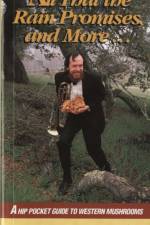
An illustrated guide to identifying 200 Western mushrooms - whether edible, poisonous, or medicinal - by their key features."In leafing through these pages, you may wonder what all the ''fanciful,'' ''foolish,'' or (shudder) ''extraneous'' material is doing in a factual guide. After all, it is the practical, hands-on, how-to-identify information that makes this book useful and gives it substance. But I ask: is it any stranger or less desirable to sprinkle the facts with flakes of fancy than it is to liven up solemn, substantial fare like potatoes with something fancier and more flavorful, like wild mushrooms?" - David Arora"[All That the Rain Promises and More] is certainly the best guide to fungi, and may in fact be a long lasting masterpiece in guide writing for all subjects." - Roger McKnight, New York Times
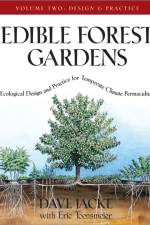
A comprehensive resource for ecological gardeners
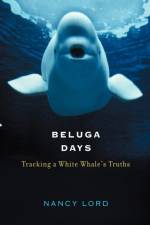
This study of the Beluga whales of Cook Inlet reveals an isolated and genetically distinct population of fascinating creatures.Living in waters adjacent to Anchorage, Alaska, and thought to number more than 1000 in the early 1990s, a sharp population decline has brought Beluga whales to near extinction. Original in approach and incisive in its questions, Beluga Days explores how conservation laws, management policies, and human behaviors have affected the shrinking beluga population. From hunters, regulators, environmentalists, researchers, and businesspeople to whale enthusiasts, Lord encounters an ongoing debate wrestling with the immediate need to protect the whales, as well as a respect for the centuries-old tradition of Native subsistence hunting. Beyond its compelling characters and particulars, Lord's story offers readers a deeper understanding of the often uncomfortable, often rewarding, juxtaposition of humans and the natural world.
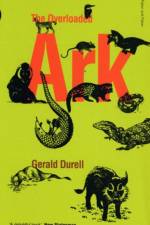
Gerald Durrell, director and owner of Jersey Zoo, was internationally famous for his amusing books about collecting wild animals. It describes an expedition to the remote territory of the Cameroons in West Africa, before independence. 'A delightful book .
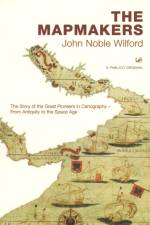
It traces the adventures, discoveries, and feats of technical ingenuity by which mapmakers, over the centuries, have succeeded in charting first the surface of the globe, then the earth's interior and the ocean floors, and finally the moon and the planets of our solar system.
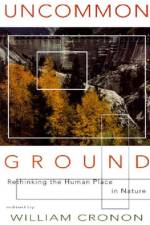
A controversial, timely reassessment of the environmentalist agenda by outstanding historians, scientists, and critics.
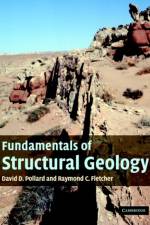
Fundamentals of Structural Geology presents a modern quantitative approach to structural geology and tectonics for advanced students and researchers. It emphasizes the observational data, modern mapping technology, principles of continuum mechanics, and the mathematical and computational skills, necessary to quantitatively map, describe, model, and explain deformation in Earth's lithosphere.
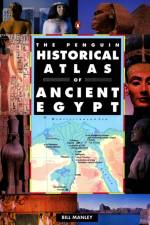
From its humble origins as a cluster of rival chiefdoms along the banks of the Nile, ancient Egypt rose to become one of the most advanced civilizations of its time. This atlas traces its turbulent history and remarkable cultural development, from the founding of Memphis around 5000 BC onwards.
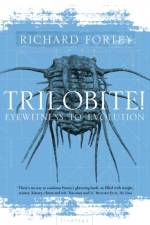
'In Richard Fortey's capable hands the humble grey trilobite has been transformed into the E.T. of the Lower Palaeozoic - a remarkable and fascinating book.' SIMON WINCHESTER
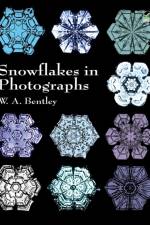
For almost a century, W. A. Bentley caught and photographed thousands of snowflakes in his workshop at Jericho, Vermont, and made available to scientists and art instructors samples of his remarkable work. His painstakingly prepared images were remarkable revelations of nature's diversity in uniformity: no two snowflakes are exactly alike, but all are based on a common hexagon.In 1931, the American Meteorological Society gathered the best of Bentley's photos and had them published; that work has long been available in a Dover reprint edition. The present volume includes a selection of 72 of the best plates (containing over 850 royalty-free, black-and-white photographs), carefully selected from that larger collection.An inexhaustible source of design inspiration for artists, designers, and craftspeople, these graceful patterns are ideal for use in textile and wallpaper design, as well as a host of other creative projects. These images will also appeal to anyone intrigued by the intricacy and beauty of design in the natural world.
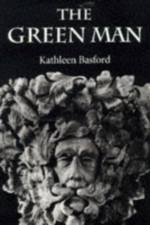
Delightful, oft-reprinted guide to the foliate heads so common in medieval sculpture. This was the first-ever monograph dedicated to the Green Man.
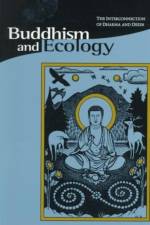
In this book, 20 religionists and environmentalists examine Buddhism's understanding of life's web. In noting the cultural diversity of Buddhism, they highlight aspects of the tradition that may help formulate an effective environmental ethics, citing examples from Asia and the U.S. of socially engaged Buddhist projects to protect the environment.
The Penguin Atlas of Ancient History illustrates in a chronological series of maps, the evolution and flux of races in Europe, the Mediterranean area and the Near East. From 50,000 B.C. to the fourth century A.D., it is one of the most successful of the bestselling historical atlas series.
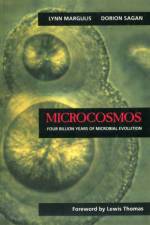
Brings together the various discoveries of microbiology. Of interest to general readers, this book provides a view of evolution as a process based on interdependency and their interconnectedness of life on the planet.
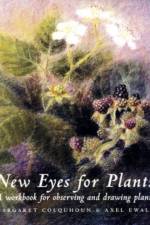
Features of the book include: a companion guide to plant development round the seasons; numerous illustrations to accompany the text; exercises for observing and for drawing plants; how science can be practised as an art; an introduction to the holistic approach of Johannes Wolfgang Goethe; and further resources and contacts for workshops are listed.
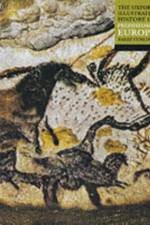
This is a comprehensive study of the early history, art and archaeology of Europe, ranging from the coming of Stone Age Man to the fall of the Roman Empire. Containing over 300 plates, maps and drawings, this book is unique in its approach to the history of civilization as a response to the changing European landscape and environment.
'A wonderful piece of polemic against everything that's wrong with the way we deal with time today.' Independent
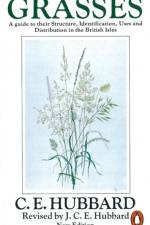
After the concise and informative descriptions of the structure of grasses and their flowers, there are lists of grasses for various habitats, followed by a key to grasses in flower. It provides excellent scientific illustrations of the major grasses found in the UK and information on the preferred conditions for each grass.
The brilliantly told and gripping story of the most familiar - yet, amazingly, still poorly understood - substance in the universe: Water.
A biodiversity hotspot, Florida is home to many ecosystems and species that evolved in the presence of frequent fire. In this book, Reed Noss discusses the essential role of fire in generating biodiversity and offers best practices for using fire to keep the region's ecosystems healthy and resilient. Reviewing several lines of evidence, Noss shows that fire has been important to the southeastern Coastal Plain for tens of millions of years. He explains how the region's natural fire regimes are connected to its climate, high rate of lightning strikes, physical chemistry, and vegetation. But urbanization and active fire suppression have reduced the frequency and extent of fires. Noss suggests the practice of controlled burning can and should be improved to protect fire-dependent species and natural communities from decline and extinction. Noss argues that fire managers should attempt to simulate natural fire regimes when conducting controlled burns. Based on what the species of the Southeast likely experienced during their evolutionary histories, he makes recommendations about pyrodiversity, how often and in what seasons to burn, the optimal heterogeneity of burns, mechanical treatments such as cutting and roller-chopping, and the proper use of fuel breaks. In doing so, Noss is the first to apply the new discipline of evolutionary fire ecology to a specific region. This book is a fascinating history of fire ecology in Florida, an enlightening look at why fire matters to the region, and a necessary resource for conservationists and fire managers in the state and elsewhere.
Abonner på vårt nyhetsbrev og få rabatter og inspirasjon til din neste leseopplevelse.
Ved å abonnere godtar du vår personvernerklæring.