






Gjør som tusenvis av andre bokelskere
Abonner på vårt nyhetsbrev og få rabatter og inspirasjon til din neste leseopplevelse.
Ved å abonnere godtar du vår personvernerklæring.Du kan når som helst melde deg av våre nyhetsbrev.

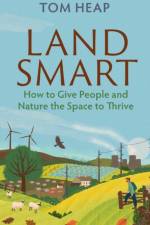
A compelling investigation into how we need to urgently change our relationship with the land by BBC and Sky journalist Tom Heap, who has been reporting on science and the environment for over 25 years.
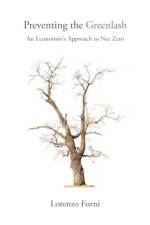
We have almost everything we need to tackle climate change, except political determination. Lorenzo Forni dissects the net-zero challenge and offers a clear-sighted strategy for policymakers, who need to enact complex green policies while keeping voters on board with the net-zero agenda.
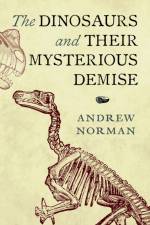
The dinosaurs are a source of endless fascination, and each new generation is inspired and enchanted by images of these wondrous and awe-inspiring creatures that dominated the Earth eons of time ago. The smallest was the size of a chicken; the largest on record, the titanosaur _Argentinosaurus huinculensis_, weighed about 95 tonsâEUR"fifteen times as much as an African bull elephant (todayâEUR(TM)s largest terrestrial creature). Dinosaurs ruled the Earth for no less than 181 million years: about 600 times longer than _Homo sapiens_ have existed on the planet (_Homo sapiens_ is defined as the primate species to which modern humans belong: the first modern humans having evolved in Africa about 300,000 years ago). Today, the consensus is that the dinosaurs became extinct when a meteorite impacted with the Earth 66 million years ago, covering it with a thick layer of soot and throwing up enormous quantities of dust which caused the sky to darken, and photosynthesis on which all terrestrial animals ultimately depend for their survival to cease. The unanswered question, however, is how did mammals, reptiles, and birds (which are the only species of dinosaur to survive) escape this holocaust?An entirely new theory is put forward for the first time to explain this mysterious and intriguing phenomenon.
Climate Change is coming for us. Its impacts will be universal and will have profound effects upon human health. It is vital we understand what these effects will be so we can - as individuals, healthcare systems and countries - try to mitigate and prepare for them. Climate change is becoming increasingly personal, about you and me rather than about strangers in far off countries. This book is about how our climate is changing, the direct effect these changes will have on our well-being and the urgent choices we need to make
"The years 2021 to 2030 have been designated "The United Nations Decade on Ecosystem Restoration". Ecological restoration and biodiversity conservation efforts face unprecedented challenges, especially in developing countries and areas, such as the Hindu Kush-Himalayan (HKH) region. The huge HKH region is a biodiversity hotspot with a vast array of ecosystems, landscapes, peoples and cultures. It is known as one of "the pulses of the world". However, the HKH is also the world's largest and poorest mountain region, where landscapes and environments have been severely eroded as a result of climate change and human activity. The HKH region includes areas in eight separate countries (Afghanistan, Pakistan, Nepal, India, China, Bangladesh, Myanmar and Bhutan). Coordinating conservation and restoration policies, sharing knowledge, funds and maintaining livelihoods are major challenges and are in urgent need of improvement. This book details the past and current ecological problems in the HKH region, and the threats and challenges that ecosystems and local people face. It pays special attention to developments of transformative adaptations and gives examples of sustainable conservation and ecological restoration management practices. Three primary questions are addressed: (1) Do the existing conservation strategies of international organizations and government policies really protect ecosystems and solve biodiversity problems? (2) Can these management measures be one-time solutions? and (3) What is the strategic framework and scenario prognosis for the future based on the historical trajectory of ecological conservation and restoration in the region? This book will be essential reading for ecologists and conservation biologists involved in large-scale ecological restoration projects, along with practitioners, graduate students, policy makers and international development workers"--
"This new edition provides a substantially updated, authoritative, critical and yet accessible perspective on public health aspects of climate change, including chapters on "cross-cutting" issues (e.g. mental health) and the impacts on several regions, including China, Africa and South Asia"--
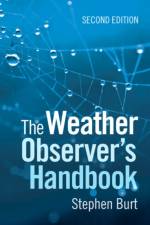
This handbook provides a comprehensive, practical, and independent guide to all aspects of making weather observations. The second edition has been fully updated throughout with new material, new instruments and technologies, and the latest reference and research materials. Traditional and modern weather instruments are covered, including how best to choose and to site a weather station, how to get the best out of your equipment, how to store and analyse your records and how to share your observations. The book's emphasis is on modern electronic instruments and automatic weather stations. It provides advice on replacing 'traditional' mercury-based thermometers and barometers with modern digital sensors, following implementation of the UN Minamata Convention outlawing mercury in the environment. The Weather Observer's Handbook will again prove to be an invaluable resource for both amateur observers choosing their first weather instruments and professional observers looking for a comprehensive and up-to-date guide.
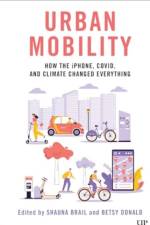
This book examines shifts in urban mobility with a focus on technological disruption, pandemic-induced travel change, and the climate crisis in twenty-first century Canadian cities.
This book examines shifts in urban mobility with a focus on technological disruption, pandemic-induced travel change, and the climate crisis in twenty-first century Canadian cities.
The first objective of this books is to provide the beginning student with some insight into a few selected topics in physical geology. The list of topics is certainly not exhaustive but includes those that are considered "building block" subjects, such as rocks and minerals and the elements of maps. More importantly, however, only topics with some practical orientation have been included. The second objective is to demonstrate how, with a very limited background in science and mathematics, one can easily solve seemingly difficult problems. Although the problems at the end of the chapters are hypothetical, they have their origins in dilemmas facing professionals daily in the field. The final objective is to give those with only a passing interest in geology an appreciation and an insight into how applications of this science are at work all around them.
The fourth edition of a well-established book in cartography explores the continued evolution of the Internet and Web 2.0 and captures the analysis and visualization of Big Data. Thoroughly revised, this textbook equips educators and benefit students with the most valuable up-to-date learning resource available in the cartographic field.
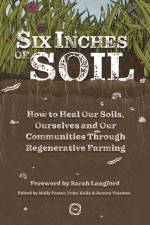
Six Inches of Soil the film and this companion book is the inspiring story of British farmers standing up to the industrial food system and transforming the way they produce food - to heal the soil, benefit our health and provide for local communities. It will be of great interest to those in farming, food production and anyone who eats. Through detailed interviews with three remarkable new farmers in the first year of their regenerative journey, industry experts and leading lights in the movement for change, Six Inches of Soil explores the connection between food and health, food poverty and affordability, the role of animals in the farming system, Britain's hugely unequal system of land ownership, barriers to new entrant farmers especially from diverse backgrounds and whether there is a place for carbon offsetting on farms. It brings to life what it feels like to farm agroecologically - to farm with authentic connection with the land, changing seasons and the environment, to produce food for people you know and care about in the local community: to spend your days with your hands in the soil. Six Inches of Soil shows that agroecological farming is not simply a job, but a way to live values and engage in practices that not only nourish the planet but also the farmers themselves. Half of the profits from book sales will go to the community interest company driving the follow up impact campaign.
Climate is generally thought as an uncontrollable factor, and this book provides an understanding of the agroclimatic system and its influences on the failure or success of agricultural development activities; looking at misunderstandings and the value of research into this area.
Bringing together leading subject experts, this book compares and situates Canadian municipal institutions, urban governance systems, and policy-making in global debates about democratic governance.
Abonner på vårt nyhetsbrev og få rabatter og inspirasjon til din neste leseopplevelse.
Ved å abonnere godtar du vår personvernerklæring.