















Gjør som tusenvis av andre bokelskere
Abonner på vårt nyhetsbrev og få rabatter og inspirasjon til din neste leseopplevelse.
Ved å abonnere godtar du vår personvernerklæring.Du kan når som helst melde deg av våre nyhetsbrev.

GEOTECHNICAL ASPECTS OF UNDERGROUND CONSTRUCTION IN SOFT GROUND serves as an invaluable resource offering insights into the contemporary methods of analyzing, designing, and executing tunnels and deep excavations within soft ground environments, crucial for the advancement of smart cities.
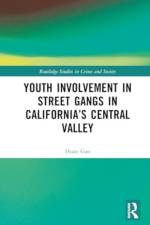
This timely, insightful, and data-led book fills a gap in gang scholarship by examining gangs in rural areas, specifically focussing on youth gang activity.
This reference book collates traditional and modern applications of remote sensing in aquatic ecosystem monitoring. It covers conventional assessment methods and discusses space-borne, airborne, and drone geospatial data. The five sections cover aquatic ecosystem monitoring, vegetation management, advanced modeling practices, and challenges.
This book covers state-of-the-art resource recovery technologies from the different components of solid waste such as plastics, e-waste, fly ash, sewage sludge and slag and their real applications. Further, it explains various management strategies for agricultural waste including generation of bioenergy from agri-crop residue.
This book reviews the critical scope of nuclear materials, which play an essential role in decreasing greenhouse gas emissions. It traces historical landmarks from the years preceding World War II to the atomic bomb era.
This fascinating collection shines a social epidemiological spotlight onto the key public health issues effecting sub-Saharan Africa today. Providing a timely overview of the relationship between social systems and human biology, this important book will interest students and researchers across Public Health, Medicine and African Studies.
A unique history examining the evolution of global environmental governance through the lens of one city. It explores the impact of the seminal 1972 U.N. Conference on the Human Environment and the outsized role of Stockholm-based actors in generating knowledge and shaping institutions. This title is also available as Open Access on Cambridge Core.
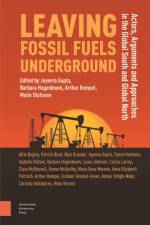
How can societies move away from a century-old global system based on fossil fuels and the deeply vested economic, financial, and political interests and patterns associated with them? Despite thirty years of international climate negotiations, industrialized countries continue to exploit new fossil fuel reserves. Many countries in the Global South have followed suit and still engage in large new fossil fuel projects with all that that entails, including pollution, social injustice, and debt. Increasingly, however, social and political actors are mobilizing to Leave Fossil Fuels Underground (LFFU). This book examines the roles played by key actors and the arguments and approaches they employ in promoting the rapid phase-out of fossil fuels. Along with local resistance, it also explores policy initiatives, both national and international, and the financial mechanisms used by actors ranging from social movements to investors and from state to nonstate actors. In Leaving Fossil Fuels Underground, an international team of well-established authors takes a global perspective and pays special attention to Africa and Latin America, with case studies on South Africa and Ecuador.
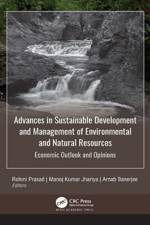
This book addresses the varied aspect of natural resources and their management in conjunction with socioeconomic aspects.
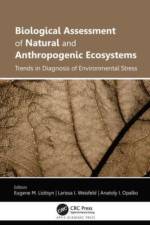
Presents diverse methods and achievements in assessing the biological state of ecosystems with biochemical, genetic and cytological methods.
The need for exploration, conservation, and sustainable utilization of bioresources is undeniable for the survival and growth of mankind. This new book throws light on new and recent research on and development of effective strategies for sustainable utilization of bioresources using modern tools and techniques to help meet this challenge.
The intricate relationship between food, city, and architecture, spanning from ancient civilizations to the present, serves as a focal point for interdisciplinary discourse. This book delves into a diverse set of cases throughout history in which processes related to food significantly influenced architectural or urban designs.
What better gift for a rambler than this delightful, clearly written and well researched guide to some of the UK's best walks with watering holes en route? .... With 'How to get there' details and an easy-to-follow map, plus an OS Map reference, this is the ideal companion." BBC Countryfile Magazine
This fascinating collection shines a social epidemiological spotlight onto the key public health issues effecting sub-Saharan Africa today. Providing a timely overview of the relationship between social systems and human biology, this important book will interest students and researchers across Public Health, Medicine and African Studies.
The book, which is beautifully illustrated seeks to immerse you in the life of the hare and the beauty of nature. Jigfoot can teach us all a lot about the importance of enjoying simple pleasures and embracing the nature we share our world with.
In this book, Elliott Schwebach explores why property can be understood to be oppressive and how political theory overlooks its significance as a pillar of social violence. This unique perspective will be an indispensable resource for scholars of property, Freudian psychology, political ecology, and the visionary thought of Frantz Fanon.
The book explores the use of AI and ML techniques for the design, characterization, and development of prediction analysis of sustainable polymer composites.
Advances in Sustainable Biomaterials: Bioprocessing 4.0, Characterizations, and Applications presents key chapters on smart biopolymer composites production, and processing methods and provides a wide range of applications in a variety of fields such as medical, food, agriculture, electronics, manufacturing, and chemical engineering.
A celebration of the British elm and positive hope for its future, with stunning photography.
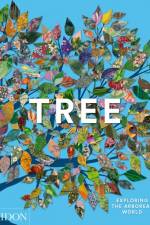
An extraordinary collection of more than 300 images celebrating the beauty and diversity of trees This exquisite survey presents a breathtaking sequence of full-page images - from landscape paintings and botanical drawings to ancient frescos, vintage book illustrations and contemporary photographs - revealing the tree as a source of inspiration throughout history. Spanning continents and cultures, Tree reflects the diversity of its subject, depicting giant sequoias, cherry blossoms, palms, poplars, ginkgoes and other species found across Earth's forest biomes, in a wide-ranging selection of visuals dating from Ancient Greece to the present day. More than 300 images include Roman stone mosaics, illustrated Norse myths, Edo-period woodblock prints and living tree installations, each lavishly reproduced. Curated by an international panel of botanists, naturalists, art historians and other experts, the images expand the definition of botanical art, together forming a vibrant, vital homage to the natural world. Featured artists and contributors include: Ansel Adams, Yann Arthus-Bertrand, Ruth Asawa, Paul Cézanne, Agnes Denes, Albrecht Dürer, Caspar David Friedrich; Global Forest Watch, Andy Goldsworthy, Ernst Haeckel, Utagawa Hiroshige, Frida Kahlo, Yayoi Kusama, Sally Mann, Grandma Moses, Marianne North, Pierre-Joseph Redouté, Daniel Roseberry for Schiaparelli, Antoine de Saint-Exupéry, Sebastião Salgado, and Yokohama Nursery Co., among others.
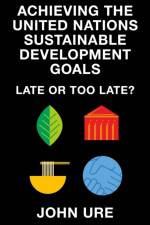
Cutting through the huge volume of literature for each of the SDGs as 2030 closes in, this immensely readable primer makes sense of the state of play for some of the most pressing existential questions of our time.
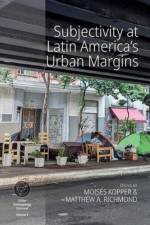
"Extreme inequalities, uneven planning, and unruly environments have long shaped individual and collective subjectivities at Latin America's urban margins. Yet these same margins have frequently given rise to new forms of community organization, cultural practice, and social mobilization. This volumeframes the urban margins as complex and multi-layered sites where ongoing translocal histories of exploitation and marginalization meet distinctly local and interpersonal forms of sociability, subjective belonging, and political agency. Through nuanced ethnographic work and cross-disciplinary theoretical insights, Subjectivity at Latin America's Urban Margins unpacks this complexity, investigating how margins are upheld, negotiated, and challenged"--
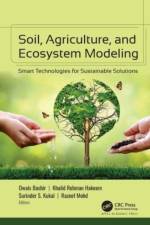
Discusses soil, agriculture, and ecosystem modeling using artificial intelligence technologies for fostering smart sustainable agricultural practices. It provides insight into sustainable agriculture, crop protection and management, soil carbon sequestration, and ecology preservation.
Abonner på vårt nyhetsbrev og få rabatter og inspirasjon til din neste leseopplevelse.
Ved å abonnere godtar du vår personvernerklæring.