





Gjør som tusenvis av andre bokelskere
Abonner på vårt nyhetsbrev og få rabatter og inspirasjon til din neste leseopplevelse.
Ved å abonnere godtar du vår personvernerklæring.Du kan når som helst melde deg av våre nyhetsbrev.

This book underlines the importance of establishing, in the planning and urban policies oriented towards sustainability, a relationship between the urban expansion, and the ability of soil and landscape to support agricultural productivity and interface processes.
What happened to the loggers of America's past when lumbermen moved west and south in the late nineteenth and early twentieth centuries? How did these communities continue to create value and meaning in these marginal lands? Cutover Capitalism: The Industrialization of the Northern Forest provides a new perspective on the process of industrialization in America through the study of rural workers in a cutover landscape. Back when resources started running scarce, the environment of the forest and bodies of workers became the natural resources from which mills and landowners extracted. Bodies and cutover landscapes were mobilized in new ways to increase the scale and efficiency of production-a brutal process for workers, human and animal alike. In the Northern Forest, an industrial working class formed in relation to the unique ways that workers' bodies were used to produce value and in relation to the seasonal cycles of the forest environment.Cutover Capitalism is an innovative historical study that combines methodological approaches from labor history, environmental history, and the new history of capitalism. The book tells a character-driven yet theoretically sophisticated story about what it was like to live through this process of industrialization.
As the climate crisis ensues, a transition away from fossil fuels becomes urgent. However, some renewable energy developments are propagating injustices such as landgrabs, colonial dispossession, and environmentally destructive practices. Changing the way we imagine and understand wind will help us ensure a globally just wind energy future.Saharan Winds contributes to a fairer energy horizon by illuminating the role of imaginaries-how we understand energy sources such as wind and the meanings we attach to wind-in determining the wider politics, whether oppressive or just, associated with energy systems. This book turns to various cultures and communities across different time periods in Western Sahara to explore how wind imaginaries affect the development, management, and promotion of wind farms; the distribution of energy that wind farms produce; and, vitally, the type of politics mediated by all these elements combined. Highlighting the wind-fueled oppression of colonial energy systems, the book shows the potential offered by nomadic, Indigenous wind imaginaries for contributing to a fairer energy future.
This is a love letter to Loughrigg. It's one of the smallest fells in the Lake District, but Loughrigg is small in height only.
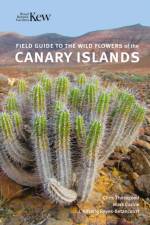
A long-awaited field guide to the flora of the Canary Islands including over 2000 species.
Through a series of short, sharp chapters, Placemaking: People, Properties, Planning delivers a cross-disciplinary critique of placemaking, examining how placemaking occurs, the quality of the places produced, and the experiences of those living and working in them.
During the Covid-19 pandemic, the term "vulnerable" was applied to "individuals" and to "populations", "groups" and "countries" in discussions, laws and regulations; now it applies to all objects in relation to all kinds of threats. However, rather than a label for governing people and places, the notion of "vulnerability" was expected to become an instrument to tackle the root causes of disasters, poverty and maldevelopment, as well as the inequalities and injustices they bring, whether social, political, economic or environmental. Despite this radical dimension, vulnerability has gradually been incorporated into public policies and international recommendations for global risk and disaster management. This book is intended for researchers, students, managers and decision makers concerned with the management of not only risks and crises but also climate and environmental change. The first part examines the multiple theoretical and conceptual approaches; the second explores vulnerability assessments, using examples from the Global North and Global South; and the third discusses tools, public policies and actions taken to reduce vulnerability.
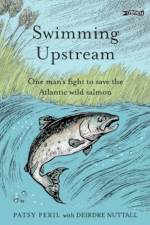
Patsy Peril was born in 1943 in Coonagh, a small fishing community on the Shannon, not far from Limerick. His family fished from a traditional gandelow boat, using hemp nets. Further upriver was Ardnacrusha, the enormous hydro-electric station, opened in 1929 and hailed as an engineering marvel, which provided 87% of the country's electricity.Even before the station opened, concerns were raised about the effect it would have on the river's wild salmon, blocking them from swimming upstream to spawn. And the concerns proved well-founded - salmon numbers plummeted and have continued to do so ever since. The problem is exacerbated by fish farms in the Shannon estuary, where disease and parasites are rampant among the tightly crowded fish.Patsy has made it his mission to do what he can to save the Shannon's wild salmon, and indeed wild salmon all over the Atlantic. He has campaigned restlessly on the subject for decades, working with the North Atlantic Salmon Conservation Organisation.
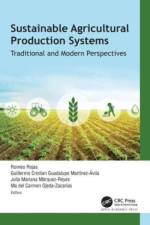
Discusses both traditional and modern forms of agricultural production focussing on sustainable practices. It discusses seed improvement, crop protection, phytosanitary aspects, protected agriculture, plant factories, hydroponic systems, mechanization, bioremediation, reduction of herbicide use, and characterization of bioactive compounds.
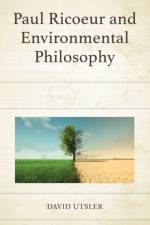
Paul Ricoeur and Environmental Philosophy expands the scope of Ricoeur's hermeneutics to issues of environmental philosophy and discusses the ways in which Ricoeur's hermeneutics has the potential to restructure the discourse and dialogue surrounding environmental issues.
A series of interviews with Noam Chomsky, the world's greatest living public intellectual, about the pressing issues of our timeThe interviews in this volume with the world's greatest public intellectual alive, and one of the most cited scholars in modern history, are a sequel to the collection of interviews that appeared in Illegitimate Authority- Facing the Challenges of Our Time . They extend and update discussions on some of the most pressing world problems, such as the climate crisis, the consequences of the ongoing war in Ukraine and the rising nuclear risk, while exploring at the same time the features of the emerging new world order and looking at the dangerous new hot zones around the globe. The fascist threat in the United States and Biden's foreign policy add to concerns both about the future of whatever is left of American democracy and that of the world at large. However, 'optimism over despair' has always been one of Noam Chomsky's mottos, and thus he contends that humanity can avert a climate catastrophe and a nuclear holocaust. He is 95 years old and still stresses with the same firm conviction that has characterized his entire extraordinary life that activism is key to building a better world.
Based on theatrical research of unusual depth and enterprise, Theatre as a Weapon (1986) shows how the workers' theatre of the 1920s and 1930s transformed the social function of theatre. Drawing largely on unpublished sources, it provides lively case studies of workers' theatre in the USSR, Germany and the United Kingdom.
Based on theatrical research of unusual depth and enterprise, Theatre as a Weapon (1986) shows how the workers' theatre of the 1920s and 1930s transformed the social function of theatre. Drawing largely on unpublished sources, it provides lively case studies of workers' theatre in the USSR, Germany and the United Kingdom.
This book examines Punjab river waters controversy in South Asia, a major defining feature of Punjab politics. It will be of interest to academics studying South Asian and Indian politics and rural political economy.
This seminal volume delves into some of the doctoral research and pedagogical experiences within an African higher education context, making a case for the transformative potential of education and the integration of African indigenous philosophies into global educational practices.
The Soviet Way of Life (1948) is an objective description of the Soviet Russian political and economic systems. The author, who spent two years in Russia, explains how the citizen lives and moves within the structure of the Soviet State. The Soviet way of life is a Russian way, to which a form of collectivism was applied drastically.
Women in Soviet Russia (1933) is a comprehensive account of the position of women in the Soviet Union. It looks at the history of women's achievements following the 1917 revolution, and of the efforts made by the Communists to establish sex equality between man and woman in economics, politics and the home.
Principles of Occupational Health and Hygiene:An Introduction, Fourth Edition allows for early career occupational hygienists and safety professionals or students to develop basic skills and knowledge to anticipate, recognize, evaluate, and control workplace hazards resulting in injury, illness or affect workers and the community.
This book provides an introduction to the principles of structural engineering using a problem-based approach. It covers the basic concepts of structural analysis and design, including statics, strength of materials, and mechanics of materials.
Principles of Occupational Health and Hygiene:An Introduction, Fourth Edition allows for early career occupational hygienists and safety professionals or students to develop basic skills and knowledge to anticipate, recognize, evaluate, and control workplace hazards resulting in injury, illness or affect workers and the community.
Sustainable Management of Environmental Pollutants through Phytoremediation discusses all the aspects of sustainable environmental management through phytoremediation making it a valuable resource for both academics and researchers in developing and developed countries.
This comprehensive six volume handbook establishes a new standard for spanning and integrating discussion of remote sensing principles, data, methods, development, and applications in a scientific and social context. Thoroughly revised, this set draws on the expertise of an array of leading international authorities in remote sensing.
Rural Disease Knowledge examines the ways in which knowledge of rural spaces and environments, on the one hand, and infectious diseases, on the other, have become inter-constituted since the late nineteenth century.
This book aims to expand and enrich understandings of violences by focusing on gendered continuities, interconnections and intersections across multiple forms and manifestations of men's violence.
This book covers the various sources, role of treatment technologies, system associated factors, and future challenges with reference to microplastics in wastewater treatment plants. Modelling and distribution of microplastics, environmental sinks, bioindicators, and microplastics as vector in wastewater treatment units are also discussed.
Abonner på vårt nyhetsbrev og få rabatter og inspirasjon til din neste leseopplevelse.
Ved å abonnere godtar du vår personvernerklæring.