










Gjør som tusenvis av andre bokelskere
Abonner på vårt nyhetsbrev og få rabatter og inspirasjon til din neste leseopplevelse.
Ved å abonnere godtar du vår personvernerklæring.Du kan når som helst melde deg av våre nyhetsbrev.

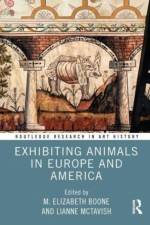
This edited volume, written by historians of art and visual culture who are working with the field of animal studies, seeks to understand how our ways of positioning (and ex-positioning) animals have separated us from the other-than-human animals that are an integral part of our interconnected world.
This book analyses over twenty years of rights-based litigation in the areas of climate change and plastic pollution in order to assess the value of rights in confronting and overcoming planetary crises.
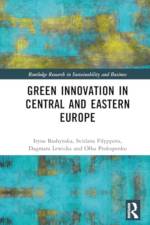
Green Innovation in Central and Eastern Europe aims to explore the crucial role of green innovation in guiding organizations towards sustainable development amidst contemporary environmental challenges.
This edited book aims to provide a scientific compendium of findings on gender issues in the construction sector and contribute to discussions on plurality and inclusion; and provide baseline data for policy design and future research on women working in the built environment.
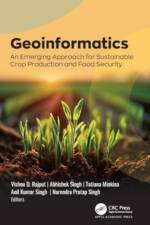
Describes applications of geoinformatics in agriculture, mainly its potential to improve agricultural systems and environmental issues through innovative, eco-friendly approaches. Covers, foundational material on geoinformatics, role of geoinformatics in agriculture, information on geoinformatics-based crop screening, and more.
This book analyses the diverse and complex interactions between the emancipatory practices of precarious (i.e. forced, vulnerable, undocumented or deported) migrants enabled by information and communication technologies, and the constraints imposed by technological tools used for surveillance and migration control.
Using the case study of postcolonial Zimbabwe, this book investigates the political legacy of colonialism in contemporary African institutions, exploring how those in postcolonial states relate to and with institutions which were originally designed to oppress them and remain structurally and systematically colonial.
This book emphasizes the synergy between eco-materials and green energy solutions, highlighting their combined power to reduce carbon emissions, conserve resources, and create a more resilient and sustainable future. It discusses cutting-edge green energy technologies and their potential to transform the energy landscape.
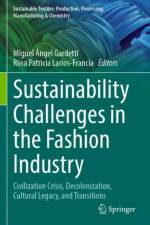
Fashion, and the growth of fashion, are presented as the manifestation of a process of civilization, within a capitalist culture (capital understood as material possessions) that has become global and imperialist, of which - in an economic sense - the industry (or the fashion system?) functions as one of its main instruments of exploitation. And with respect to design, Arturo Escobar said:"Can design detach itself from its roots in modernist practices of unsustainability and defuturization and reorient itself towards other commitments, practices, narratives and ontological enactions? Moreover, can design be part of the toolkit for the transition to the pluriverze (i.e. a world in which many worlds can fit)?"This book presents the importance of cultural sustainability in the textiles and fashion industry, decolonizing fashion system and promotes the design for transitions.
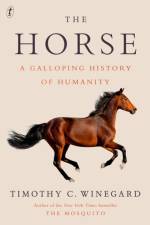
From New York Times bestselling author of The Mosquito, the incredible story of how the horse shaped human history. The Horse is an epic history that begins more than 5500 years ago on the windswept grasslands of the Eurasian Steppe when the first horse was tamed and an unbreakable bond with humans was forged - a bond that transformed the future of humanity. Since that pivotal moment, the horse has carried the fate of civilisations on its powerful back. For millennia it was the primary mode of transport, an essential farming machine, a steadfast companion and a formidable weapon of war. With its unique combination of size, speed, strength, and stamina, the horse has influenced every facet of human life and widened the scope of human ambition and achievement. Horses revolutionised the way we hunted, traded, travelled, farmed, fought, worshipped and interacted. They fundamentally modified the human genome and the world''s linguistic map. They determined international borders, moulded cultures, fuelled economies, and decided the destinies of conquerors and empires. And they were vectors of lethal disease and contributed to lifesaving medical innovations. Horses even inspired architecture, invention, furniture and fashion. From the thundering cavalry charges of Alexander the Great to the streets of New York during the Great Manure Crisis of 1894 and beyond, horses have been integral to both the grand arc of history and our everyday lives. Timothy C. Winegard''s The Horse is a riveting fast-paced narrative of this noble animal''s unrivalled and enduring place in human history. To know the horse is to understand the world.
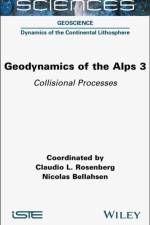
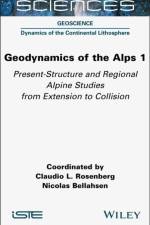
Geodynamics of the Alps consists of three volumes. This third volume is entirely dedicated to Alpine collision. It describes and interprets elements of the Alpine chain, including Alpine magmatism, the formation of external massifs, the foreland basin, the exhumation of the internal part of the chain and the northern deformation front of the Alps. The aim of this book is to create a space for experts on Alpine research to present the state of the art of specific subjects and provide their own interpretations.
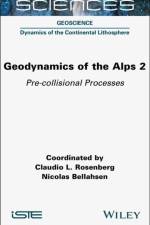
Geodynamics of the Alps consists of three volumes. This second volume presents the pre-collisional history of the Alps. It discusses the Variscan orogeny in the Alpine realm, the inferred paleo-geography, the structure and processes affecting continental margins and the mantle structure in the pre-orogenic Alpine realm. It concludes by describing oceanic and continental subduction processes. The aim of this book is to create a space for experts on Alpine research to present the state of the art of specific subjects and provide their own interpretations.
Geodynamics of the Alps consists of three volumes. This first volume describes the recent and present-day structure and tectonic setting of the Alpine chain, from the lithospheric mantle to brittle crust and surface topography. It also provides a historical overview of Alpine research, with two chapters covering specific Alpine regions (Corsica and the Eastern Alps) through all phases of Alpine history. The aim of this book is to create a space for experts on Alpine research to present the state of the art of specific subjects and provide their own interpretations.
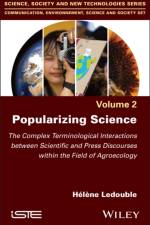
Media coverage of scientific issues is a highly complex process. It involves making a specialized field accessible to the general public, without necessarily disseminating the associated scientific terms or knowledge. The terminological interactions between press discourses and scientific knowledge are presented within the field of agroecology. The analysis of textual data focuses on articles in the general press in French and English, devoted to plant protection practices using natural mechanisms (biological control). This book provides a terminological and cognitive overview of the issues involved in popularizing science in a rapidly expanding field, and of the challenges to be met in the constantly evolving environmental communication sector.
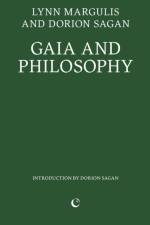
In the 1970s, microbiologist Lynn Margulis and atmospheric chemist James Lovelock developed the Gaia theory, which describes a living Earth: a body in the form of a planet. Fusing science, mathematics, philosophy, ecology and mythology, Gaia and Philosophy, with a new introduction by Dorion Sagan, challenges Western anthropocentrism to propose a symbiotic planet.
Abonner på vårt nyhetsbrev og få rabatter og inspirasjon til din neste leseopplevelse.
Ved å abonnere godtar du vår personvernerklæring.