



















Gjør som tusenvis av andre bokelskere
Abonner på vårt nyhetsbrev og få rabatter og inspirasjon til din neste leseopplevelse.
Ved å abonnere godtar du vår personvernerklæring.Du kan når som helst melde deg av våre nyhetsbrev.

This book emerges from the observation that the current literatures on migration in China are constrained by a series of shortfalls. It will be of interest to researchers and advanced students of Sociology, Politics, Human Geography, Social Work, and Urban Studies.
By presenting the monetary history of India before independence, this volume seeks to address the effect of money supply on trade, prices of commodities and services, wage structures in different regions as well as on the administrative and military health of a political power.
This book is a sociological study of the resilience of Tingkao Ragwang Chapriak - one of the indigenous religions of the Rongmei people of Manipur. It is intended to serve the academic interests of researchers working on indigenous religions.
This volume gives an in-depth account of cultural heritage of Nagaland covering important themes like cultural beliefs, traditional knowledge, material culture, and social institutions.
The present volume tries to fill the gap of the missing voices of the people of the Darjeeling hills and their cultures through re-writing inclusive history of society and culture from 'below'.
In a context of disciplinary division between human and physical geography, the book seeks to reassert the unity of the field through an emphasis on a shared focus on the geographic configuration of things and how and why configuration is important.
Any attempt to homogenize Kashmiri society or the politico-cultural discourse on Kashmir is a dangerously flawed exercise. To that end, this book address various aspects of the political, cultural, and socioeconomic life in Kashmir. It was originally published as a special issue of the South Asian Review.
This book foregrounds the voices of women in educational leadership to draw on the power of diverse perspectives and to create an environment that better embraces a broad range of leadership styles.
After delving deep into social, cultural, economic aspects of the Pondicherry society, this book focuses on politics and the freedom movement of Pondicherry, using sources written in Tamil, English and French.
This book examines the political and economic dimensions of food security in Bangladesh and assesses the role of the state in meeting the challenges of food security.
The book attempts to trace an overview of the different components that define the cultural landscape of the state of Odisha in relation to its history, religious cults, art, and literature.
This book questions the use of salvage law as legal regulatory framework for the remuneration of environmental services in salvage operations, proposing that such services should be based on direct contracting between commercial salvors and coastal States.
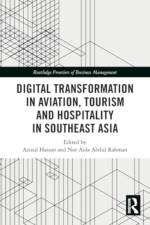
Technological advances and the drive to digitalise business processes in aviation, tourism and hospitality has forced the industries to go along with the digital movement. This book brings together contributions from leading scholars in the field and explores the digital transformation in these industries in Southeast Asia.
This book focuses on the application of statistical analyses in the environmental, agricultural, and natural resources disciplines.
This book focuses on genealogies of religious authority in South Asia, examining the figure of the guru in narrative texts, polemical tracts, hagiographies, histories, in contemporary devotional communities, New Age spiritual movements and global guru organizations..
This book is a collection of ten essays that direct their gaze to the unfolding of contagions in the non-classical contexts of Asia and Africa.
This book demonstrates how preserving ideology and relationship with other activists affords social movements to persist over time amid limited resources and political opportunities in Southeast Asia.
This book argues that strengthening policing, and the rule of law is pivotal to promoting human rights, equity, access to justice and accountability in sub-Saharan Africa. It considers the principles of accountability, just laws, open government, and accessible and impartial dispute resolution.
The book examines a version of archival activism that is centred on various practices of documentation and commemoration of many dead victims of historical violence in Russia to understand what kind of historicity is produced when a single name is added to an endless list.
Responsible Finance and Accounting positions itself as a key pillar in tomorrow's better world for business, society, and planet.
This book breaks new ground in demystifying the relationship between architecture, nationhood, and other forms of collective identity. It attempts to extricate the oppressive ideology of national identity entrenched within the very idea of architecture.The chapters were first published in the journal National Identities.
Explains the fundamentals of Ground Based Synthetic Aperture Radar, the principles of Synthetic Aperture Radar (SAR) image generation, and Interferometric SAR (InSAR) processing for observation of small ground surface deformation less than 1 mm, and gives examples of GB-SAR used for landslide monitoring, its potentials, and its limitations.
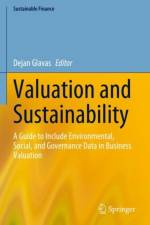
Do you want to know how to integrate environmental, social, and governance (ESG) data into business valuation? This book will help you do so step-by-step.The book primarily aims at reaching two types of audiences: practitioners and students in finance (graduate and undergraduate level). Practitioners in finance will find interest in the book, as it will give them access to academic knowledge in a format that suits them. Academic research has made substantial advances in the field of business valuation and ESG. The book intends to transform this knowledge into practical and rigorous methodologies for taking ESG into account when valuing a company. Graduate and undergraduate courses have recently developed in business schools, universities, and engineering schools. These courses usually directly refer to academic articles or valuation companies' website documentation, but not to academic books. Therefore, the book will allow students to have access to centralized and organized information about business valuation and ESG.Readers without prior knowledge of business valuation will be guided through the ESG integration process. They will first be introduced to the concept of value and the reasons for incorporating ESG into the value. They will then learn simple financial methods to value firms and see step-by-step use cases. For instance, the reader will learn how to value a firm in the renewable energy sector using cash flow and multiple valuation methods. After building knowledge of standard business valuation, readers will better understand ESG data and ratings. The reader will then learn how to integrate ESG into business valuation using cash flow and multiples approaches. Again, the reader will be able to replicate these methods as the book will provide practical cases for integrating ESG data in business valuation. Finally, for the readers that intend to go a bit further, they will learn about the academic research advances in ESG and businessvaluation.
The book is the first to focus on the physical oceanography of the North Indian Ocean (NIO), a special region of the global ocean that exhibits a distinct seasonality due to the impact of the South Asian Monsoon (SAM). It is written as a textbook about the NIO for graduate students, lecturers, and researchers in physical oceanography. It will also be useful for courses on the interior, coastal, and equatorial dynamics in any other ocean. It helps readers, particularly new entrants to the field, to gain a comprehensive understanding of tropical-ocean dynamics by: developing from first principles the equation set for the linear continuously stratified (LCS) model, which has long been used to study tropical oceans; and then obtaining solutions that explore different aspects of the dynamics.Part 1 of the book provides an overview of observed ocean circulations and forcing functions in the NIO that are linked to the SAM.Part 2 develops the equations of motion for the LCS model. Part 3 (Free Waves) and Part 4 (Forced Solutions) derive and discuss analytic solutions to the LCS model that illustrate basic processes in the interior (unbounded), coastal, and equatorial regions of the ocean. The last two chapters of Part 4 consider more complicated processes and phenomena that build upon the simpler solutions previously found: vertical propagation of coastal and equatorial waves, and the Indian Ocean's shallow overturning circulations. Each analytic solution is illustrated (and extended) by a suite of numerical LCS solutions presented as video clips, providing a powerful means for visualizing complex processes.
This book examines the synthetic approaches, properties, applications, and recyclability of bio-based superabsorbent polymers (SAP) in depth. It describes and compares bio-based SAPs with petro-based SAPs. Additionally, it explores the structure¿property relationships of bio-based SAPs derived from various natural sources. The book covers current and emerging applications in health and hygiene products, agriculture, construction, and other areas. It also explores the recycling and reusing methods available for water recovery, pressure sensitive adhesives, etc. It discusses the issues behind the sharp increase in research attention, namely the prevailing research hotspots/clusters and suggestions with regard to present studies, works that have been significant and pivotal in the development of SAP research, and the current advances and future directions of research. It also presents the emerging applications of superabsorbent polymers.
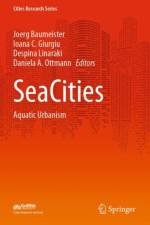
This book highlights the research outcome of Cities Research Institute's SeaCities group at Griffith University and a panel with the same title which took place at the World Expo in Dubai 2021/22 supported by the UN.It reflects on topics which are relevant for a future aquatic urbanism like the evolution of a taxonomy for aquatic urbanism, island and ecological wetland development, the planning aspects of seascapes, as well as drivers for floating communities and aquacultural urbanism.The book broadens the perspective of the previous book "SeaCities: Urban Tactics for Sea-Level Rise" published in 2021 from a terrestrial towards an amphibious and aquatic understanding of future city development.
This book is designed to give an existing state of knowledge in the field of hydrology, irrigation engineering, and hydraulic structures in a brief manner so that students can use it for their own reference from time to time. Compared to other voluminous books available on the subject, the author has tried to cover the important subject matter in an abridged manner in approximately 320 pages. Besides the full explanation of the theoretical aspects with well-illustrated figures, it gives a number of solved numerical examples. Problems for practice are also given with answers at the end of each chapter.
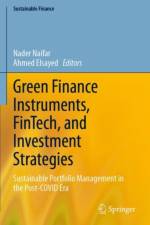
In the COVID 19 post-pandemic era, sustainable financial systems are increasingly getting the attention they deserve, and policymakers are now moving toward investment and financing decisions based on sustainable development. Green finance plays an important role in mobilizing financial resources and hedging against environmental risk to achieve financially sustainable systems. Moreover, green financial instruments offer viable alternatives for investors and regulators with regard to portfolio management and risk minimization. Over the last few years, financial technology (FinTech) has grown to become one of the most topical areas in the global financial services industry. The development of distributed ledger technology, big data, smart contracts, peer-to-peer lending platforms, biometrics, and new digital has sparked innovation in the financial services industry and the development of new financing and investment strategies. The combination of sustainability and FinTech can help policymakers to achieve ESG targets when making investment and financing decisions.This book showcases a collection of recent advances in green finance and FinTech and explores their impact in achieving sustainable finance, investment strategy-making, and portfolio management. Presenting theoretical frameworks and the latest empirical studies in the field of green finance and FinTech, it offers a valuable asset for academics, professionals, policymakers, regulators, and investors who want to understand in-depth the impact of green finance and FinTech on future investment and financing strategies in the post-pandemic era.
Abonner på vårt nyhetsbrev og få rabatter og inspirasjon til din neste leseopplevelse.
Ved å abonnere godtar du vår personvernerklæring.