














Gjør som tusenvis av andre bokelskere
Abonner på vårt nyhetsbrev og få rabatter og inspirasjon til din neste leseopplevelse.
Ved å abonnere godtar du vår personvernerklæring.Du kan når som helst melde deg av våre nyhetsbrev.

This book investigates how non-state actors have become key drivers of the diffusion of the UN 2030 Agenda for Sustainable Development in Brazil. It will be of interest to academics in the field of Sustainable Development, Latin America Studies and Environmental Politics.
This book examines how modern Nigerian political institutions have grappled with the resurgence of traditional institutions of political leadership in the post-colonial era.
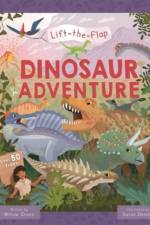
Lift the flaps to follow our palaeontologist on an adventure among the dinosaurs
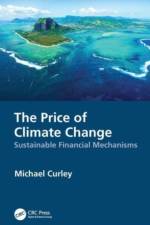
"The Price of Climate Change: Sustainable Financial Mechanisms presents a summary of the effects of global warming with specific emphasis on what these phenomena will cost and the price we must pay for trying to mitigate these processes. Some of these mitigation strategies include reducing our use of carbon by converting to non-carbon energy sources such as solar, wind, and nuclear, or lower-carbon sources such as natural gas. The book examines the financial implications of society adapting to the effects of climate change, including rising sea levels, extreme weather events, and desertification. Further, it addresses the costs to make buildings more resilient to climate change, such as flood considerations, improving durability against severe weather, bolstering insulation, and more. Sources of funding for any type of environmental projects, including those for climate change mitigation, are also examined. These include governmental budgets at the federal, state, and local levels, international development banks, international capital markets, and private funds. Features: Addresses global climate change issues from the standpoints of mitigation, adaptation, and resilience- and the funding mechanisms for each. Describes different types of energy sources as well as their respective costs, including nuclear, solar, natural gas, and more. Examines the effects of agriculture on climate change as well as the potential ways it can be used to help mitigate the issue. The book's straightforward approach will serve as a useful guide and reference for practicing professionals and can also be appreciated by the general public interested in climate change issues and mitigation strategies"--
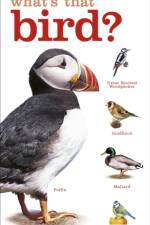
The perfect pocket guide to bird-watching for beginnersRSPB What's That Bird? is ideal if you struggle to tell a swift from a swallow. It's the perfect pocket guide for beginners but also a handy reference for the more seasoned bird-watcher.Featuring over 150 common European birds, habitat overviews show you what to look for where and commonly confused birds are shown side by side for quick comparison and identification. Become a successful bird-watcher in no time with RSPB What's The Bird?
Positioning design at the center of the debate, The Urbanism Reader brings together classic and contemporary readings to help designers understand the complexities of cities and urban design in the 21st century. The selection of readings presented here is uniquely tailored to a design perspective for architects and urban designers - balancing social issues in urbanism with a clear focus on foregrounding design as an instrument for change in cities, and examining the outcomes and challenges of recent design theories, design methods, and technologies in the built urban environment. Covering today's most urgent issues, 44 texts explore key topics in urbanism - from digital design technologies to smart cities, from the ongoing ecological crisis to public health and the impact of Covid-19, and from emergence and informality to economic inequity in global cities. Chapters cover cultural issues including diversity, indigenous knowledge, decolonization, social justice, and inclusion alongside technological developments, while a final chapter speculates on the future of urbanism through readings in AI, virtual reality, and the frontiers of current thinking in architecture and urban design. The extracts are grouped by theme, each with an introduction to the historical contexts and guiding paradigms - helping design students, researchers, and professionals to make sense of the diverse field of theory and practice in the past, present, and future of global urbanism.
Positioning design at the center of the debate, The Urbanism Reader brings together classic and contemporary readings to help designers understand the complexities of cities and urban design in the 21st century. The selection of readings presented here is uniquely tailored to a design perspective for architects and urban designers - balancing social issues in urbanism with a clear focus on foregrounding design as an instrument for change in cities, and examining the outcomes and challenges of recent design theories, design methods, and technologies in the built urban environment. Covering today's most urgent issues, 45 texts explore key topics in urbanism - from digital design technologies to smart cities, from the ongoing ecological crisis to public health and the impact of Covid-19, and from emergence and informality to economic inequity in global cities. Chapters cover cultural issues including diversity, indigenous knowledge, decolonization, social justice, and inclusion alongside technological developments, while a final chapter speculates on the future of urbanism through readings in AI, virtual reality, and the frontiers of current thinking in architecture and urban design. The extracts are grouped by theme, each with an introduction to the historical contexts and guiding paradigms - helping design students, researchers, and professionals to make sense of the diverse field of theory and practice in the past, present, and future of global urbanism.
Poems (1920) is a collection of poems and plays by W.B. Yeats. Containing many of the poet¿s early important works, Poems illuminates Yeats¿ influence on the Celtic Twilight, a late-nineteenth century movement to revive the myths and traditions of Ancient Ireland.The collection opens with Yeats¿ verse drama The Countess Cathleen, which he dedicated to the actress and revolutionary Maud Gonne. Set during a period of famine in Ireland, The Countess Cathleen tells the story of a wealthy landowning Countess who sells her soul to the devil in order to save her starving tenants. The Land of Heart¿s Desire, Yeats¿ first professionally performed play, follows a young fairy child who disrupts the lives of two newlyweds and shakes a simple village to its core. The Rose contains some of the writer¿s most beloved early poems, including ¿To the Rose Upon the Rood of Time¿¿a symbolist lyric alluding to the Hermetic Order of the Golden Dawn¿and ¿Fergus and the Druid,¿ a dialogue in verse. In ¿Who Goes With Fergus,¿ a poem blending ancient legend with modern Irish nationalism, Yeats asks the youth of his country to ¿brood on hopes and fears no more,¿ to follow Fergus who ¿rules the shadows of the wood, / And the white breast of the dim sea / And all disheveled wandering stars.¿ Yeats¿ writing, mysterious and rich with symbolism, demonstrates not just a mastery of the English language, but an abiding faith in the cause and principles of Irish independence.With a beautifully designed cover and professionally typeset manuscript, this edition of W.B. Yeats¿s Poems is a classic of Irish literature reimagined for modern readers.
This open access book aims to present the cutting-edge research of scholars from the Global South, where scholars from developing countries have begun to join in the production of knowledges of Area Studies and have produced a large body of excellent works of Area Studies based on a variety of disciplines.Articles of this book have been developed from 11 papers which were presented at the 2nd Tsinghua Area Studies Forum, to represent a range of area studies subjects and regions. The book is divided into five chapters that either analyze regional country issues (regions in the world) from the perspective of global linkages and cross-regional linkages or discuss internal issues such as national governance, ethnicity, economy, and civil war, using the nation-state as the unit of analysis.
This book presents essential insights on the interaction between rising risks and raising the bar for resilience during the climate crisis. Its timeliness lies in applying important findings on risk and resilience to runaway climate change. When risk and resilience are brought together in the context of climate catastrophes, three key messages emerge. The first is that accounting for the root causes, and not just their symptoms, is essential to slowing these events. It is therefore vital to link carbon emissions from human activity to the sharp rise in climate disasters globally. The second is that growth economics and policy must factor in the failure of governments and businesses to tackle spillover harm from economic activities, as seen strikingly with global warming AND BIODIVERSITY LOSS. With climate risks rising, this calls for a fundamental revision of the framing of growth in the teaching and practice of business and economics. And third, prevention must become a far bigger part of resilience building, with preparedness to avert or handle tougher eventualities built into interventions. Emphasis on prevention deems disaster recovery as not just returning to how things were but building back better.
This book places the contemporary fear of climate change in historical perspective, showing that throughout human history the dominant perspective on the future has been one of fear. Across a broad historical sweep, the book describes the varied means employed to predict and control the future: magic, religion, science, and technology. Future Fear traces fear of the future from prehistory to the present, culminating in the contemporary fear of imminent climate change catastrophe. Consideration is also given to hope in a more positive future, revealing that visions of the future have often been a mingling of fear and hope.
This volume presents a well-integrated collection of chapters from distinguished decision-makers, influential opinion makers, and eminent experts creating in the process a synergy of views supporting India`s transition to affordable and sustainable energy that not only reduces emissions.
This book presents information on common-to-rare organisms from around the world that inhabit freshwater habitats. The first six chapters focus on organisms from the very small (e.g., protozoa, zooplankton, and fairy shrimp) to the huge (e.g., hippos, freshwater sharks, and giant turtles), while the last four chapters provide information on aquatic ecosystems (lakes, streams, caves, and wetlands). Included in this last section are the physical nature of the system and how that influences the kinds of animals living there.This unique ¿nature¿ book, incorporating information from around the world on both aquatic systems and organisms, is written to attract the interest of a wide group of non-academic readers.
This academic book critically examines the concept of sustainable futures and its interdependence with the policy framework of Green New Deals. We emphasize the inherent link between the two concepts by highlighting how Green New Deals can pave the way for a sustainable and just future in key areas such as environmental policy, economic development, and social equity. Taking a multidisciplinary approach, the book draws on insights from fields such as environmental studies, sustainable development, political ecology, and climate policy to explore the intricacies of these interconnections. The revised description underscores the importance of understanding the Green New Deal's historical and political contexts, as well as its implications for sustainable futures. The book delves into the theoretical perspectives that shape our comprehension of sustainable futures, the diverse strategies employed by countries and regions in implementing Green New Deals, the role of technological innovation and social movements in fostering sustainable transitions, and the political dynamics surrounding the Green New Deal. Through an analysis of the Green New Deal's role in sustainable development, climate policy, and environmental justice, the book provides a necessary and timely contribution to ongoing debates. The chapters offer detailed explorations of the interrelationships between these key areas, emphasizing how the Green New Deal can serve as a transformative policy framework for achieving sustainable and equitable futures. "Sustainable Futures and Green New Deals" is intended for scholars, policymakers, activists, and students interested in understanding the complex and interconnected issues surrounding sustainable development, climate policy, and environmental justice.
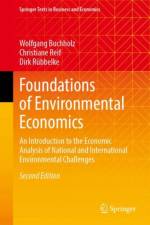
This textbook provides a solid introduction to the theoretical and empirical aspects of environmental economics and their links to environmental policy. In this second edition, all chapters have been updated and restructured, and new sections have been added to reflect a greater focus on climate policy.Starting from the need to balance the social costs of pollution against the financial costs of emission abatement, the book discusses the major issues that arise in the context of environmental policy - such as the potential and limitations of monetary valuation of the environment (and in particular the contingent valuation method) and the design of environmental policy. With regard to the choice of environmental policy instruments, the book focuses on the price-based instruments preferred by economists, i.e., environmental taxes and emissions trading, discussing in detail not only their many advantages but also their drawbacks.The second edition especially focuses on green industrial policy as a complementary measure to price-based instruments, the distributional effects of environmental policies, and the resulting challenges for political feasibility. Moreover, the book deals extensively with international environmental problems, in particular climate protection, which is a global public good that will be underprovided when certain countries refuse to cooperate and contribute. Approaches to overcoming this underprovision are described in far more detail than in the first edition, both theoretically and empirically - in particular by assessing the functions of the many international environmental agreements in this field. Finally, a new chapter considers adaptation strategies, especially in the water sector, as an additional pillar of climate policy.
This book examines the issues arising from British contested history by looking at how it came to be constructed, how it developed, and how attitudes over time have begun to change towards it. It considers how this narrative was first created through the writing of British history. It explores the private spaces of the court, the political places of the state, and the public places of the street. Beyond British shores this history has also been enacted through international heritage sites when objects were removed and taken back to Britain. Conclusively, it explores how the historic spaces of a maritime city, has further entrenched an already complex history of the nation. How this research brings new insights into this field is by looking at it through the lens of place, space, and the spatial turn. The underlining research questions are: What role does place and space play in historical constructions of the past? How do place and space contribute to contested history? How can these places and spaces be re-appropriated and reused, and endowed with new meanings?
This open access book presents state-of-the-art insights on transdisciplinary work towards societal transformation. It provides theoretical and practical guidance and tools, applicable across diverse empirical settings. The book supports researchers and practitioners, especially those early in their careers, to navigate dilemmas inherent in transdisciplinarity for transformation. The book serves as a valuable resource for (graduate) educational programs in any field open to transformation-oriented transdisciplinary collaboration. It comprises three sections: Design & Evaluation; Diversity & Inclusion; Roles & Competences. Each section includes a chapter on theoretical advancements, multiple empirical chapters presenting insights from various fields and contexts, and practical guidance conducive to engaging in high-quality, just and equitable transdisciplinary processes directed at sustainable transformation.
Famed for restoring historic properties, Belmond luxury?hotel group is now collaborating with world-leading contemporary photographers to create bodies of work responding to their destinations, carefully pairing each artist with the personality of the chosen hotel. Letizia Le Fur photographed Caruso, on the Amalfi Coast in autumn 2022, and spring 2024. Caruso has a history that goes back almost a thousand years, and there is a certain genius in the way Le Fur depicts its architecture against the glowing hills and towering cliffs of this most iconic stretch of Italy's coastline. The reliefs appear almost flat, like a Renaissance trompe l'oeil fresco, or a stage set for A Midsummer Night's Dream, where one could simply step out and glide across their surface. The gardens could have been plucked straight from a Hayao Miyazaki fantasy. It was quite intentional for these photographs to reinforce the dreamlike, timeless aspect of the place. Le Fur sought to capture what she calls the 'omnipresent sun' - the buttery light that drenches the 11th-century walls and cliffside gardens. It is this singular observation that drives the book; every subject Le Fur captures is soaked in a luminescence that plays a character in several acts, and it is the sun's kaleidoscopic theatrics that form the heart of the story. (...)
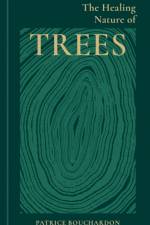
What can be more majestic than a great tree in its prime, or more moving than a fruit tree snowed under by its spring blossom? Have you ever sensed as you gaze at its beauty, the mysterious life that makes this tree what it is?Since ancient times the tree has been a symbol of power, of wisdom, of fertility and of life itself. Perhaps the universality of these symbols reflects something innate that connects us with the tree at a deeper level than we have imagined until now.The Healing Nature of Trees will help you discover and use trees' energy for yourself and provide a clear process of self-development, self-healing and a creative way of finding new solutions to the problems that face us. Woods and forests still provide a special place for finding peace, silence and beauty; precious qualities that are becoming more and more needed to combat the stress of daily life.This enchanting book beckons you to pause amidst the bustling world and invites you to meet trees as you never have before, fostering a deeper connection with the natural world. This marvellous adventure will lead you into the heart of yourself, and in this simple intimacy you can come to understand yourself more deeply and find your true strength.
'Levison Wood is a great adventurer and a wonderful storyteller.' Sir Ranulph Fiennes'Britain's best-loved adventurer... he looks like a man who will stare danger in the face and soak up a lot of pain without complaint.' The TimesLevison Wood has spent a lifetime exploring wild places and witnessing environmental challenges and conservation efforts around the world. Now, he's delving into the incredible world of forests. In this global investigation, The Great Tree Story explores the profound influence forests have had on our planet and civilisation. Each chapter digs into a different aspect of this relationship, from the evolutionary history of trees and their cultural significance in ancient civilisations, to the impacts of agriculture, colonisation, and the industrial revolution on forest ecosystems. The book highlights the wisdom of indigenous communities in forest stewardship, examines the environmental movement's efforts to protect forests, and analyses the causes and consequences of deforestation and environmental degradation.Forests are integral components of the global ecosystem. They serve as complex habitats for flora and fauna, supporting a delicate web of interdependence that we have only scratched the surface of understanding. Every organism, from the towering trees to the smallest insects, plays a crucial role in maintaining the biodiversity that sustains our planet. The intricate relationships woven within forests are not to be underestimated, for they are the threads that hold our world together.In this compelling weaving of fascinating anecdotes and in-depth research, Wood contemplates the future of forests, emphasising the importance of collective action and individual responsibility in preserving these vital ecosystems.
A nature diary from TV presenter and zoologist Hannah Stitfall, about her close encounters with British wildlife in the Cornish countryside
Abonner på vårt nyhetsbrev og få rabatter og inspirasjon til din neste leseopplevelse.
Ved å abonnere godtar du vår personvernerklæring.