








Gjør som tusenvis av andre bokelskere
Abonner på vårt nyhetsbrev og få rabatter og inspirasjon til din neste leseopplevelse.
Ved å abonnere godtar du vår personvernerklæring.Du kan når som helst melde deg av våre nyhetsbrev.

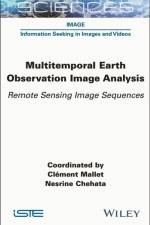
Earth observation has witnessed a unique paradigm change in the last decade with a diverse and ever-growing number of data sources. Among them, time series of remote sensing images has proven to be invaluable for numerous environmental and climate studies. Multitemporal Earth Observation Image Analysis provides illustrations of recent methodological advances in data processing and information extraction from imagery, with an emphasis on the temporal dimension uncovered either by recent satellite constellations (in particular the Sentinels from the European Copernicus programme) or archival aerial images available in national archives. The book shows how complementary data sources can be efficiently used, how spatial and temporal information can be leveraged for biophysical parameter estimation, classification of land surfaces and object tracking, as well as how standard machine learning and state-of-the-art deep learning solutions can solve complex problems with real-world applications.
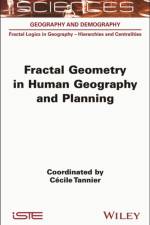
The aim of this book is to provide an overview of the concepts and methods used in fractal analysis and modeling in order to study the spatial distribution of human settlements. The main concepts and mathematical tools are reviewed, and emphasis is placed on the practical benefits of their application and the pitfalls to be avoided when using them. The first part of the book is devoted to the basic concepts and geometric reference figures required for fractal analysis in human geography. In the second part, the principles of four major families of analysis methods are explained in detail: fractal analyses of point sequences, fractal methods for morphological delineation of urban agglomerations, multifractal analyses and cross scale signatures. The third part of the book is devoted to applications of fractal geometry in urban and regional planning.
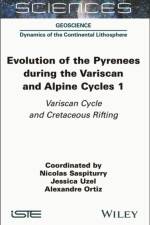
Evolution of the Pyrenees during the Variscan and Alpine Cycles 1 presents the evolution of geological knowledge of the Pyrenees as a result of major scientific research programs in the early 21st century. This book, dedicated to the Variscan cycle and Cretaceous rifting, traces the evolution of the Pyrenean domain between 340 Ma and 90 Ma. It begins with an analysis of the state of knowledge of the Pyrenean basement, whose structure is inherited from the Variscan evolution of this domain. It then traces the kinematic evolution of the western Mediterranean domain since the Paleozoic. Finally, it discusses the evolution of our knowledge of Cretaceous rifting and the sedimentary and metasomatic processes associated with the individualization of the Iberian-Eurasian plate boundary.
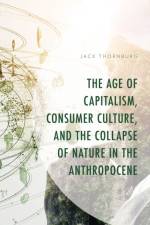
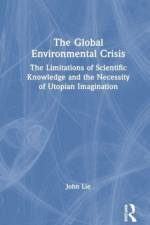
This book examines how modern society arrived at such a destructive environmental and social stage, suggesting that three great crises have converged: climate change, capitalism as a logic system, and questions of consumer society and social identity.
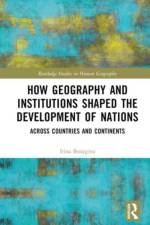
This book provides a concise and informative introduction to how geography and institutions shaped the development of nations, showing that while the role of institutions for the development of nations is indisputable, the role of geographic factors remains underexplored and underestimated
This book shares real-life case studies taken from GreenSCENT, a three-year EU-funded project that promotes sustainability through the development of digital platforms and tools, green education programme, and climate and environmental literacy certification.
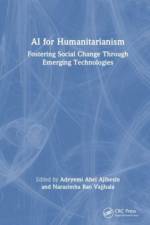
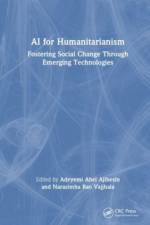
This book explores the transformative potential of Artificial Intelligence (AI) in addressing critical humanitarian challenges. It examines AI's role in enhancing emergency responses, poverty alleviation, and healthcare.
This book explores the transformative potential of Artificial Intelligence (AI) in addressing critical humanitarian challenges. It examines AI's role in enhancing emergency responses, poverty alleviation, and healthcare.
This reference book explores the multifaceted problem, sources, pathways, persistence in ecosystems, and health impacts of heavy metal contamination in the environment. This book is an important source for researchers and professionals working in the fields of environmental science, toxicology, and public health.
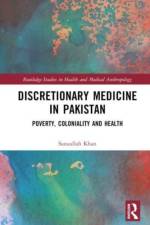
This book uses the notion of 'discretionary medicine' to explore the landscape of contemporary healthcare in Pakistan.
This edited volume traces the development of art practices in Ukraine from the 2004 Orange Revolution, through the 2013-14 Revolution of Dignity, to the ongoing Russian war of aggression.
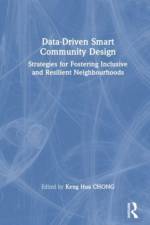
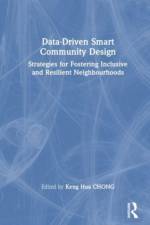
This book couples data analytics with social behavioural studies and participatory design to derive deeper insights on city dwellers' present needs and future aspirations, thereby enabling the development of targeted spatial and programmatic interventions for diverse communities.
This book couples data analytics with social behavioural studies and participatory design to derive deeper insights on city dwellers' present needs and future aspirations, thereby enabling the development of targeted spatial and programmatic interventions for diverse communities.
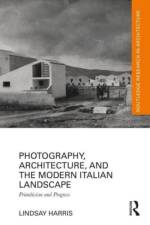
Photography, Architecture, and the Modern Italian Landscape explores the impact of photography at a pivotal moment in Italian architecture and culture, focusing on the period between 1910 and the mid-1970s.
This book offers comprehensive state-of-the-art knowledge of how ride-hailing applications (RHAs) are changing the landscape of urban mobility in developing Southeast Asia by examining the disruptions they cause, the impacts of RHAs on the transportation system, and public policy responses aimed at mitigating these impacts.
This book addresses issues related to leadership by and for multilingual individuals by providinge a strong theoretical grounding for multilingual leadership, using case studies and autoethnographies to showcase multilingual leaders' backgrounds, and discussing challenges and opportunities in TESOL.
Collecting writings by a wide range of established scholars together with exciting new voices in architecture and affiliated disciplines, this book shows the pertinence islands hold for critical spatial thinking and practice today.
This book addresses issues related to leadership by and for multilingual individuals by providinge a strong theoretical grounding for multilingual leadership, using case studies and autoethnographies to showcase multilingual leaders' backgrounds, and discussing challenges and opportunities in TESOL.
This book explores the intersections of gender, religion and migration within the context of post-independent Zimbabwe, with a specific focus on how gender disparities impact economic development. It addresses the need for gender equity, gender inclusion and gender mainstreaming in both religious and societal institutions.
The book explores quality assessment and enhancement in higher education in Africa to illustrate the need to develop quality practices in measuring effective education and search for permanent improvement. It illustrates why quality assessment and enhancement should be embraced in all aspects in educational settings.
This book investigates how extractive capitalism has developed over the past three decades, what dynamics of resistance have been deployed to combat it, and whether extractivism can ever be transformed into being a part of a progressive development path.
This book analyses the first two years of South Africa's response to the COVID-19 epidemic, from its emergence in early 2020. For researchers and practitioners across Public Health, Health Policy, and Global Health, as well as those with an interest in South African politics and development more generally.
Abonner på vårt nyhetsbrev og få rabatter og inspirasjon til din neste leseopplevelse.
Ved å abonnere godtar du vår personvernerklæring.