






















Gjør som tusenvis av andre bokelskere
Abonner på vårt nyhetsbrev og få rabatter og inspirasjon til din neste leseopplevelse.
Ved å abonnere godtar du vår personvernerklæring.Du kan når som helst melde deg av våre nyhetsbrev.

A beautiful, full-color tribute to the story of public housing in America, told through reminiscences about emblematic objects by former and current public housing residents Over the past century, more than 10 million people across the nation--including well-known figures from Barbra Streisand to former Chicago DA Kim Foxx--have called public housing home, yet since the 1990s, thousands of public housing units across the United States have been demolished. Today, housing insecurity is one of the most pressing social issues facing the nation. Building on an exhibit at the brand-new National Public Housing Museum, We Are All Family Here is designed to help facilitate national dialogue about the history and importance of public housing through the intimacy of residents' memories of prized, and ordinary, everyday objects. The book will include full-color photos of over two dozen objects--from a championship boxing belt owned by Lee Roy "Solid Gold" Murphy and the leather motorcycle jacket of legendary Cabrini-Green organizer Marion Stamps, to a camera, a Pyrex dish, and a wedding dress--along with photos of the individuals who have provided them, as well as brief essays by the objects' owners, describing each object's significance with respect to the time the owner resided in a public housing building. The book also includes essays by experts on housing and homelessness in America. Together, these objects will tell both the beautiful and troubled history of public housing, and the diverse experiences of those who have survived and thrived in those communities.
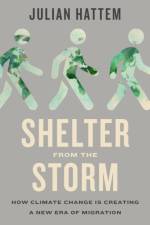
An urgent wake-up call about the coming large-scale human displacement caused by climate change, from one of the world's leading experts Mere decades from now, millions of people all over the world will be forced to move because of climate change. Entire islands will disappear into the sea. Once-in-a-century hurricanes will occur on a regular basis, decimating cities and wiping out peoples' homes. Wildfires fed by prolonged drought will rage through communities. No one will be immune: in countries rich and poor, climate change will usher in a new era of migration. In Shelter from the Storm noted journalist and migration researcher Julian Hattem tells the story of the massive human displacement that is already being caused by climate change. With hard-hitting journalism from the front lines of the environmental apocalypse, Hattem takes the reader on a journey from the South Pacific to the Indian subcontinent, the Mediterranean, and beyond, offering a shocking glimpse into the human geography wrecked by a warming planet. Shelter from the Storm also provides rich historical perspective on how climate has impacted migration and a primer on cutting-edge climatological research, creating a multidimensional portrait of this uncertain new age. A work of profound expertise and storytelling, Shelter from the Storm gives a human face to the millions of climate migrants who are leaving their homes--and the millions more who will follow.
Studies how oil has shaped the societies and cultures of the modern and contemporary Middle East.
A thrilling exploration of nature's symbiotic relationships, some comforting and familiar, others wildly alien, by the award-winning author of Forget Me Not.
In a world where the pace of technological advancement continues to accelerate, the imperative to ensure sustainable development has never been more pressing to address the same.
Zero Hunger (SDG-2) and Responsible Consumption and Production (SDG-12) of the United Nations are very crucial aspects for any economy in the world.
The book creates an augmented knowledge about human security beyond the warfare concept in the Arctic It analyses international political analysis on security issues and their spillovers to the Arctic societies.
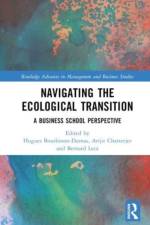
In this book, faculty and researchers from ESSEC Business School, a recognised leader among European schools of business and management, provide a multi-faceted perspective on the obstacles that come in the way of the transformation of dominant business models, and how to overcome them in order to move away from "business as usual."
This book presents a roadmap for university leaders to vitalize higher education in response to global problems. It addresses structural, programmatic, and curricular gaps to prepare current and future generations for unfolding socio-ecological challenges.
In the last decade, the international development sector has been re-examining its ways of thinking, being, and doing, and we have seen a growing consensus around the need to centre communities in development. However, there is little clarity on what such centring entails and how it can be achieved.
In the last decade, the international development sector has been re-examining its ways of thinking, being, and doing, and we have seen a growing consensus around the need to centre communities in development. However, there is little clarity on what such centring entails and how it can be achieved.
This book breaks new ground through its interdisciplinary approach, its insistence on the interweaving of the phenomena of travel and collecting, and its emphasis on marginalised perspectives.
How fossilized reefs hold clues to the survival of corals in the AnthropoceneWith rising global temperatures, pollution, overfishing, ocean acidification, and other problems caused by humans, there’s no question that today’s coral reefs are in trouble. As predictions about the future of these ecosystems grow increasingly dire, scientists are looking in an unlikely place for new ways to save corals: the past. The reefs of yesteryear faced challenges too, from changing sea level to temperature shifts, and understanding how they survived and when they faltered can help guide our efforts to help ensure a future for reefs.Lisa Gardiner weaves together the latest cutting-edge science with stories of her expeditions to tropical locales to show how fossils and other reef remains offer tantalizing glimpses of how corals persisted through time, and how this knowledge can guide our efforts to ensure a future for these remarkable organisms. Gardiner takes readers on an excursion into “the shallow end of deep time”—when marine life was much like today’s yet unaffected by human influence—to explore the cities of fossilized limestone left behind by corals and other reef life millennia ago. The changes in reefs today are unlike anything ever seen before, but the fossil record offers hope that the coral reefs of tomorrow can weather the environmental challenges that lie ahead.A breathtaking journey of scientific discovery, Reefs of Time reveals how lessons from the past can help us to chart a path forward for coral reefs struggling for survival in an age of climate crisis and mass extinction.
Bringing together cutting edge and diverse research from international and interdisciplinary perspectives, this book initiates and shapes conversations about transgender people within the criminal justice system.
Aimed at undergraduate and graduate students as well as scientists and engineers in industry, this textbook provides readers with the foundational and practical knowledge of cryogenic hydrogen necessary to research and develop these systems safely.
Green Superpowers: China, the European Union, and the United States in the Global Energy Transition offers an in-depth comparative analysis of the green foreign energy policies and green power strategies of the three main international actors in this transformative process: China, the European Union, and the United States.
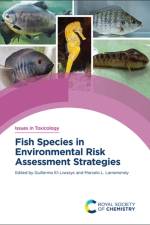
An ideal companion to toxicologists and ecologists interested in risk assessment in the environments of ichthyic fauna, particularly those with an interest in the deleterious impact introduced by human activity.
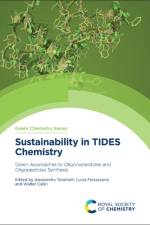
Bringing together the information on green synthesis of oligopeptides and the preliminary data on green oligonucleotides synthesis this book bridges the gap between these two areas.
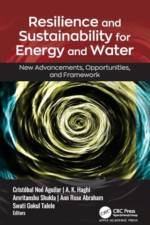
Provides strategies and trends in resilience and sustainability plans, highlighting best practices and presenting case studies from the energy sector and the water industry. Introduces resilience and sustainability and describes some of the basics of energy and water. Details how the green movement can help us achieve a better future.
Learn how businesses can leverage their success to drive positive social impact. Kurt Avery delves into a range of proven business and marketing techniques, including some developed through his own professional experiences as the founder, owner, and president of Sawyer Products.Sawyer Products has achieved remarkable success with its innovative water filtration and insect repellent products, but it hasn’t stopped there. Sawyer Thinks reveals how the company has harnessed its profitability to make a significant charitable impact worldwide and provides a clear roadmap that other businesses can follow.Sawyer Thinks aims to inspire and empower business leaders to think beyond the bottom line and use their resources to create meaningful change. It includes a step-by-step guide on increasing charitable giving and philanthropic efforts while also enhancing overall profitability and sustainability.
This text traces the origins of the modern zoo to the efforts of the German animal entrepreneur Carl Hagenbeck. Hagenbeck opened the Hagenbeck Animal Park in 1907 in a village near Hamburg, and this park sought to move wild animals out of their cages and into "natural landscapes".
Abonner på vårt nyhetsbrev og få rabatter og inspirasjon til din neste leseopplevelse.
Ved å abonnere godtar du vår personvernerklæring.