










Gjør som tusenvis av andre bokelskere
Abonner på vårt nyhetsbrev og få rabatter og inspirasjon til din neste leseopplevelse.
Ved å abonnere godtar du vår personvernerklæring.Du kan når som helst melde deg av våre nyhetsbrev.

The book is unique in providing an introduction to Latin American geography that showcases the ideas of some of the region's leading geographical thinkers. Aimed at undergraduate students, chapters will also be of relevance to advanced researchers looking for introductions to specific areas.
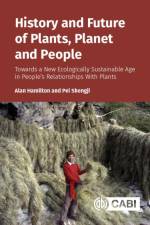
This book describes how plant conservation projects benefit from working with local communities and stakeholders and the use of ethnobotanical knowledge. It has been written by two very experienced conservation scientists with very different backgrounds; Alan Hamilton from the West and Pei Shengji from China.
Dragonflies are variouslysensitive to both the health of freshwater systems and the quality ofvegetation along rivers and around ponds. Their wide range of sensitivitiesenables us to measure the extent to which freshwater ecosystems are eitherdeteriorating or are improving when we undertake restoration. After discussingdragonfly functional morphology and their diversity and distribution, the booklooks at a trait perspective on dragonfly conservation. It then examinesstressors on freshwater ecosystems and dragonflies, conservation action, andassessment and monitoring using dragonflies. It concludes with methods forfuture-proofing freshwaters and their dragonfly sentinels.
This book invokes the relationship between nature and urban contexts as powerful storytellers through a timely contribution to the historical understanding of our mechanisms of production of narratives about nature, therefore breaking new ground for current and future research for locally situated and globally shared environmental concerns.
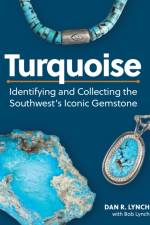
Explore the beauty and history of turquoise, one of the most celebrated and treasured gemstones of ancient and modern times.Revered around the world, turquoise is a mineral with two histories: that of its formation and that of the people who have mined, traded, and treasured it. Turquoise is an icon of ancient civilizations and especially of the desert regions where it most famously appears. Uncover the history and the secrets of this coveted gemstone in Turquoise. Written by Dan R. Lynch with Bob Lynch, the authors of several books about rocks and minerals, this is the definitive guide to the sky-blue stone.Begin by learning the natural history of turquoise, from how it forms to where it’s found. Dan and Bob present tips for finding and identifying turquoise, and they introduce naturally occurring and human-made turquoise look-alikes. Next, go in-depth on the human history of turquoise. You’ll learn all about buying and caring for turquoise, and you can glimpse our future with this gemstone of the American Southwest. Whether you’re a rockhound or someone who simply appreciates nature’s wonders, grab this book and get to know the storied mineral whose very name is a symbol of color.Book FeaturesSummary of the fascinating natural historyExpert advice on how to find and identify turquoiseFull-color photographs and illustrationsSuggestions on what to do with turquoise and how much it’s worth
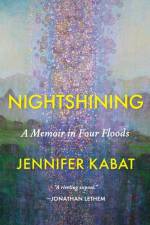
A propulsive, layered examination of the conflict between the course of nature and human legacies of resistance and control.Floods, geoengineering, climate crisis. Her first year in Margaretville, New York, Jennifer Kabat wakes to a rain-bloated stream and three-foot waves in her basement.This is far from the first—and hardly the worst—natural disaster to devastate her town. As Kabat dives deeper into the region’s fraught environmental history, she discovers it was more than once the site of Cold War weather experimentation. She traces connections between noctilucent clouds, man-made precipitation, and the 1950 Rainmaker’s Flood—finding unlikely characters along the way, including Kurt Vonnegut’s brother, Bernard, a scientist at General Electric. And all the while she searches for ways to cope with the grief of her environmentalist father’s recent passing. “Because I need the water to speak to me too,” she writes.Curious and experimental, Nightshining uses place as the palimpsest of history, digging into questions of personal responsibility and planetary change. With “characteristically lyrical incision” (Marko Gluhaich), Kabat circles back to her own life experience and the essence of being human—the cosmos thrumming in our bodies, connecting readers to the land around us and time before us.
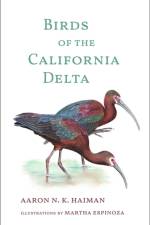
A richly illustrated birding guide to the wetlands and developed areas of the California Delta.From Sacramento to Stockton, the Delta gathers the waters of inner California to create a lush estuary and a haven for birds. In Birds of the California Delta, lifelong birder and Delta local Aaron N. K. Haiman showcases the avian diversity found all around the shoals and sloughs where the Sacramento and San Joaquin Rivers meet. Even though much of the Delta has been claimed for human use, Haiman rejoices in the abundance of resident birds and migratory visitors. Ibises and cranes wander through these pages, just as they stalk across the valley's farmland and the Suisun marsh. Kites hover over pastures, woodpeckers hammer towering trees, and grackles squeak and whistle in Fairfield parking lots. Experienced birdwatchers and new birders alike will appreciate Haiman's soulful descriptions, his introductory essay to the ecology of this region, and his understanding that birding can connect us not only with wildlife but with one another. Paired with vividly realized full-color portraits that offer detailed insights into identification marks and distinctive behavior, this useful and engaging guide to 25 Delta birds helps everyone get to know their avian neighbors a bit better.
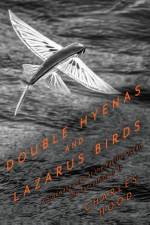
Lauded essayist takes to the high seas in hot pursuit of elusive birds, artistic ghosts, fathers and their memories, and above all, safe harbor."Among nature writers now working, Charles Hood may be my favorite." —Jonathan FranzenCharles Hood is on a boat, wearing at least two life jackets as he scans the sky for seabirds and plumbs the depths of his—and our—relationship with the vast Pacific Ocean. Winner of the Foreword INDIES Book of the Year for his collection of essays, A Salad Only the Devil Would Eat: The Joys of Ugly Nature, Hood now brings his irrepressible curiosity to the lives of petrels, frigate birds, sea snakes, and flying fish. During our voyage, he resurrects Melville's storm-tossed journey to San Francisco, takes us into the storm-tossed minds and paintings of J. M. W. Turner and Winslow Homer, and surfaces the trauma—still reverberating—to ocean and family ecologies alike from World War II. As sharp and witty as ever, Hood also turns his scrutiny on a more personal history, navigating murky waters of harm and forgiveness, love and entrapment. Full of wonder, joy, and terror at the shared capacity of the ocean and the humans on its edges to nurture life and damage it irreparably, this book is a vessel, seaworthy and transportive.
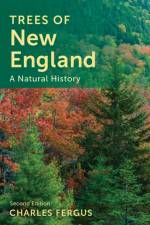
A beautifully written natural history of the more than seventy tree species that grow in New England. Includes detailed illustrations and range maps.
This book shows how artists and scholars are creatively responding to ecocide to redefine the complex relationship between creativity, ecological crisis and political change across the arts and in society.
'Traveller-specific' architecture in Ireland and permanently 'temporary' sites in the UK embody an insoluble contradiction - as systems of control, policing and strategic neglect, and as a cultural right, an alternative to housing that recognizes the dignity of choice.
The book is unique in providing an introduction to Latin American geography that showcases the ideas of some of the region's leading geographical thinkers. Aimed at undergraduate students, chapters will also be of relevance to advanced researchers looking for introductions to specific areas.
This book provides an in-depth, ethnography-based comparison of environmentalism in the global North and South through movement case studies situated in Australia and India.
First published in 1981, Libya: The Experience of Oil provides a comprehensive overview of Libya' s socio-economic development since the reform of 1961. The book shows that by end of the 1970s there had been a significant redistribution of wealth along with a reorganization of the economy.
First published in 1981, Libya: A Modern History traces the history of Libya from 1900 to 1980, showing how its first monarchic constitution was modelled by the UN Commission, and survived precariously until the military coup of 1969.
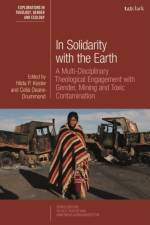
Based on case studies, the book creates a multidisciplinary conversation on the gendered vulnerabilities resulting from extractive industries and toxic pollution, and also charts the resilience and courage of women as they resist polluting industries, fight for clean water and seek to protect the land. While ecumenical in scope, the book takes its departure from the concept of integral ecology introduced in Pope Francis' encyclical Laudato Si'. The first three sections of the book focus on the social and ecological challenges facing minoritized women and their communities that are related to mining, pollutants and biodiversity loss, and toxicity. The final section of the book focuses on the possibilities and obstacles to global solidarity. All chapters offer a cross disciplinary response to a particular local situation, tracing the ways ecological destruction, resulting from extraction and toxic contamination, affects the lives of women and their communities. The book pays careful attention to the political, economic, and legal structures facilitating these life-threatening challenges. Each section concludes with a response from a 'practitioner' in the field, representing an ecclesial organization or NGO focused on eco-justice advocacy in the global South, or minority communities in the global North.
Your journey is about to begin! Get ready to set sail, soar through the air, climb mountains and blast into space. We are following in the footsteps of history''s most adventurous explorers. Are you ready to start your own amazing adventure?
Your journey is about to begin! Get ready to set sail, soar through the air, climb mountains and blast into space. We are following in the footsteps of history''s most adventurous explorers. Are you ready to start your own amazing adventure?
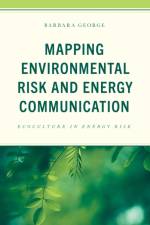
As the rise of the Anthropocene has led to serious deliberation about how energy is best produced and distributed in a world pressured by both the depletion of natural resources and global climate change, advances in technology have enabled new systems of extracting energy like High Volume Hydraulic Fracturing (HVHF), commonly known as fracking, that complicate these discussions. In this book, Barbara George explores how citizens impacted by HVHF tell stories about environmental risks, the conflict they experience in attempting to articulate these risks, and the hope for a post-carbon future in which HVHF is banned. Deep ideologies linked to history, coal, and industry permeate areas like the Rust Belt and Appalachia and, George argues, create "frames" that encourage and advocate for HVHF and make it difficult for publics in these locales to find a platform to tell their stories in a meaningful way. This book offers a case study of three communities in the United States - New York, Pennsylvania, and Ohio - and how each community frames HVHF environmental and health risks differently based on their differing sociocultural histories. Scholars of communication, environmental studies, history, and sociology may find this book of particular interest.
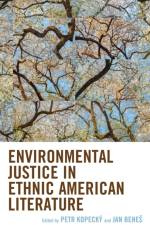
Addressing issues from slow violence, transcorporeality, food and reproductive justice or agrarianism and employing a wide range of ecolinguistics approaches, this volume brings to the fore a diversity of literary responses by African American, Latinx, Asian American, and American Indian writers to environmental injustices and their impact.
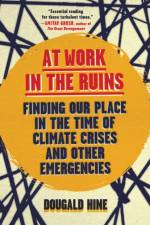
'One of the most perceptive and thought-provoking books ...Essential reading for these turbulent times.' Amitav Ghosh, author of The Great Derangement'Dougald Hine's brilliant book demands we stare into that abyss and rethink our securest certainties about what is actually going on in the climate crisis. It's lucidly unsettling and yet in the end empowering. There is something we can do, and it starts with where we look, how we see and what we choose to change.' Brian Eno, Musician'[A] rich book, which like a poetic or religious text deserves multiple readings' Richard Smith, British Medical Journal'I consider this book a must-read for all those activists feeling lost, desperate and perhaps subject to 'press-on-itis'.' Gail Bradbrook, cofounder, Extinction RebellionDougald Hine, world-renowned environmental thinker, has spent most of his life talking to people about climate change. And then one afternoon in the second year of the pandemic, he found he had nothing left to say. Why would someone who cares so deeply about ecological destruction want to stop talking about climate change now? At Work in the Ruins explores that question. 'Climate change asks us questions that climate science cannot answer,' Dougald says. Questions like, how did we end up in this mess? Is it just a piece of bad luck with atmospheric chemistry - or is it the result of a way of approaching the world that would always have brought us to such a pass? How we answer such questions also has consequences. Through our over-reliance on the single lens of science, Dougald writes that we are blinded to the nature of the crises around and ahead of us, leading to 'solutions' that can only make things worse. At Work in the Ruins is his reckoning with the strange years we have been living through and our long history of asking too much of science. He offers guidance by standing firmly forward and facing the depth of the trouble we are in, to ultimately, helps us find the work that is worth doing, even in the ruins.
Aquapelagos is a cross disciplinary volume that is geared to a general undergraduate and non-specialist readership while also being rigorous and theoretically exciting for doctoral and advanced researchers of climate and ocean studies. It foregrounds the ocean as a philosophical, navigational and knowledge making interface.
Aquapelagos is a cross disciplinary volume that is geared to a general undergraduate and non-specialist readership while also being rigorous and theoretically exciting for doctoral and advanced researchers of climate and ocean studies. It foregrounds the ocean as a philosophical, navigational and knowledge making interface.
Abonner på vårt nyhetsbrev og få rabatter og inspirasjon til din neste leseopplevelse.
Ved å abonnere godtar du vår personvernerklæring.