













Gjør som tusenvis av andre bokelskere
Abonner på vårt nyhetsbrev og få rabatter og inspirasjon til din neste leseopplevelse.
Ved å abonnere godtar du vår personvernerklæring.Du kan når som helst melde deg av våre nyhetsbrev.

Scientific management strategies can help in exploring anthropogenic wastes (human-made materials) as potential resources through the urban mining concept and be a panacea for sustainable development.
This book focusses on graduate students, researchers in environmental engineering, ecological engineering, chemical and biological engineering, plastics and material sciences/engineering, waste management. materials science.
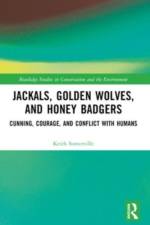
This book explores the fascinating and complex lives of the honey badger, the African jackals (black-backed jackal and side-striped), African golden wolves and Eurasian golden jackals. It will interest researchers, scientists, and students in wildlife conservation, human-wildlife relations, zoology, biology and environmental science.
This book cover problems of controlled synthesis of biomass materials and effect of their morphological, physical and chemical characteristics on their adsorption or desorption capacity and recent progress on green catalysts derived from biomass for various catalytic applications including socioeconomic impacts on environment.
This book provides an overview of the different aspects of microbial bioconversion methodologies for valorization of underutilized wastes of varied nature. It covers microbiological/biotechnological aspects, environmental concerns, bioprocess development, scale-up aspects, and opportunities in microbial valorization at commercial scale.
Big Data Analytics and Intelligent Techniques for Smart Cities covers fundamentals, advanced concepts, and applications of big data analytics for smart cities in a single volume.
This book presents an integrated and holistic discussion on cadmium, lead and mercury toxicity in aquatic environments, expanding general concepts on chemical speciation effects and exploring specific environmental toxicological issues, exposure routes.
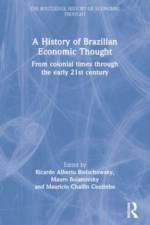
This book provides a comprehensive analysis of the evolution of Brazilian economic thought ranging from colonial times through to the early 21st Century.
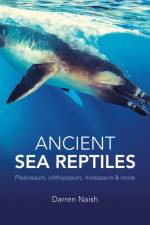
In the Mesozoic Era, while dinosaurs roamed on land, giant carnivorous reptiles ruled the seas. These enormous underwater creatures have enthralled the public imagination since Mary Anning discovered spectacular reptile skeletons on Dorset's 'Jurassic Coast' in the early 1800s. Join palaeontologist Darren Naish on a tour of these incredible animals, ranging from shark-shaped ichthyosaurs and long-necked plesiosaurs to gigantic, predatory mosasaurs. Occupying roles similar to those of modern sharks, seals and whales, they filled the ancient oceans for a period of 180 million years. Naish charts the evolutionary rise of the ancient sea reptiles and their domination of the Mesozoic Seas. He reveals how these reptiles moved in water, the anatomical advantages of their soft tissue, skin and blubber, how their jaws were specialized for aquatic prey, and the sensory organs that enabled them to see, smell or hear underwater. Later chapters focus on each of the major lineages: the shark-shaped ichthyosaurs, the long-necked plesiosaurs; the crocodilelike thalattosuchians, the fast-swimming mosasaurs, and the first sea turtles. The book is richly illustrated with photographs of striking specimens and artistic reconstructions which bring these giants of the sea to life.
This book discusses the application of chiral chromatography in monitoring and characterization of chiral organic pollutants in food and the environment. Discussions on the environmental behavior--biodegradation, chiral inversion, adsorption--and toxicity provides valuable information on the risks to the food supply posed by chiral pollutants.
This edited volume considers the many ways in which landscape (seen and unseen) is fundamental to place-making, colonial settlement, and identity formation.
The book offers a comprehensive review of the latest advances in nanomaterials-based technologies for the treatment of emerging contaminants in wastewater. It describes the latest developments in synthesis protocols.
The book addresses the needs of researchers on the fundamentals as well as more advanced knowledge on microgrids and their evolution. It covers newly emerging trends in fields such as Computer Science, Energy, Electrical Engineering, and Electronics and brings the reader up-to-date on the new emerging fields.
This revised and fully updated second edition of the Routledge Handbook of Environment and Communication provides a state-of-the-art overview of environmental communication theory, practice and research.
This book covers toxic metals individually discussing their redox biology and cytotoxicity, toxicological aspects on animals and humans, disease manifestations and threshold, organ specific damage, and molecular toxicology including mechanistic insight. It also discusses appropriate doses for beneficial micronutrients or essential trace elements.
This book describes resource efficient and circular e-waste management processes including valorisation amalgamating the sustainable benefits of electronic component recycling, industrial symbiosis, green technology implementation, efficient supply chain networks with a vision towards year 2025.
This book presents the latest research that shows how design thinking, making, and acting contributes to the co-design and development of products, spaces, and services with people living with dementia.
The book provides a systematic assessment of how the mining and materials sector contributes to the 17 sustainable development goals set forth by the UN in 2015. The target date of 2030 for reaching these goals is considered as a benchmark but the book looks beyond considering a longer-term vision.
The present book regarding Persistent Organic Pollutants (POPs) focusses on the sources, atmospheric behaviour, terrestrial and aquatic food chain transfer, human exposure and fate aspects of this important class of chemicals including topical issues like temporal trends in contamination and chemical characteristics of individual POPs.
This text presents recent research and advances in various solid-liquid separation technologies and their applications to treating produced water. It covers fundamental principles and the importance of produced water in major industrial sectors and compares solid-liquid separation technologies.
Abonner på vårt nyhetsbrev og få rabatter og inspirasjon til din neste leseopplevelse.
Ved å abonnere godtar du vår personvernerklæring.