








Gjør som tusenvis av andre bokelskere
Abonner på vårt nyhetsbrev og få rabatter og inspirasjon til din neste leseopplevelse.
Ved å abonnere godtar du vår personvernerklæring.Du kan når som helst melde deg av våre nyhetsbrev.

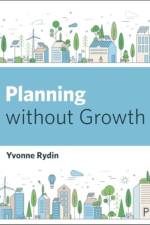
Many planning systems are currently locked into growth-dependence, encouraging market-led development which can widen social inequalities and produce adverse environmental outcomes. This accessible book introduces students to the debates around growth and planning and sets out the solutions to promote genuinely sustainable communities. It includes:¿ a positive proposal for reform of the planning system;¿ focussed discussions from the UK and Europe providing lessons for future planning;¿ analysis of the challenges of implementing reform. Covering chapters on cooperatives, community land trusts, local economic development and community assets and infrastructure, as well as commoning, it provides a roadmap for planning system reform with social justice and sustainability at its heart.
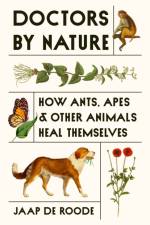
"What happens when animals get sick? Do they rely exclusively on their bodies own defense systems to protect them, or are there other behaviors they can use to heal themselves? Humans have been using plants, fungi, and other natural mechanisms to treat ailments and disease for millennia--why not animals too? It turns out they do! In 1987, primatologist Michael Huffman noticed an ill chimpanzee collecting shoots of a plant called Vernonia amygdalina, which humans in the area used to treat stomach upset and fever. The ill chimpanzee removed the plant's outer bark and sucked on the soft inner branches. Within 24 hours, she appeared to have largely recovered. Although there have been stories about animals medicating themselves, and traditional healers have looked to animals to help develop treatments for years, Huffman's observations are widely considered the first official scientific evidence of an animal actively medicating itself to treat disease. Since then, scientists have found conclusive evidence for medication in all manner of species--including bees, ants and butterflies, as well as monkeys, birds, apes, and elephants. Self-medication behaviors (for which scientists have developed a rigorous field definition) range from prophylactic consumption of anti-parasitic berries by monkeys and therapeutic use of alkaloids by woolly bear caterpillars, to blue jays' use of ant-produced formic acid as bug-repellent. In Animal Doctors, Professor of Biology and science communicator Jaap de Roode will provide an overview of the scientific study of animal self-medication, drawing on both the scientific literature and first-person interviews with key contributors to the field to ask how animals use medication against the parasites and pathogens that ail them"--
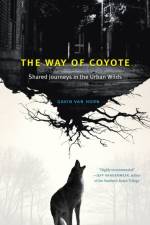
Blending travelogue and philosophical reflection, Van Horn embarks on a quest for a new urban land ethic that reveals how urban animals can expand how we care for and understand place. A hiking trail through majestic mountains. A raw, unpeopled wilderness stretching as far as the eye can see. These are the settings we associate with our most famous books about nature. But Gavin Van Horn isn't most nature writers. He lives and works not in some perfectly remote cabin in the woods but in a city-a big city. And that city has offered him something even more valuable than solitude: a window onto the surprising attractiveness of cities to animals. What was once in his mind essentially a nature-free blank slate turns out to actually be a bustling place where millions of wild things roam. He came to realize that our own paths are crisscrossed by the tracks and flyways of endangered black-crowned night herons, Cooper's hawks, brown bats, coyotes, opossums, white-tailed deer, and many others who thread their lives ably through our own. With The Way of Coyote, Gavin Van Horn reveals the stupendous diversity of species that can flourish in urban landscapes like Chicago. That isn't to say city living is without its challenges. Chicago has been altered dramatically over a relatively short timespan-its soils covered by concrete, its wetlands drained and refilled, its river diverted and made to flow in the opposite direction. The stories in The Way of Coyote occasionally lament lost abundance, but they also point toward incredible adaptability and resilience, such as that displayed by beavers plying the waters of human-constructed canals or peregrine falcons raising their young atop towering skyscrapers. Van Horn populates his stories with a remarkable range of urban wildlife and probes the philosophical and religious dimensions of what it means to coexist, drawing frequently from the wisdom of three unconventional guides-wildlife ecologist Aldo Leopold, Taoist philosopher Lao Tzu, and the North American trickster figure Coyote. Ultimately, Van Horn sees vast potential for a more vibrant collective of ecological citizens as we take our cues from landscapes past and present. Part urban nature travelogue, part philosophical reflection on the role wildlife can play in waking us to a shared sense of place and fate, The Way of Coyote is a deeply personal journey that questions how we might best reconcile our own needs with the needs of other creatures in our shared urban habitats.
This book presents an analysis of climate change and agricultural laws in Kenya, Nigeria and South Africa in order to determine whether they adequately addressed the concept of agricultural adaptation. It will be of interest to students and scholars of law, climate change, food and agriculture, sustainable development and African studies.
This Handbook brings together seminal research on the Sustainable Development Goals (SDGs) and investigates their effectiveness. For academics and students of economics, business studies, political science, and development studies, and also for leaders in industry, the public sector, civil society, and international policymakers.
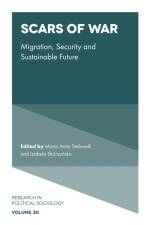
Echoing the sentiments expressed in pivotal UN resolutions and positions which emphasize the inherently destructive nature of warfare on sustainable development, the chapters focus on the importance of adhering to international legal frameworks for safeguarding the environment during armed conflicts.
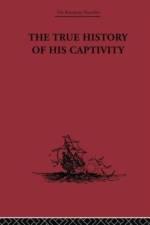
The first part of the book is a straightforward account of the author's personal experiences. The second part is a detailed treatise on the customs of the Tupinambá, their polity, trade, religion, manufactures and warlike undertakings.
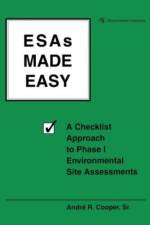
Learn how to conduct and evaluate a successful Phase I ESA to identify existing or potential environmental hazards and 'special resources' for a subject property. Through its easy-to-follow checklist format and sample ESA, this book shows you everything you need to know about Phase I ESAs, including ESA statement of work, environmental databases, ESA report appendices, ESA process, site history, governmental records, site reconnaissance, environmental hazards, underground and aboveground storage tanks, historic properties and national landmarks, scientific significance, and more.
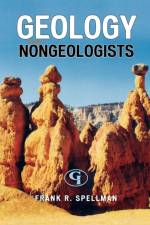
Geology for Nongeologists introduces basic concepts in geology: how rocks, minerals, and fossils are classified, how wind, ice, and water have shaped the earth, how mountains are formed, and how volcanoes, geysers, earthquakes, glaciers, and groundwater work to modify the physical structure of Earth. Written for both the technical practitioner in the field and the student in the classroom, this book is accessible for a range of readers, including those who have no experience with geology or other sciences.
In Pathways through Crisis, Carl Maida describes how communities tend (and need) to develop "grass roots" solutions in responding to critical social problems.
In a context where digital media are reshaping the futures of conservation, environmentalism, and ecological politics - for better and for worse - Digital ecologies draws together leading scholars in the humanities and social sciences to establish a research agenda for making sense of these transformations. -- .
This book constitutes an effort to develop a critical social science of climate change, one that posits its roots in global capitalism with its emphasis on profit-making, a treadmill of production and consumption, heavy reliance on fossil fuels, and commitment to ongoing economic expansion.
In Nuclear Infrastructure Protection and Homeland Security, authors Frank R. Spellman and Melissa L. Stoudt present all the information needed for nuclear infrastructure employers and employees to handle security threats they must be prepared to meet.
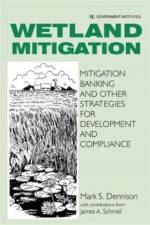
Avoid or minimize expenses or delays when you develop projects in wetland areas. This practical reference explains the regulations and provides guidance on mitigation requirements and the permitting process. You'll learn everything you need to know about evaluating, selecting, negotiating, and implementing the various mitigation measures available.
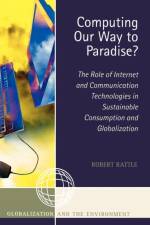
Computing Our Way to Paradise? challenges key assumptions concerning the role of Internet and communication technologies in globalization processes. While globalization is predicated upon a strong, extensive, and interconnected network of products, processes, and services, the real environmental and health benefits remain far from certain.
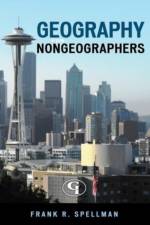
This book introduces readers to the most important aspects of geography and how they affect us. It covers all areas of geography, from physical geography to climate and weather to human and cultural geography. It is presented in an accessible and straightforward manner, explaining scientific concepts in the most basic way possible. Readers acquire an understanding of and skill in geographical principles, adding a critical component to their professional knowledge.
This book draws on Indigenous knowledges, methodologies and methods, presenting concepts of decolonising and Indigenous design interweaved as theory, storytelling, and practices. Useful for students and scholars of design, art, architecture, culture, decolonising methodologies, biocultural diversity, and design beyond human and materiality.
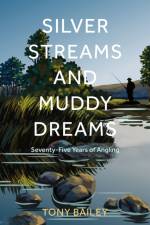
Looking back over 75 years of angling in Lancashire and other areas
The book studies applications of remote sensing and GIS to highlight the possible integration of the advanced applications of remote sensing and GIS-based technologies in the architecture of smart buildings and city planning. It demonstrates the integration of remote sensing and GIS technologies applications through case studies.
Abonner på vårt nyhetsbrev og få rabatter og inspirasjon til din neste leseopplevelse.
Ved å abonnere godtar du vår personvernerklæring.