




















Gjør som tusenvis av andre bokelskere
Abonner på vårt nyhetsbrev og få rabatter og inspirasjon til din neste leseopplevelse.
Ved å abonnere godtar du vår personvernerklæring.Du kan når som helst melde deg av våre nyhetsbrev.

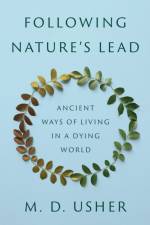
In the spirit of E. F. Schumacher's Small Is Beautiful, a dazzling and revelatory exploration of what ancient ideas and ways of living can teach us about creating a more sustainable worldHow should we think and live in a world facing environmental catastrophe? In this urgent, original, and wide-ranging book, classicist and farmer M. D. Usher brings together ancient, indigenous, and modern ideas about how to live in this world and describes how we might begin to reconnect with Nature and heal our damaged planet and lives. The ancients were close to Nature, the source of their survival, in ways that most of us can scarcely conceive of today, and ancient philosophy often argues that humans should follow Nature's lead. Usher makes the case that Nature's resilience can serve as a model for our own responses to climate trauma and all the other harms caused by modern lifestyles. Drawing on philosophy, science, economics, art, literature, history, and religion, Following Nature's Lead is both an indictment of human overreach and a celebration of human ingenuity and the adaptability of Nature. Here, Plato meets German biologist Jakob von Uexküll, Lucretius illuminates King Lear, and Diogenes the Cynic crosses swords with Henry Thoreau. Filled with vital and inspiring insights, Following Nature's Lead shows how the ancients can help teach us to live in accordance with Nature-and why it's essential for human survival that we learn to do so without delay.
This book investigates changing geographies of fast growing Asian metropolitan regions, in particular their peripheral areas. Through examining the intersection of global suburbanisation and Asian urbanism, it depicts a complex (sub)urban world in Asia. The chapters in this book were originally published in Urban Geography.
This handbook builds a shared understanding of the troubling politics of philanthropy and the disturbing history and practices of humanitarianism.
This book explores the relationships between empire, natural history and gender in the production of geographical knowledge and its translation between colonial Burma and Britain. Focusing on the work of the plant collector, botanical illustrator and naturalist, Charlotte Wheeler-Cuffe, this book illustrates how natural history was practiced
'A wondrous work of walking, seeing and thinking' - Robert Macfarlane'A startlingly brilliant and moving debut' - William DalrympleA deep observation of coast and wetland, climate and self, by a leading Indian ecological activist. Introduction by Robert Macfarlane. Written in spellbinding prose, Intertidal reveals an unseen world. We hear frog calls through the night, spot butterflies miles into the ocean, see the churning of longshore currents, and meditate on worms' composting abilities. We also witness communities standing together to preserve the homes of the coast's inhabitants, both human and non-human. Intertidal asks us to reimagine values to live by; heeding the natural world, attending to the climate's calling, and moving away from the old political and cultural values that have proven ecologically disastrous. Set in beaches, marshes, and the wild places of the mind, Intertidal revels in the healing power of nature and explores what it means to reclaim an ecology that has been colonised.
This timely and interdisciplinary book deals with urban marginality as a multi-faceted process of urban transformation that engenders a wide range of experiences world-wide.
This book historicises and analyses the increasing incidence of xenophobia and nativism in Africa, Latin America, and the Caribbean.
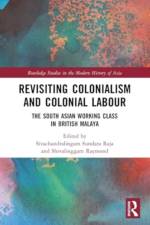
This book argues that the prevailing view of colonialism needs to be rethought. It focuses on the experiences of the South Indian working class, large numbers of which came to Malaya in the early years of the twentieth century, emigrating from socially, economically, and environmentally inhospitable south India.
Computer-Aided Modelling of Stormwater Systems deals with the construction of probabilistic models of rainfall and their use in sizing retention tanks. It probes methods of sensitivity & uncertainty analysis of hydrodynamic models of urban catchments as well as proprietary calculation algorithms for the sizing of retention tanks.
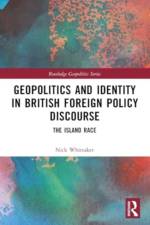
This is the first book to examine Britain's geopolitical identity and how it is expressed in foreign policy discourse. It demonstrates how British imperial thought, related to its island status, has remained important for British Members of Parliament in their debates of contemporary issues.
Future of mega-events has never been more uncertain. Ongoing COVID-19 pandemic has introduced unparalleled level of doubt regarding the kind of mega-events that will take place in coming years. This book analyses case studies of heritage-rich cities that hosted mega-events to discuss emerging challenges, controversies and accomplishments.
The Handbook of Irrigation Hydrology and Management examines irrigated ecosystems in which water storage, applications, or drainage volumes are artificially controlled in the landscape and the spatial domain of processes varies from micrometers to tens of kilometers, while the temporal domain spans from seconds to centuries.
Metaphors are diversly and intricately embedded in architectural practice and discourse. Precisely for this reason, this volume sets out to explore, how they can be engaged to critically interrogate architecture's social, cultural and political dimensions - past and present - and to challenge and intervene with established perspectives.
This new edition provides a practical view of pollution and its impact on the natural environment. Driven by the hope of a sustainable future, it stresses the importance of environmental law and resource sustainability, and offers a wealth of information based on real-world observations and expert experience.
This edited book takes a critical look at the geopolitics of the broader Middle East and North Africa (MENA) region. It scrutinizes some of the perennial issues shaping the regional security agenda, as well as the emerging geopolitical trends in the wake of a decade of turmoil triggered by the demands for political and economic reforms.
This book applies both industrial engineering and computational intelligence to demonstrate intelligent machines that solve real-world problems in various smart environments. This state-of-the-art book will be essential reading for both undergraduate and graduate students, researchers, practitioners.
The Imagined Arctic in Speculative Fiction explores the ways in which the Arctic is imagined and what function it is made to serve in a selection of speculative fictions: non-mimetic works that start from the implied question 'what if?'
This book revitalizes the discourse on backsliding democracy and the global rise of autocracy, extending the consequences of their changes to a sustainable future.
Abonner på vårt nyhetsbrev og få rabatter og inspirasjon til din neste leseopplevelse.
Ved å abonnere godtar du vår personvernerklæring.