






Gjør som tusenvis av andre bokelskere
Abonner på vårt nyhetsbrev og få rabatter og inspirasjon til din neste leseopplevelse.
Ved å abonnere godtar du vår personvernerklæring.Du kan når som helst melde deg av våre nyhetsbrev.

This book aims to prospectively conjecture about what the coming decades may hold for human rights. The authors in this volume discern where current trends are likely to lead and try to make sense of the future they herald. The chapters in this book were originally published as a special issue of Nordic Journal of Human Rights.
This book focuses on India's foreign policy towards Sri Lanka before the Indo-Sri Lanka Accord (ISLA) in July 1987 and India's military intervention after the ISLA.
Sustainable Development in India and South-East Asia attempts to explore and analyse the nature of economic relationship between India and the South-East Asia. It assesses the prospects for this relationship to grow and flourish.
This book examines the changing roles and functions of the soybean throughout world history and discusses how this reflects the complex processes of agrofood globalization.
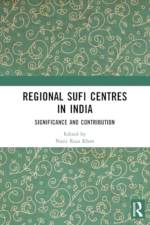
The authors of this volume discuss some of the regional Sufi Centres in India and their contribution in the social emancipation of the society.
Islam in India: History, Politics and Society is based on the historical and contemporary relevance of the religion and its related culture(s) in India.
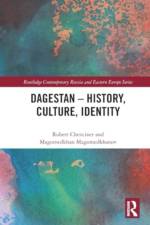
The book provides an up-to-date and comprehensive overview of Dagestan, a strategically important republic of the Russian Federation which borders Chechnya, Georgia and Azerbaijan, and its people. It outlines Dagestan's rich and complicated history, from 5th c ACE to post USSR, as seen from the viewpoint of the Dagestani people.
The Handbook of Irrigation Hydrology and Management examines irrigated ecosystems in which water storage, applications, or drainage volumes are artificially controlled in the landscape and the spatial domain of processes varies from micrometers to tens of kilometers, while the temporal domain spans from seconds to centuries.
The Handbook of Irrigation Hydrology and Management examines irrigated ecosystems in which water storage, applications, or drainage volumes are artificially controlled in the landscape and the spatial domain of processes varies from micrometers to tens of kilometers, while the temporal domain spans from seconds to centuries.
Comprising eleven countries and hundreds of languages from one of the most culturally diverse regions in the world, the chapters in this collection explore a wide range of translation issues. This book will appeal to scholars and postgraduate students of translation studies, sociolinguistics, and Southeast Asian studies.
Mobilities in Remote Places explores the meanings, challenges, and opportunities of remoteness as practiced and experienced by those who live and work in some of the world's most remote communities.
This book comprehensively compares the development of population control policies in China and India, their implementations, and the population changes over the past seven decades.
Considering the alarming issue of global climate change and its drastic consequences there is an urgent need to further develop smart and innovative solutions. The goal of sustainable and smart energy for present and future generations can be achieved by integrating emerging technologies into the existing energy infrastructure
Microbial Products: Applications and Translational Trends offers complete coverage of the production of microbial products, including biopolymers, biofuels, bioactive compounds, and their applications in fields such as bioremediation, agriculture, medicine, and other industrial settings.
This text focuses on the latest developments of urban storm water design methods using drainage and storage approaches for both water quality and quantity control. It covers conventional approaches to flood mitigation and low-impact methods for stormwater quality enhancement. Theory, practice, and modelling methods are presented.
This book can be used as a college text designed to provide new engineers and scientists some comprehension of the industries into which they may enter. It also serves as a useful reference for practitioners which will help them better understand the health risk aspects of various industrial operations.
This book brings together some of the finest academics in the field to address the important questions around the way in which people experience their physical environments including temperature, light, acoustics and so forth.
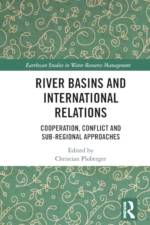
This book argues that river basins represent a particular structural setting in international relations with the potential for generating a dynamic of cooperation among the involved countries.
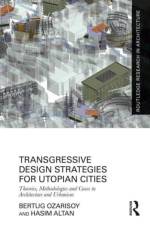
This book critically examines the philosophy of the term 'transgression' and how it shapes the utopian vision of contemporary urban design scenarios.
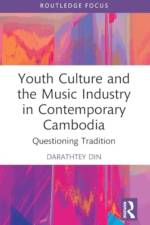
This book explores young Cambodians' perceptions of their place in today's society and how they interact with the country's arts and culture scene.
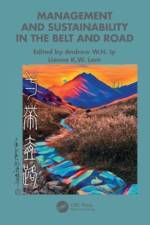
This book is about how to manage innovation, sustainability, and business necessary to make BRI works, and how to handle the issues, problems and crisis that may arise thereof. Participants of BRI projects can take many different roles but ultimately it is team effort and leadership for each project.
This book examines a diverse range of community food initiatives in light of their everyday practices, innovations and contestations.
Blue Skies over Wuhan traces the development of environmental protection policy in China through a case study of Hubei Province, where an environmental agenda dominated by economic growth priorities gradually gave way to more mature, state-led governance.
An engaging and thought-provoking introduction to river scienceWhen we look at a river, either up close or while flying over a river valley, what are we really seeing? Following the Bend takes readers on a majestic journey by water to find answers, along the way shedding light on the key concepts of modern river science, from hydrology and water chemistry to stream and wetland ecology. In this accessible and uniquely personal book, Ellen Wohl explains how to "read" a river, blending the latest science with her own personal experiences as a geologist and naturalist who has worked on rivers for more than three decades. She charts how water travels through the hydrologic cycle around the globe and downstream to distribute energy, move sediment, and shape river channels, and how living organisms adapt to life in flowing water to create vibrant river ecosystems. Wohl looks at the role of disturbances such as floods and droughts and discusses how geologists interpret the sedimentary records of past river processes. She illustrates how river networks interact with Earth's surface and considers issues for rivers in the future, such as progressive drying, river restoration, and the legal personhood of a river to maintain its distinctive spirit, identity, and integrity. Sharing a new understanding of how rivers function as both physical systems and ecosystems, Following the Bend enables us to observe rivers with fresh eyes and more fully appreciate the beauty, vibrancy, and complexity our planet's vital waterways.
Abonner på vårt nyhetsbrev og få rabatter og inspirasjon til din neste leseopplevelse.
Ved å abonnere godtar du vår personvernerklæring.