










Gjør som tusenvis av andre bokelskere
Abonner på vårt nyhetsbrev og få rabatter og inspirasjon til din neste leseopplevelse.
Ved å abonnere godtar du vår personvernerklæring.Du kan når som helst melde deg av våre nyhetsbrev.

Gathers the recent studies and new developments in effective environmental remediation using nanomaterials for cleaning up pollutants in air, water, and soil. It explains the role of carbon and composite nanomaterials, bio nanomaterials and phytonanotechnology in environmental remediation and the challenges they pose to the environment.
A compendium of diverse women and nonbinary femmes, the second, expanded edition of this book highlights the contributor's journeys with straddling social and ecological issues through both their professional and personal paths and reveals how straddling these edges has surfaced new learning, models, and practices for collective healing.
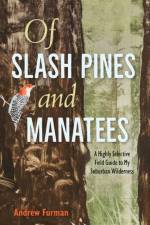
"Through stories of nature near at hand, a South Florida writer offers a unique view of humans and the environment amid development and change Wings and talons clatter against a windowpane. Foxes den under a deck. Pines stand in quarter-acre lots, recalling a vanished forest. In this book, Andrew Furman explores touchpoints between his everyday suburban life and the environment in South Florida, contemplating his place in a subtropical landscape stretching from the Everglades to the warm Atlantic coast. Transportive vignettes of encounters in the natural world blend with ordinary, all-too-relatable stories of home and family life in these chapters. Puzzled and fascinated by the plants and animals he meets while continually preoccupied by busy domestic routines, Furman illustrates the beauty of his "suburban wilderness." He also reckons with changes and threats to the surrounding landscape. How, he asks, should humans go about living in what is simultaneously one of the most overdeveloped and most naturally beautiful states in the country? Furman's meditations give rise to an environmental ethic that challenges distinctions between nature and culture, wilderness and civilization, solitude and family life. Rather, with humor and hope, he encourages readers to engage in life with the mindset that the human and non-human are inextricably connected-and to ask how they can better belong together. Of Slash Pines and Manatees is a creative and memorable example for anyone seeking to live responsibly and richly in a world impacted by human activity. Furman inspires readers to focus fiercely on the local, to conduct their own adventures in the ecosystem outside their front doors, and to see that even in the most overdeveloped areas, what is wild persists. Funding for this publication was provided through a grant from Florida Humanities with funds from the National Endowment for the Humanities. Any views, findings, conclusions, or recommendations expressed in this publication do not necessarily represent those of Florida Humanities or the National Endowment for the Humanities. "--
Organic Farming: A Comprehensive Guide to Sustainable Agriculture examines a wide range of topics related to organic farming, including soil health, organic fertilizers, biodiversity, biotechnological interventions, microbial inoculants and biostimulants, genome editing, as well as certification and marketing.
Focusing on the MENA region, this book the complexities of rebuilding cities amid wars and conflicts, highlighting the importance of harnessing global knowledge.
Music in Modern Japanese and Hebrew Literatures examines the place of classical music in early 20th century Japanese and Hebrew literatures.
This report focuses on the future of the bus industry following the change of government in July 2024, setting it in the context of the changes that have taken place since the last Labour government left office in 2010. It contains analysis of:Where we have come fromThe bus market as it has evolved since 2010, looking at income, service levels, patronage, fare levels, costs and financial performanceBus RegulationCurrent status of the National Bus Strategy, BSIPs, Franchising and Enhanced Partnerships, including funding allocationsThe Key Tasks AheadA detailed look at the four key tasks that the government, local authorities and operators need to deliver over the next few years, including: Improving performance, Increasing Service Levels, Decarbonising the Fleet, Net Zero and Modal Shift, featuring estimates of costs and other indicators.Alongside this, it provides the latest update on the Bus Industry Monitor methodology for suggesting what level of profits operators need to earn in order to sustain themselves and meet their financial obligations.The report also features five detailed Appendices to support the 100-page text, which is illustrated with 18 charts and 24 tables.
He was also an acute observer of Indian conditions at an interesting period of Indian history.
Providing an introduction to the use of remote sensing in monitoring and mapping environmental change at regional and global scales, the 2nd edition of this acclaimed book now also covers space and other planetary bodies besides Earth. Remote Sensing nowadays is used routinely in the assessment and mapping of biodiversity over large areas, in the monitoring of changes to the physical environment, in assessing threats to various components of natural systems. Each system forms the basis of a separate chapter, and each is illustrated by real world case studies and examples. Remote Sensing for Earth and Planetary Science is intended for advanced undergraduate and graduate students in earth science, environmental science, or physical geography taking a course in environmental remote sensing.
Written by a renowned paleontologist and illustrated by leading artists in the field, the book covers the evolution of the dinosaurs, their adaptation, specialization, habitats and locations, and current research.
In the early modern period, members of the Society of Jesus working as missionaries in the so-called mission of Maynas explored vast areas of the upper Amazon. These missionaries belonged to the very small group of Europeans who lived in the forests of the Amazon Basin for longer periods, in close contact with local people. Their daily experiences in the mission, their high level of education, and their connection with the institutional structures of the Jesuit order made them key figures in the production of knowledge about the Amazon. Irina Saladin investigates the complex relationships between mission and knowledge in the context of seventeenth- and eighteenth-century Jesuit maps. She analyzes how Jesuit missionary practices shaped the cartographic representation of the Amazon in the early modern era.
The French countryside is as beloved by the many millions of tourists who visit it each year as it is of French people themselves. But it has not always looked like it does today. An Environmental History of France instead presents the countryside in which people live and work and through which they travel as a human creation across 250 years of economic and cultural change, war and revolution. It is a book about the 'making' of the French landscape and an engrossing story linking human geography, history, agriculture and culture.Showing an awareness of the origins and nature of current ecological and social challenges, Peter McPhee uses a blend of environmental and cultural approaches to paint a vivid picture of rural France's modern history. From the aristocratic control of agrarian resources in the 1770s, to widespread mechanisation in the 19th century, through to the impact of the World Wars and an intriguing discussion about the uncertain future of French rural communities, McPhee provides a nuanced, detailed and absorbing account of a distinctive version of France that is essential to the country's identity.
An urgent and useful guide for parents navigating the uncertainty of the climate crisis (their kids' and their own) that offers doable advice on how to turn the worry and fear into hope and action. Camp canceled because of wildfire smoke. Favorite beaches closed due to erosion. Recess held indoors due to extreme heat. Kids today are experiencing the climate crisis firsthand. So how do parents help it all make sense for them? And how can we keep our kids (and ourselves) from despair? Environmental journalist and parent Bridget Shirvell has created a handbook for parents to help them navigate these questions and more, weaving together expert advice from climate scientists, environmental activists, child psychologists, and parents across the country. She helps parents answer tough questions (how did we get here?) and raise kids who feel connected to and responsible for the natural world (it starts with nature walks and a family dog), feel motivated to make ecologically sound choices, and feel empowered to meet the challenges of the climate crisis (it starts with building resilience and problem-solving skills), and to ultimately fight for change.
Discusses natural pesticides and allelochemicals as a holistic and sustainable approach that balances effective pest management with minimizing environmental impacts, promoting biodiversity, and ensuring food safety and quality. It presents ideas for improving the quality of management and production of healthier foods with allelochemicals.
Rural Planning Futures charts the critical societal challenges that are reshaping rural places across the UK and Ireland. The book evaluates current planning processes and explores the prospects for an enhanced, cross-sectoral and holistic future that manages rural change towards more resilient and sustainable outcomes.
Rural Planning Futures charts the critical societal challenges that are reshaping rural places across the UK and Ireland. The book evaluates current planning processes and explores the prospects for an enhanced, cross-sectoral and holistic future that manages rural change towards more resilient and sustainable outcomes.
Abonner på vårt nyhetsbrev og få rabatter og inspirasjon til din neste leseopplevelse.
Ved å abonnere godtar du vår personvernerklæring.