

Gjør som tusenvis av andre bokelskere
Abonner på vårt nyhetsbrev og få rabatter og inspirasjon til din neste leseopplevelse.
Ved å abonnere godtar du vår personvernerklæring.Du kan når som helst melde deg av våre nyhetsbrev.

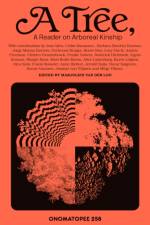
Artistic practices that share intimate, speculative and queer observations of tree kinshipPlants make the world; they literally create soil, shape landscapes and regulate the climate to some extent. They provide oxygen, fuel, food, building materials and shelter. Is anthropomorphism a way to strengthen the connection between humans and trees or a danger that makes it impossible to acquire objective knowledge? A Tree: A Reader on Arboreal Kinship showcases research and works in which artists explore the relationship between people and trees and ways we can relate more closely to their time span. (Some species, such as pines and Japanese cypress trees, can live up to 5,000 years.) A Tree is about vegetal agency, plant knowledge and the interaction between plants and people. The aim of this reader is to nurture and encourage dialogues and to share inspiration on exercising arboreal kinship by taking the time to think about trees differently.
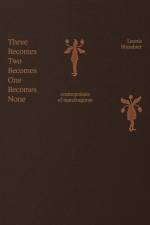
An artist's rigorous examination of the historical and future significance of a hallucinogenic member of the nightshade familyThe mandragora plant, commonly known as the mandrake, is one of the best-recorded gynecological herbal substances. It is also the only plant in the European context historically depicted as half human and half plant. In the richly illustrated Three Becomes Two Becomes One Becomes None, the Swiss artist Leonie Brandner (born 1992) explores the medicinal and magical properties of the plant, moving from the beginning of recorded storytelling to ancient Egyptian and Greek mythology and the many other stories that have grown around mandragora throughout history. Joining rigorous historical research with her own perception and encounters, she traces mandragora through medicinal tomes and folklore, eventually arriving at the impact the plant had during the witch hunts of the Middle Ages. Could the mandragora's many stories hold the potential for new orders and world-making? Brandner creates a dazzling kaleidoscopic image of human-plant imaginations across time.
Below the famously flat surface of the Netherlands lies a fascinating world of buried mountains and valleys, which can only be unraveled with drillings, geophysical techniques and geological understanding. Thorough exploration for hydrocarbons, groundwater and minerals produced a wealth of data and knowledge about the Dutch subsurface and its various uses. The second edition of this book, originally published in 2007, provides access to that wealth with a thoroughly revised and updated description of the Paleozoic to recent geology of the Netherlands, including the offshore. It covers applied geology with chapters on oil and gas, coal and peat, rock salt, groundwater, construction minerals, silica sand, underground storage and sequestration, and geothermal energy. It treats the natural and anthropogenic geohazards of seismicity and subsidence. Finally, it illustrates how data and knowledge of the Dutch subsurface are disseminated by the Geological Survey of the Netherlands, part of research and technology organisation TNO. Geology of the Netherlands is a comprehensive reference work for geologists, engineers, geoscience students, and all others who wish to know more about the relevance and applications of geology in the Netherlands.
Navigate ESG compliance confidently with the ESG Reporting Manual. Offering 500+ legal tips from a seasoned expert, this practical step-by-step guide ensures you meet reporting obligations and deliver shareholder value. Achieve success in sustainability reporting, climate change, governance, and more.
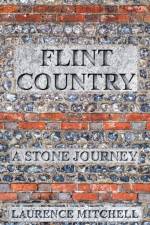
Laurence Mitchell uncovers the stories that flint has to tell us in this celebratory journey through the natural and cultural history of the stone. The East of England is characterised by the flint that makes up its world-famous architecture, beaches and landscape. The stone is so ubiquitous, in fact, that it can be easy to overlook how remarkable it is. Here, long time Norfolk resident Laurence Mitchell uncovers its extraordinary history and significance for East Anglia and beyond. Flint Country takes us on a tour around the flint regions of England, documenting how flint was formed, what we can learn from fossil records, and how flint has been used through millennia: from our prehistoric ancestors, to the Romans building roads and forts, and through to the present day. Whether it is thanks to the seismic geological events that have shaped our landscape, the stone we rely on for our homes, or simply the joy of picking up pebbles on the beach, this book shows how flint continues to be a touchstone in our lives.
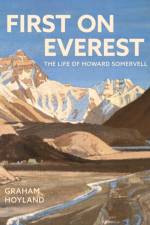
Climb Mount Everest with Howard Somervell, who was alongside George Mallory in the first attempt to summit the world's largest mountain
Containing 15-20 easy to moderate day hikes, these books are an accessible choice for sampling several attainable hikes in a state, National Park, or smaller region.
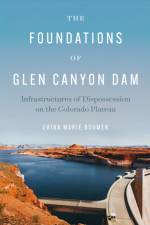
A history of the construction of the Glen Canyon Dam and social imbalances that resulted from it.
An exploration of how the world needs to adapt to climate change, and the problems and hard choices that lie ahead for the global community.
Abonner på vårt nyhetsbrev og få rabatter og inspirasjon til din neste leseopplevelse.
Ved å abonnere godtar du vår personvernerklæring.