







Gjør som tusenvis av andre bokelskere
Abonner på vårt nyhetsbrev og få rabatter og inspirasjon til din neste leseopplevelse.
Ved å abonnere godtar du vår personvernerklæring.Du kan når som helst melde deg av våre nyhetsbrev.

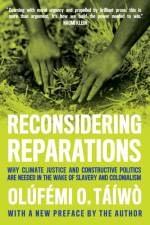
A pathbreaking book about world history, global justice, colonialism, and the climate "Coursing with moral urgency and propelled by brilliant prose, this is more than argument. It's how we build the power needed to win."-Naomi KleinA clear, new case for reparations as a "constructive," future-oriented project that responds to the weight of history's injustices with the equitable distribution of benefits and burdens. Centuries ago, Táíwò explains, European powers engineered the systems through which advantages and disadvantages still flow. Colonialism and transatlantic slavery forged schemes of injustice on an unprecedented scale, a world order he calls "global racial empire." The project of justice must meet the same scope.Táíwò's analysis not only discourages despair, it demands global resistance. Reconsidering Reparations suggests policies, goals, and organizing strategies. And it leaves readers with clear and powerful advice: act like an ancestor. Do what we can to shape the world we want our moral descendants to inherit, and have faith that they will continue the long struggle for justice. This understanding, Táíwò shows, has deep roots in the thought of Black political thinkers such as James Baldwin, Martin Luther King, Jr., Cedric Robinson, and Nkechi Taifa.Reconsidering Reparations is a book with profound implications for our views of justice, racism, the legacies of slavery and colonialism, and climate change policy.
This is a comprehensive exploration of the challenges and solutions related to environmentalism and sustainability. It is both history and foundational reference for the future, bridging the gap between theory and practice for those who care deeply about the planet and humanity's future.
The best of contemporary nature writing from the winners of the second international Nature Chronicles Prize. Founded in 2020 to mark the global pandemic and serve those who witnessed it, The Nature Chronicles Prize is an international, English-language, biennial literary award for unique, essay-length non-fiction that responds to the time we are in and the natural world as it is. The prize is also a memorial to Prudence Scott, a lifelong nature diarist who died in 2019. Contained within this volume are the outstanding shortlisted entries for the second iteration of the prize. These winning works address the feelings of responsibility, anxiety and hope that come with living at this time on this planet, and celebrate the species we share the earth with - from insects to blue whales. Together, the essays represent the freshest, most exciting contemporary nature writing by emerging and established authors. The anthology is introduced by nature writer Marchelle Farrell, winner of the 2021 Nan Shepherd prize for nature writing.
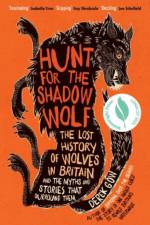
Longlisted for the Wainwright Prize 2024 for Nature Writing????? The Telegraph'One of the most remarkable figures in British conservation.' The Observer'There have been several books on the fate of British wolves, but this is the best.' The Spectator'Beautifully crafted, fascinating and unbearably poignant, I totally loved this book.' Isabella Tree, author of Wilding'A dazzling romp through the turbulent history of wolves in Britain.' Lee Schofield, author of Wild Fell'Gow's anecdotes will leave you howling - and his historical detective work to track down the shadow of the wolf is as gripping as any thriller.' Guy Shrubsole, author of The Lost Rainforests of Britain'Gow reinvents what it means to be a guardian of the countryside.' GuardianAuthor of Bringing Back the Beaver and Britain's favourite maverick rewilder Derek Gow embarks on an adventure to uncover the mythology, mystery and history of wolves in Britain. Derek Gow's dream is that one day we will see the return of the wolf to Britain. Wolf rewilding projects have been successfully implemented across the world - so what is holding us back in the UK?Hunt for the Shadow Wolf is Derek's quest to uncover the true nature of this magnificent creature. As Derek worked to reintroduce the beaver, he began to hear stories of the wolf, both real and mythical, and his fascination with it grew. He pieced together fragments of information, stories and artefacts to reveal a shadowy creature that first walked proud through these lands and then was hunted to extinction. What Derek came to realise was that the underlying motives behind our hatred were actually rooted in power and profit. We turned the wolf into a savage beast and saw its extirpation as a civilising mission. But the wolf endured and Derek tells of his sightings through folklore and mythology, the records of grand estates and parish churches as well as wolf heads, both real and recreated. With bitingly funny but also tender stories, Hunt for the Shadow Wolf makes clear why we must reconcile our relationship with this majestic animal before we can begin to bring it back to these lands. 'Gow has a fire in his belly. We need more like him.' BBC Wildlife Magazine
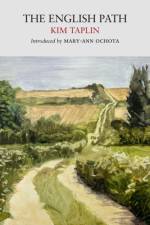
In The English Path Kim Taplin explores how writers and poets have written about footpaths and bridleways, from Jane Austen to Iain Sinclair, celebrating these vital routes, which sustained rural life for centuries.
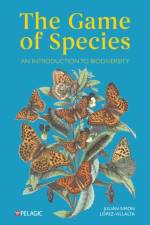
Why is life so diverse? Why are there so many different species? This book explores the origins of biodiversity, its evolution and its continuation, as well as the impact that humans are having on this natural heritage. Richly illustrated, accessible and engaging, The Game of Species is structured like the instruction manual for a board game whose separate pieces are individual species. Each chapter explores a different aspect of this game: the origin of the pieces, how they interact with each other, the rules of the different types of board on which species exist. This game-based approach guides the reader through the science of biodiversity in a fun and rather addictive way. We are living in a time of deep crisis in the natural world, with the loss of species and habitats impoverishing the earth for future generations. In order to stop this trend, we need to understand the essential rules that regulate biodiversity. This is a book for everyone interested in how life on earth works and the evolutionary mechanisms that shape it.
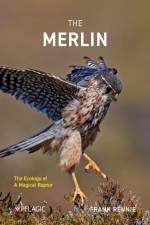
The Merlin Falco columbarius is Europe's smallest falcon, and its breeding presence is often regarded as a key indicator of a healthy natural environment. A highly adaptable species, it displays a variety of intriguing and contrasting behaviours across its extensive Northern Hemisphere range. Frank Rennie has spent many years observing and researching the characteristics of this important raptor. His landmark volume brings together for the first time many important sources of information from Europe, Asia and North America to better explain the complex and adaptive nature of the Merlin, which make it such a fascinating bird to observe. The book provides in-depth coverage of the complex origins and behaviours of the Merlin, from its obscure fossil ancestors through to the contemporary challenges it faces from habitat destruction, environmental pollution and climate change. Close investigation of its hunting methods, habitat selection and breeding activities reveals some surprising regional differences that offer a new understanding of this critically important, elusive and quietly majestic indicator species.
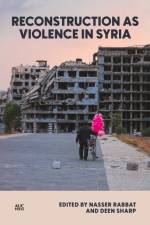
A sustained critique of postwar reconstruction in Syria as a politically neutral process In 2011, emboldened by the Arab Spring, the Syrians rose up against their government. The Syrian regime used violence to suppress the protests, so that what began as pro-democracy protests eventually morphed into a civil war with heavy outside intervention. Today, the regime has regained partial control of the country, but large parts of it lie in ruins, millions of Syrians are displaced, and the economy is in freefall. Reconstruction as Violence delves into the complex interplay of post-conflict reconstruction in Syria, challenging the traditionally held dichotomy between the end of violence and the commencement of rebuilding. The contributors to this volume-architects, urbanists, geographers, and historians-employ critical concepts such as urbicide, domicide, and "civilian crisis architecture" to argue against the conventional theoretical frameworks that support a neat separation of phases. They illustrate how reconstruction often extends the dynamics of conflict into the urban and social realms, suggesting that the built environment becomes a battleground for further violence. They emphasize the importance of acknowledging the historical, economic, societal, legal, and bureaucratic contexts that shape reconstruction efforts, arguing for initiatives that prioritize equity, inclusivity, and community participation. Reconstruction as Violence starkly underscores the authors' stance that to overlook any of these dimensions, or to disengage from the reconstruction process altogether, represents a political choice with potentially detrimental effects on Syria and beyond in the Arab world, where countries like Palestine, Yemen, Libya, Iraq, Lebanon, and Sudan are undergoing similar cycles of destruction and rebuilding. It calls for a reimagined approach to reconstruction, one that fosters peace, resilience, and social justice in post-conflict societies. Contributors:Sawsan Abou Zainedin, Madaniya, London, UKAmmar Azzouz, University of Oxford, UKValérie Clerc, Université Paris Cité, FranceEmma Katherine DiNapoli, human rights lawyer, London, UKOmar Ferwati, Goldsmiths, University of London, UKRim Lababidi, architect and independent scholar, Ohio, USAWendy Pullan, University of Cambridge, UKNasser Rabbat, Massachusetts Institute of Technology, Cambridge, MA, USAHashim Sarkis, Massachusetts Institute of Technology, Cambridge, MA, USADeen Sharp, London School of Economics, UKHeghnar Watenpaugh, University of California Davis, CA, USA
A groundbreaking, multidisciplinary study of the relations between climate disaster, pastoralist migration, and intercommunal conflict in the experiences of the Dinka people of South Sudan
Metal Ions and the Route to Life provides the empirical groundwork to interested researchers and the general public for revisiting their preconceived ideas about the origin of life and for appreciating the absolute indispensability of metal ions in life.
Abonner på vårt nyhetsbrev og få rabatter og inspirasjon til din neste leseopplevelse.
Ved å abonnere godtar du vår personvernerklæring.