




Gjør som tusenvis av andre bokelskere
Abonner på vårt nyhetsbrev og få rabatter og inspirasjon til din neste leseopplevelse.
Ved å abonnere godtar du vår personvernerklæring.Du kan når som helst melde deg av våre nyhetsbrev.

While grasslands face a number of challenges, such as encroachment from intensive farming and the impact of climate change, there is a growing recognition of the key role they can play in supporting the transition to more resilient, sustainable and circular agricultural systems. Advances in temperate grassland science and management reviews the wealth of research addressing these challenges and opportunities, focussing on the role of grasslands in agricultural systems and, in particular, in improving livestock health and product quality. It summarises recent research on grassland composition and management in optimising the contribution it can make, including regional case studies on grassland management in practice. This book builds on a successful earlier volume by Burleigh Dodds Science: Improving grassland and pasture management in temperate agriculture (2018). Edited by an internationally-renowned expert, the book will be a standard reference for university and other researchers in grassland and rangeland science, ruminant farmers, as well as government and non-governmental organisations responsible for grassland management and conservation. Dr Agnes van den Pol-van Dasselaar is Professor of Grasslands and Grazing at Aeres University of Applied Sciences, The Netherlands. Prior to her appointment of this role in 2015, Dr van den Pol-van Dasselaar had a distinguished career spanning over 20 years at Wageningen Livestock Research, in which she held several positions, including Head of Grass and Forage Systems. Dr van den Pol-van Dasselaar recently co-edited Grassland Use in Europe (2020) and has contributed to over 200 journal articles on grazing, ecosystem services, grass and forage management, as well as greenhouse gas emissions and sustainable production systems. She is also the current President of the European Grassland Federation and Member of its Scientific Advisory Board.
This novel book demonstrates the polarised logics that exist between exploring cultural, structural, political and historical contexts as a primary focus for pedagogical research versus an interventionist agenda that isolates pedagogy and its components from their environments.
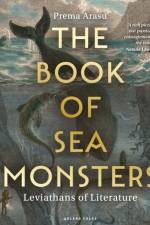
A fascinating and beautifully illustrated journey across the world and through the centuries in search of the sea monster.
Greener Future: Building Sustainable Tourism Communities delves into the intricate landscape of sustainable tourism development, offering invaluable insights and practical strategies for fostering a symbiotic relationship between travellers, local economies, and cultural preservation efforts.
"A renowned plant expert explains how we can make urgent, positive changes to our cities that protect against and reduce global warming. The conquest of new lands has been the greatest occupation of our species: for hundreds of thousands of years, humans have searched for new territories to inhabit, finding in the city the best place to live in the last hundred years. Looking at the parabola of our geographical expansion, it sounds like humans have gone from being a generalist species, capable of colonizing any environment, to very quickly becoming a specialized species, capable of thriving only within a particular habitat. The city seems to have become the only place where we can expect to thrive and reproduce, because it is the only place where our specialization gives us the best chance of survival, and quality of life. However, "species specialization" is only effective in a stable environment: in changing environmental conditions, it becomes dangerous. And if the resources the city needs to thrive are not unlimited, global warming can permanently change the environment of our cities-an event that would be fatal. But it is the city itself, as it is today, that is the main driver of environmental destruction. Mankind is confronted with a paradox: we must rethink our cities and make them a lasting ecological niche. In this clear, accessible, and fascinating work, Stefano Mancuso proposes a green solution: how would our cities be transformed if their framework was modeled on plants?"--
Originally published in 1968, the book is mainly concerned with Local Government; with the changing pattern and hierarchy of administrative areas and, in the mid-20th century, with the particular problems posed by the conurbations.
At the time of the publication of this book in its fourth edition in 1969, Ireland was alone globally in having experienced a decline of population for more than a century. The book analyses the physical environment and the life of 20th century Ireland whilst it was in the throes of an economic revolution.
This handbook centers around how justice, security, and sustainability shape Arctic governance. It will be of interest to scholars and students of global governance, security studies, environmental studies, and geopolitics, offering insights into the region's pressing social, environmental, and geopolitical issues.
This edited volume contributes to recent theoretical work in ecolinguistics that treats language as, not about nature, but of nature.This book will be of interest to students and scholars interested in ecolinguistics, discourse analysis, applied linguistics, language contact, environmental humanities, and human and social geography.
Explores the spaces and events of the interwar Round Table Conference which drafted the blueprint for colonial India's constitutional future. This geographical analysis explores the imaginations, infrastructures, urban spaces and contestations of the meeting.
Abonner på vårt nyhetsbrev og få rabatter og inspirasjon til din neste leseopplevelse.
Ved å abonnere godtar du vår personvernerklæring.