



Gjør som tusenvis av andre bokelskere
Abonner på vårt nyhetsbrev og få rabatter og inspirasjon til din neste leseopplevelse.
Ved å abonnere godtar du vår personvernerklæring.Du kan når som helst melde deg av våre nyhetsbrev.

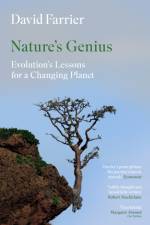
A NEW SCIENTIST BEST POPULAR SCIENCE BOOK FOR 2025'A book that shows how we might evolve to solve the problems we have caused our planet. Brilliantly written, surprising, inspiring and, ultimately, hopeful' ISABELLA TREEFor nearly four billion years, life on Earth has found new ways to adapt, reproduce and thrive, taking on new forms to meet the environment of the moment. Human impact on the planet, and the potentially devastating threat of climate change, have stressed that adaptability as never before. Yet life still finds a way. Animals, plants and insects rise to the challenge and are still adapting, reproducing and thriving, even in our rapidly transforming environment. In their example we may just find ways that we too can adapt, ways to stop the destruction we're causing to the planet.In Nature's Genius David Farrier takes us on a profound journey into this ever-changing natural world. What we discover could transform us. The ways animals adjust to the urban landscape can help us design sustainable cities. Examining other intelligences can help us remake our economies. Learning from bacterial evolution may help solve our waste problem. Synthetic biology could rescue animals from the brink of extinction. Thinking in timescales of the natural world could help us choose a better future. Life on Earth is changing; the question is, can we change with it? Can we remake the world to be fit for all life to thrive once more?
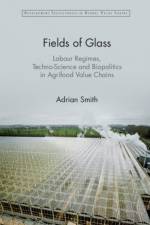
"This book will be useful to practitioners, policymakers, graduate students and researchers of environmental law, environmental studies, human rights, sustainable development, social justice and area studies on the Middle East and North Africa (MENA) and West Asia. This title is also available as open access on Cambridge Core"--
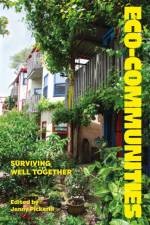
This book critically explores the aims and practices of worldwide eco-communities.
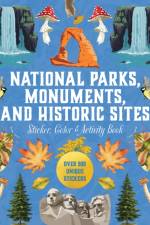
Explore the national parks, monuments, and historic sites like you never have before with National Parks, Monuments, and Historic Sites Sticker, Color & Activity Book—with more than 500 nature stickers and more than 50 activity and coloring pages.
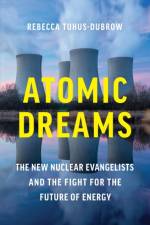
The inside story of how nuclear energy-long considered scary, controversial, and even apocalyptic-has become the hot topic of the climate debate, and perhaps a vital power source of the futureOn June 21, 2016, Pacific Gas & Electric Company announced a plan to shutter California's last nuclear power plant, Diablo Canyon, in 2025. The plan was hailed by environmental groups and politicians around the country. Then, in 2022, the state's Democratic establishment suddenly reversed the decision, and in 2024 the Biden-Harris administration awarded the plant $1.1 billion in credits to extend its life. What happened in between?In Atomic Dreams, journalist and lifelong environmentalist Rebecca Tuhus-Dubrow unearths the surprising answers-and the deep-seated conflicts behind them. She follows the fascinating and lively cast of characters who are immersed in the fight over Diablo Canyon and nuclear energy, among them a world-renowned climate scientist, a fashion model turned "nuclear influencer," and two radically opposed groups of mothers, both fiercely advocating for the kind of planet they want their children to inherit. And she chronicles how nuclear power has morphed from the stuff of cinematic nightmares-associated with world-ending weapons and terrifying meltdowns-to a rare issue with strong bipartisan support.Tuhus-Dubrow takes readers to nuclear plants and research facilities, to the halls of Congress and into the streets with activists as she explores the big questions wrapped up in the nuclear debate: questions about risk and responsibility, about nature and technology, about whether humans should be humble caretakers of the Earth or audacious innovators. She explores how these issues affect real people's lives, and personally grapples with the viability of this controversial energy source. Can the power of the atom be freed from its historical baggage and reinvented? Could something that once threatened to doom us now hold the potential to save us?
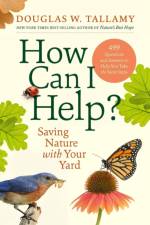
From a New York Times bestselling author, a wildlife ecology expert and environmental advocate provides readers with the next step in their ecological journey. In How Can I Help?, Tallamy tackles the questions commonly asked at his popular lectures and shares compelling and actionable answers that will help gardeners and homeowners take the next step in their ecological journey. Topics range from ecology, evolution, biodiversity and conservation to restoration, native plants, invasive species, pest control, and supporting wildlife at home. Tallamy keenly understands that most people want to take part in conservation efforts but often feel powerless to do so as individuals. But one person can make a difference, and How Can I Help? details how. Whether by reducing your lawn, planting a handful of native species, or allowing leaves to sit untouched, you will be inspired and empowered to join millions of other like-minded people to become the future of backyard conservation.
Professional botanist Peter Stroh decides to explore within his local parish boundaries for wildlife and flora over a year, but instead of grumbling at what is missing he determines to look at what he actually finds. His writing about his weekly meanders is highly engaging and the results he finds on his doorstep are a surprising delight.
A Kind of Pantheism: Escape from Cosmic Pessimism and the Quest for a Biocentric Ethic explores how such nineteenth-century transcendentalists as Henry David Thoreau and John Muir advanced a biocentric ethic that recognized the intrinsic worth of both plants and animals. This ethic required a pantheistic cosmology to be coherent, however. As science progressed, with developments in evolutionary biology and ecology, the paths of environmental ethics and animal rights diverged. But at the turn of the twentieth century, the nature writer Joseph Wood Krutch, inspired by quantum theory, provided a crucial link that reconnected these fields-a contribution often overlooked even by his own biographers.This book traces the historical development of humanity's attitudes toward the non-human world, highlighting the influence of philosophical, religious, and scientific ideas. In addition to Krutch, it brings attention to such lesser-known figures as Henry Stephens Salt and John Howard Moore, emphasizing their roles in shaping biocentric thought. Ultimately, the book argues that animal rights and environmental ethics are two expressions of the same biocentric outlook. By focusing on Krutch's unique contribution, the book offers a way for secular thinkers to reclaim a pantheistic ethic. In the process, A Kind of Pantheism solves the problem of "cosmic pessimism"-which postulates the cold and meaningless universe implied by modern science, a concept that often undercuts the very ethic it suggests. Through the process of free inqiury, new answers emerge.
Carry the Flame vividly recounts the establishment and early years of the Canadian Outward Bound Wilderness School. Throughout more than 50 eclectic essays, former staff, administrators, board members, and students articulate the distinctive, unique spirit of the school and its lasting impact on their lives to this day.
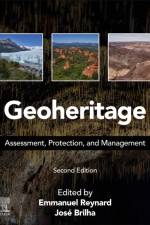
Geoheritage: Assessment, Protection, and Management, Second Edition provides a comprehensive exploration of geoheritage, beginning with an introduction to geodiversity and progressing to the characterisation of in situ and ex situ geoheritage, its protection and sustainable use. It also offers advanced concepts and methodologies for site assessment, mapping, conservation, visualisation and management and features 12 case studies spanning five continents.Authored by 75 experts from 22 countries, this edition includes nearly 200 figures and maps. New chapters expand the scope of the first edition to address geoheritage’s links to biodiversity, climate change, natural hazards, ecosystem services, education and cities.This essential resource is perfect for geoscientists and students in the fields of geodiversity, geoheritage, geoconservation and geotourism, as well as professionals involved in nature conservation, protected areas and geoparks.
Soviet Local Politics and Government (1983) examines the local government system of the Soviet Union, an important part of the great bureaucracy that ran the country. It looks at the wide range of duties that the local soviets managed, and the attempts to adapt the local government system to new circumstances and requirements.
Abonner på vårt nyhetsbrev og få rabatter og inspirasjon til din neste leseopplevelse.
Ved å abonnere godtar du vår personvernerklæring.