




Gjør som tusenvis av andre bokelskere
Abonner på vårt nyhetsbrev og få rabatter og inspirasjon til din neste leseopplevelse.
Ved å abonnere godtar du vår personvernerklæring.Du kan når som helst melde deg av våre nyhetsbrev.

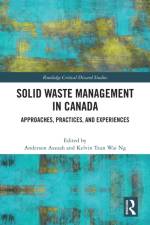
This edited volume takes a comprehensive look at solid waste management across jurisdictions in Canada, including provinces, territories, municipalities and Indigenous communities.
This book addresses one of the key issues of our time, the process of sustainable transition in modern, industrial societies, by looking at the dynamics associated with this objective at the decentralised local level in South Korea.
Improvement of Desert Ranges in Soviet Central Asia (1985) examines the progress made in the Soviet Union's attempts to increase desert vegetation without using irrigation or fertilizers. Prominent Soviet scientists analyse the use of ecological resources in desert ranges to produce more productive grazing land.
The Soviet Union (1989) examines the state of the Soviet Union at the end of the 1980s. It claimed to offer a new social, economic and political order and this book looks at the extent of its success. It surveys the major components of Soviet society and examines the principal issues and debates that surround its assessment.
The Soviet Secret Police (1957) depicts the main aspects of the development, structure and functions of the secret police of the Soviet Union forms a full and objective study of the secret police and its role in the Soviet system.
Gorbachev at the Helm (1987) analyses the policy decisions taken at the 27th Congress of the Communist Party of the Soviet Union in February-March 1986, declared at the time by the Soviet government as a major turning point in Soviet history.
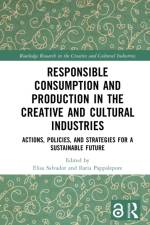
No sector can escape the challenge of the climate crisis. This book brings together a team of academic experts to urgently examine the intersection of sustainability and the Cultural and Creative Industries (CCIs).
The order of Catfishes (Siluriformes) is one of the largest in number of families, genera, and species. The group is found in most freshwaters and shallow saltwater bodies around the world.
This book focuses on upland agricultural systems and applies a multiple capitals approach to explain what they can provide at a time when many are struggling to survive. It will be of interest to students and scholars of agriculture, natural resource management, ecosystem services and rural development.
Eva Roefs' AMSTERDAM is a visual study of young people living in the Dutch capital, approached in the streets and portrayed by the artist in her studio in the Red Light District. However, the close-up, analytical photographs estrange the participants from the urban environment, resulting in a solid, black and white series whose focal point is the human experience. With this collection of characters gazing back at the camera, Roefs creates a portrait of the city without its landscape - it is the expressiveness of her subjects that defines Amsterdam, by standing against a stark white background and engaging with the medium and the artist. Each portrait feels carefully crafted, with the photographic process shining through the darkroom, delivering images that stand out for their rich tones and depth obtained through hand printing.
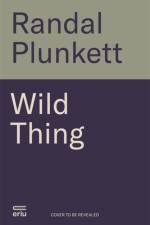
At the age of 28, Randal Plunkett inherited the title of Baron Dunsany, alongside Dunsany Castle and the 1,500 hectare estate and found himself at a crossroads - but had no choice but to accept. Now, where once his ancestors had grazing animals on the grounds, Randal has let nature reign WILD.What Randal had was a vision of Dunsany given back to nature. Wild Thing is a brilliant memoir-with-a-mission, showcasing how this poisoned chalice - a cold, leaky, needy castle, with all the responsibilities to the generations before - became a personal journey toward fulfilment, a vital mission toward a better, more sustainable, future, and a call to arms for the environment, and the people who live among it.
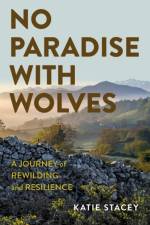
Understanding the wolf and rewilding a home: one couple's journey to coexist with nature in Northern Spain.
This book explores energy transitions in India, Germany and Australia, drawing on ethnography and political economy to provide best-practice for future energy transitions around the world. It will appeal to students, researchers, and policy makers from anthropology, sociology, politics and political economy, sustainability studies, and geography.
Abonner på vårt nyhetsbrev og få rabatter og inspirasjon til din neste leseopplevelse.
Ved å abonnere godtar du vår personvernerklæring.