











Gjør som tusenvis av andre bokelskere
Abonner på vårt nyhetsbrev og få rabatter og inspirasjon til din neste leseopplevelse.
Ved å abonnere godtar du vår personvernerklæring.Du kan når som helst melde deg av våre nyhetsbrev.

"This volume explores the notion of ecoviolence, particularly the intersection of the anthropogenic destruction of nature with human exploitation. It is a valuable resource for researchers and graduate students working in green criminology, Earth system governance, environmental politics, human rights, and environmental and international law"--
First Published in 1962, Russia under Kruschev is a comprehensive collection of articles from Problems of Communism, a journal published by U.S. Information Agency. They provide the broadest picture of the political, economic, and cultural trends of Kruschev's Russia.
The first book-length treatment of how loss and damage policy and politics works at the national level, this book appeals to a broad audience with its timely focus on a headline-dominating issue. A valuable primer for practitioners addressing loss and damage, including policymakers, experts, and civil society stakeholders.
The first book-length treatment of how loss and damage policy and politics works at the national level, this book appeals to a broad audience with its timely focus on a headline-dominating issue. A valuable primer for practitioners addressing loss and damage, including policymakers, experts, and civil society stakeholders.
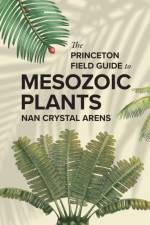
A dazzlingly illustrated guide to the plant life of the dinosaur age, from intricate ferns to the most majestic megafloraThe Mesozoic was dominated by a spectacular array of flora, from ferns, conifers, and cycads to ginkgos and flowering plants, as well as some enigmatic species with no modern-day descendants. This wide-ranging illustrated guide provides an unparalleled, in-depth look at the era’s extraordinary plant life, exploring its natural history, biology, and evolution over a span of 185 million years. Blending the latest discoveries in paleontology with informative profiles of extinct species and their living descendants, The Princeton Field Guide to Mesozoic Plants is a one-of-a-kind reference to the botanical wonders of the prehistoric world.Features hundreds of breathtaking illustrations, from life studies and scenic landscapes to detailed sketches of representative speciesIntroduces the history of plant paleontology and the dating, geography, and extinction of Mesozoic floraProfiles hundreds of Mesozoic species, tracing the evolutionary relationships of fossil plants with living onesDiscusses photosynthesis, reproduction, growth, climate, plant communication, partnerships with fungi and animals, and conservationReveals how Mesozoic plants evolved in response to predation and changing environmental conditionsJourneys through the forests of the Triassic, Jurassic, and Cretaceous periodsA must-have guide for anyone interested in the lost world of the dinosaurs
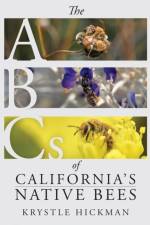
Journey through the world of California native bees, one letter at a time.National Geographic Explorer Krystle Hickman has spent a decade capturing exquisitely detailed photographs of native bees and making exciting discoveries about their behavior in the field. In her debut book of natural history, she offers an intimate look at the daily habits of rare and overlooked bees in California: those cloaked in green and black and blue, that live alone in the ground or sleep inside flowers, that invade nests and enslave other bees like infinitesimal conquerors, or that, unlike more generalist honeybees, feed only on native blooms in wild lands. A committed conservationist and community scientist who knows all too well how precarious the wellbeing of these insects is, Hickman shares her adventures in local native plant gardens and throughout the far reaches of California to bring the beauty of our diverse ecosystems into wondrous bee's-eye view. Meant for all curious readers, this collection of bee stories—one for each letter of the alphabet, matching the first letter of a bee's scientific name—will leave you both wowed and compelled to help save these fascinating beings.
The book titled Garbocracy: Towards a Great Human Collapse engages with how the accumulation and disposal of garbage in India is motivated by diverse social, cultural, political, economic, communal, caste, religious and various other factors. The disgusting experiences generated by the sight and the stink of garbage is not only physical in nature, but psychological, neurological, structural, institutional, tangible and intangible in nature. To elaborate further, on the one side the improper disposal of garbage in the public places generate varied health issues and on the other hand it impacts the social, cultural, political, and economic state of individuals and communities. With respect to these perspectives, the aim of this book is to unfold how the various socio-politically motivated patterns and intensions of disposing garbage in India, gradually convert the heaps of garbage into authoritative entities that govern the habitual thinking, behaving and acting patterns of the humans.
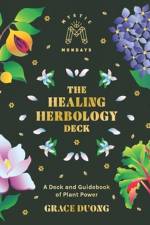
From the artist behind Mystic Mondays comes a deluxe deck and guidebook set featuring 56 richly detailed, vibrantly illustrated plant cards and accompanying information on their meanings and their uses in personal growth and healing.Features 56 full-color Healing Herbology cards: Discover the potential contained within 56 plants, herbs, and flowers corresponding to the four elements, rendered in stunning colors and on these durable divination cards in a unique square shape. Designed and written by Grace Duong, founder of Mystic Mondays: Connect to the replenishing power of nature through this brand-new set from Grace Duong, founder and designer of Mystic Mondays. Includes guidebook: An accompanying 80-page guidebook features plant profiles and rituals for using the cards. Deluxe keepsake box: Housed in a magnetic-closure keepsake box, with a separate interior travel box for the cards, this one-of-a-kind collection is a must-have for modern mystics. A note on packaging: In order to help honor our planet and reduce waste, we have only shrink wrapped the interior cards, rather than the keepsake box. Please feel confident that your product is not defective or used, but rather represents a step we are taking to protect our collective home. When you open your deck, you will find that the actual cards inside the box are shrink wrapped for protection and to ensure first use by the buyer.
In The City and the World Gregor Hens threads memoir with travelogue, philosophy, photography and references from a wide variety of writers and thinkers to consider the phenomenon of the contemporary city and our place within it.
A polyculture of ideas, decolonising, reframing, and transforming how we think about the things we grow through a social-ecology lens.
Renowned herbalist Rosemary Gladstar presents a beautiful keepsake collection of teachings, reflections, and insights on the plant world and herbal healing, featuring diverse voices from the community of herbal teachers and practitioners. A beloved teacher and leader in the herbal healing world for more than 50 years, Rosemary Gladstar's curated this collection explore key themes in herbalism, including: *The sacred teachings of the plants *The importance of preserving knowledge of the plants' healing properties and the work of herbal healers *The practices of gardening and gathering herbs in the wild *The power and passion of the herbal community *The rich value of living with gratitude and reverence for the Earth, and a deep connection to the plant world. Many of the quotes are original to this collection, excerpted from Gladstar's private correspondence and conversations. Her narrative voice introduces each theme, and the text is accompanied by stunning photographs and artwork celebrating the beauty and wonder of plants.
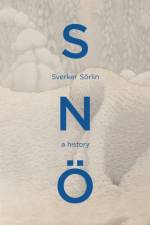
Snow. A single word, for an infinite variety of water formulations, frozen in air. The study of snow is physics, chemistry, meteorology, anthropology, geography, poetry and art. It is hope - annually renewed. And it is history, too.Earth saw its first snowfall 2.4 billion years ago. The world's oldest skis, made by hand five thousand four hundred years old, pre-date the pyramids of ancient Egypt. To humanity, snow has variously been an ally and an adversary; an inspiration to countless artists and a place of breathtaking tragedy and survival. But it's always been there. And now it is melting.In 1927, the snow was already more than nine metres deep on Japan's Mount Ibuki when a remarkable 230cm fell in 24 hours, bringing about the greatest depth of snow - 11.82m - ever recorded. Yet it is a fact today that, ironically not only has this mountain's resort been forced to close due to lack of snow, most people in the world have never been near snow: never felt the soft crunch of snow underfoot, never held snow to see it melt in their hands, let alone stood on a pair of skis.As the seasons lose their rhythm, and whole landscapes risk vanishing, shrinking too our planet's ability to reflect sunlight, Swedish environmentalist Sverker Sörlin urges that we take the time to look - really look - at what it is we're losing, in all its multifaceted wonder. And to question, what comes next?
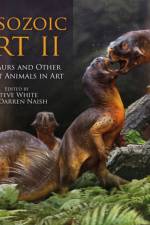
Following on from the hugely popular Mesozoic Art, this magnificent new volume showcases 25 amazing artists whose work represents the very best of palaeoart.
Abonner på vårt nyhetsbrev og få rabatter og inspirasjon til din neste leseopplevelse.
Ved å abonnere godtar du vår personvernerklæring.