



Gjør som tusenvis av andre bokelskere
Abonner på vårt nyhetsbrev og få rabatter og inspirasjon til din neste leseopplevelse.
Ved å abonnere godtar du vår personvernerklæring.Du kan når som helst melde deg av våre nyhetsbrev.

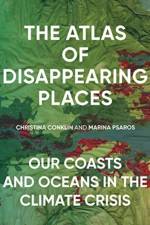
A beautiful and engaging guide to global warming's impacts around the worldOur planet is in peril. Seas are rising, oceans are acidifying, ice is melting, coasts are flooding, species are dying, and communities are faltering. Despite these dire circumstances, most of us don't have a clear sense of how the interconnected crises in our ocean are affecting the climate system, food webs, coastal cities, and biodiversity, and which solutions can help us co-create a better future.Through a rich combination of place-based storytelling, clear explanations of climate science and policy, and beautifully rendered maps that use a unique ink-on-dried-seaweed technique, The Atlas of Disappearing Places depicts twenty locations across the globe, from Shanghai and Antarctica to Houston and the Cook Islands. The authors describe four climate change impactschanging chemistry, warming waters, strengthening storms, and rising seasusing the metaphor of the ocean as a body to draw parallels between natural systems and human systems.Each chapter paints a portrait of an existential threat in a particular place, detailing what will be lost if we do not take bold action now. Weaving together contemporary stories and speculative ';future histories' for each place, this work considers both the serious consequences if we continue to pursue business as usual, and what we can dofrom government policies to grassroots activismto write a different, more hopeful story.A beautiful work of art and an indispensable resource to learn more about the devastating consequences of the climate crisisas well as possibilities for individual and collective actionThe Atlas of Disappearing Places will engage and inspire readers on the most pressing issue of our time.
While more than half of the world's population live in cities, informal settlements or slums continue to expand. Concomitant with their worldwide expansion, however, we do not see urban designers and planners wanting to actively engage with the informality conundrum. This bookexplores the informality-urban design nexus, and why formal urban designers and planners have remained largely reluctant or prostrate to address those challenges facing our cities. One could ask what distinguishes the formal vs. informal urban design paradigms in the first place? Experience shows that compounding informality and urban design creates more confusion as opposed to dealing with each theme separately. While urban designers could at least pinpoint specific problems, i.e., walkability, gentrification, visual and economic decline, sense of place, meaning, in their pre-design problem definition stage, informal settlement problems prove inexorably complex, and harder to fathom to begin with. Therefore, seeking to demystify these epistemological ambiguities--while difficult--makes sense. Using abductive reasoning, regulations, aesthetics, and design epitomize formal while information, assets and adaptation characterize the multifarious attributes of informal urban planning and design. Besides these thematic differentiations, this book uses case studies to better contextualize and unpack the metaphorical distinctions of the two theoretical entities. Conceptualizing these two schools of thought this way, the book engages urban designers more into these debates, and explores how informal settlement residents see themselves, act collectively, care about their settlements, or leverage opportunities. The book ends with some observations on avoiding two potential pitfalls surrounding discussions on urban design and informality.
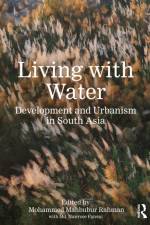
Explores dynamics of water and the built environment in the urban and ecological landscapes of South Asia. Case studies from Bangladesh, India, Pakistan, and Sri Lanka offer guidance to improve climate resilience through water-sensitive development, integrated urban design, and resource management in cities, wetlands and ecosystems.
The aim of this monograph is to examine the impact of a new set of uncertainties on the socio-economic situation of people and societies and to provide research-based innovative approaches and methods for building socio-economic resilience in order to reduce vulnerability and promote the resilience of people and societies to shocks.
Gebäude haben einen immensen Energiebedarf und verursachen einen erheblichen Teil der weltweiten CO2-Emissionen – sowohl während der Bauphase als auch bei Nutzung oder Rückbau. In Zeiten der Energiewende und extremer Wetterphänomene wird somit die Frage "Wie bauen wir in Zeiten des Klimawandels?" umso drängender. Der Band präsentiert internationale Best-Practice-Projekte die sich durch zukunftsfähiges Design auszeichnen und richtungsweisende Antworten geben.Ein Supermarkt in wiederverwertbarer Holz-Beton-Konstruktion mit Dachfarm; ein Kindergarten erbaut mit Recyclingmaterial von vor Ort; die Sanierung eines Bürogebäudes, das ohne Klimaanlage und Lüftungssysteme auskommt – die Möglichkeiten zur Reduktion von Emissionen und Energiebedarf bestehen neben Materialwahl und innovativen Betriebskonzepten, vor allem auch darin, den gesamten Lebenszyklus eines Gebäudes mitzudenken; hierzu gehört auch, im Zweifelsfall eher zu sanieren als neu zu bauen. Der Band vereint anschaulich konkrete Beispiele und gibt Ansatzpunkte für das Bauen von heute und morgen.
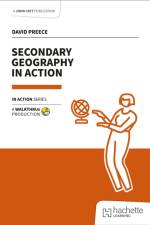
Secondary Geography in Action is a guide to interpreting subject-specific educational research in real-world classrooms, drawing on David Preece's many years of experience in the field.
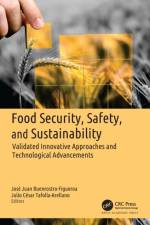
Reports on important factors that impact food safety and nutrition security by providing insight into effective policy development and implementation and innovative approaches for developing sustainable food for a growing population. Using new approaches and case studies, it also reviews risks associated with each step of the food chain.
An exposé of the hidden impact of America's überwealthy on the country's economy, environmental health, housing market, and political system Even if you don't begrudge the ultrarich their multiple vacation homes, yachts, and private jets, Burned by Billionaires chronicles how the actions of the top .01% have severe consequences for the rest of us. In chapters including "Road Map to Richistan" and "Extractavism," upper-class traitor Chuck Collins takes down the "myth of meritocracy," showing how the rich rig the game in their favor, resulting in an increasing concentration of wealth in the hands of a tiny (but growing) class of billionaires. In a wholly original argument, Collins shows the impact the ultrawealthy have on the rest of us: increasing the tax burden on ordinary working people; reducing public funding for schools, roads, and other essential infrastructure; shrinking the pool of affordable housing; and accelerating climate change with outsize emissions from superpollutant yachts and private jets. Perhaps worst of all, the concentration of wealth and power is leading to political capture, undermining the democratic principle that our votes matter equally. Lively chapters feature charts, graphs, political cartoons, and more. A final chapter on "Reining in the Billionaires" offers concrete prescriptions for taking power back from the billionaire class.
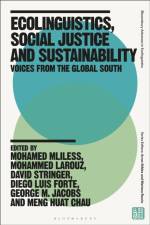
Decentring the growing field of ecolinguistics from its historically Western orientation, this book offers a comprehensive exploration of the intricate relationship between language and the environment in the Global South. It brings forward new perspectives and voices to broaden our understanding of the role of language in addressing ecological challenges.Through a series of thought-provoking chapters, the book navigates through various dimensions of ecolinguistics, shedding light on critical issues and innovative approaches across diverse contexts. Case studies include the representation of ecotourism in Morocco, the implementation of ecological ideology in Oman, colonial legacies in Argentina's food production discourse, ecological identity in Kenya, the role of civets in Indonesian coffee production and life stories about Senegalese ecologies.Through a blend of theoretical insights and practical applications, the book advocates for a holistic understanding of ecolinguistics that transcends geographical boundaries and cultural nuances.
Integrating the latest developments in urban water hydrology and management, Urban Water Engineering and Management uses a system approach to urban water hydrology, engineering, planning and management, supplying examples and case studies, and highlighting pressing issues such as urban water governance and disaster management on urban areas.
This book presents contemporary trends and challenges in agricultural land-use, drawing on an array of global case studies. This book will be of great interest to students and scholars of food and agriculture, land-use and land management, rural studies and sustainable development.
This book fills a critical void in the domain of neighbourhood studies and comprehensively analyses India's bilateral relations with Afghanistan, Bangladesh, Bhutan, China, Iran, the Maldives, Myanmar, Nepal, Pakistan, and Sri Lanka
This book examines the relationship between social practices and built space, focusing on current cooperative/participative and posthuman approaches to its production and management. This book will be of interest to researchers, students and professionals of architecture, urban planning, anthropology and philosophy.
This book carefully examines the constraints and possibilities for participatory governance under capitalism. Bridging critical urban studies and democratic theory, it will be of interest to researchers and students in the fields of democratic innovations, political economy, and urban planning.
This collection brings together fifteen essays from practitioners of a variety of disciplines that concern themselves with the past: not only historians, but scholars from other branches of the humanities, social sciences and natural sciences.
The handbook explores the nature and implications of civil society across Southeast Asia, engaging with both theoretical approaches and empirical nuance for a systematic, comparative and informative approach.
This book comprises scholarly essays and creative works exploring the implications of Christian environmentalism through literary and cultural criticism. For scholars, researchers and upper-level students interested in the relationship between religion and environment, ethics, animal welfare, poetry, and post-secularism.
Responding to the increasing urgency for reimagining futures beyond dystopias and utopias, this book explores the challenges of how to think about compelling futures, what these better futures might be like, and what personal and collective practices are emerging that support the creation of more desirable futures.
This volume studies narrative memories in India through oral, chirographic and digital cultures. It examines oral cultures of memory culled out from diverse geographical and cultural landscapes of India and throws light on multiple aspects of remembering and registering the varied cultural tapestry of the country.
Abonner på vårt nyhetsbrev og få rabatter og inspirasjon til din neste leseopplevelse.
Ved å abonnere godtar du vår personvernerklæring.