




Gjør som tusenvis av andre bokelskere
Abonner på vårt nyhetsbrev og få rabatter og inspirasjon til din neste leseopplevelse.
Ved å abonnere godtar du vår personvernerklæring.Du kan når som helst melde deg av våre nyhetsbrev.

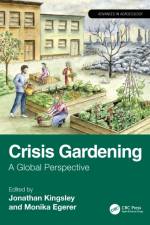
Gardening during times of crisis can have significant benefits to individuals and populations in terms of health, wellbeing, social and economic outcomes. In this book crisis gardening is explored to better define, describe and provide recommendations about this activity globally.
The Routledge Handbook of Field Research presents a comprehensive, go-to resource for staff and students in preparing for and thinking about the doing of field research, including both individual fieldwork and group field classes.
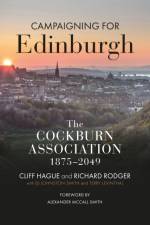
Campaigning for Edinburgh tells the story of the Cockburn Association - the city's civic watchdog, which, since 1875, has campaigned to protect and enhance. It shows how citizen involvement can, and should, be key to the planning, development and management of places. The book also looks forward, imagining what the city might be like in 2049.
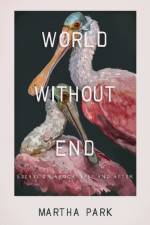
For fans of Margaret Renkl and Lisa Wells’s Believers, World Without End circles the connections between climate change and faith in the fear and fascination of the end of the world.When Martha Park’s father announces he is retiring from the ministry after forty-two years, she moves home to Memphis to attend his United Methodist church for his last year in the pulpit. She hopes to encounter a more certain sense of herself as secular or religious. Instead, she becomes increasingly compelled by this uncertainty, and grows curious whether doubt itself could be a kind of faith that more closely echoes a world marked by loss, beauty, and constant change.In illustrated essays, World Without End: Essays on Apocalypse and After explores the intersections of faith, motherhood, and the climate crisis across the South. From man-made wetlands in Arkansas to conservation cemeteries in South Carolina, from a full-scale replica of Noah’s Ark in Kentucky to the reenactment of the Scopes Monkey Trial, Park chronicles the ways the faith she was raised in now seems like an exception to the rule and explores this divide with compassion and empathy. For fans of Margaret Renkl and Lisa Wells, World Without End considers the ways religion shapes how we understand and interact with the world—and how faith can compel us all to work to save the places we love.
This book explores the pervasive anticipation of catastrophe in contemporary society, examining how temporal expectations shape personal and collective experiences and influence our perspectives and responses.
Based around pedagogical theory and concrete practical examples and experiences from the classroom, the book contributes with a multiplicity of knowledge to the growing appetite for interdisciplinary initiatives at universities.
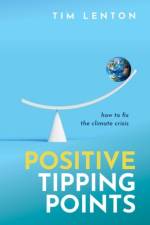
This book identifies the positive tipping points that can help us avoid the worst and shows how we can all play a part in triggering positive tipping points that accelerate us out of the climate crisis.
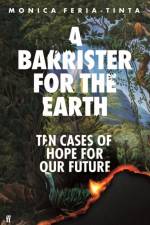
'Can a planet have legal rights? Could it be defended in a court of law?' A revolution is taking place. Around the world, ordinary people are turning to courts seeking justice for environmental damage. At the forefront of this movement, pioneering barrister Monica Feria-Tinta advocates not only for the people fighting for their homes and livelihoods, but also for those who have no voice: for rivers, forests and endangered species. In A Barrister for the Earth, Monica takes us behind the scenes of ten real cases - as she argues against the destruction of cloud forests in the world's first Rights of Nature case, to holding Sovereign states to account for inaction in addressing climate change in a landmark win for the Torres Strait Islanders. Each of these hopeful stories are landmarks signalling that we are at an important juncture, in which the law can be a powerful tool for the lasting change that we need.
Offers a historically grounded and multi-scalar analysis of agrarian change in Nepal's eastern Tarai, exploring the convergence between older economic formations grounded in landlord-tenant relations with contemporary capitalism.
THE INTERNATIONAL BESTSELLER'A wonderful book' - Tristan Gooley, author of How To Read A Tree'A celebration of the oak as nature's masterpiece' - Daniel Lewis, author of Twelve TreesThe enchanting biography of an ancient tree. For over two centuries, as rulers have risen and fallen and wars have raged, one majestic oak tree has lived out an epic drama. From germination in 1780 to adapting to the changing climate of the modern age, its struggles and triumphs took place far from human eyes. That is, until one day a young man named Laurent Tillon came across it, and a decades-long relationship began ... In this dazzling book, biodiversity expert Tillon narrates the story of the tree he calls Quercus. Evoking the richness which is all around us, he reveals that Quercus is embedded in a network of ever-shifting relationships, from close alliances between plants and animals to battles between insects, birds and fungi. A book of ecology unlike any other, Being An Oak offers a tree-eyed view of life on earth. Translated by the award-winning translator Jessica Moore.
In the 1960s and 1970s, rapidly growing environmental awareness and concern not only led to widespread calls for new policies, but also created unprecedented demand for ecological expertise by the likes of the International Union for the Conservation of Nature.
Bring your data to life with this essential guide to storytelling with maps. From scraping patterns in sand to drawing intricate lines on vellum and paper, to charting every place on the planet, humans have used maps as a powerful storytelling medium. The advent of the digital age has revolutionized the creation, distribution, and consumption of maps. The web created enormous opportunities for storytelling, enabling maps to dance and weave, partnering with other multimedia elements—photos, video, audio, text—to tell countless tales about our world. Featuring a foreword by renowned travel writer and cofounder of Lonely Planet Tony Wheeler, Telling Stories with Maps: Lessons from a Lifetime of Creating Place-Based Narratives bridges both analog and digital realms, showcasing how maps themselves tell stories and enrich narratives by providing context and insight. Richly illustrated with examples from traditional maps to the latest digital visualizations, this book is an essential guide for anyone interested in the powerful storytelling potential of maps. Allen Carroll leads an editorial team at Esri that publishes ArcGIS StoryMaps and supports a global community of storytellers who have used StoryMaps to create millions of multimedia narratives. Before joining Esri, Carroll spent 27 years at the National Geographic Society, designing scores of maps for its renowned magazine and other publications. Carroll spearheaded the creation of the Seventh and Eighth editions of the World Atlas; the publication of many new web resources and other special projects featuring biodiversity, conservation, and indigenous cultures; and numerous other projects. After joining Esri in 2010, Caroll founded its StoryMaps team, which developed web tools that enabled hundreds of thousands of individuals and organizations to tell place-based stories combining interactive maps and multimedia content.
A beautiful treasury of nature-based spells from a popular expert, this guide explores the healing power of flowers, herbs and trees.
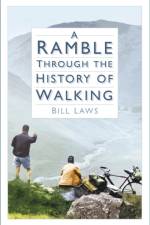
'The great affair is to move: to come down off this feather-bed of civilisation, and find the globe granite underfoot,' wrote Robert Louis Stevenson. This book celebrates the history of walking for leisure and pleasure.
Abonner på vårt nyhetsbrev og få rabatter og inspirasjon til din neste leseopplevelse.
Ved å abonnere godtar du vår personvernerklæring.