![[2] Extraction / Managing Displacement Series](https://cdnbackdoor.tales.as/thumbnail/150x225/products/00317/63312/2-extraction-managing-displacement-series.jpg)
![[1] Outsourcing / Managing Displacement Series](https://cdnbackdoor.tales.as/thumbnail/150x225/products/00317/63311/1-outsourcing-managing-displacement-series.jpg)




Gjør som tusenvis av andre bokelskere
Abonner på vårt nyhetsbrev og få rabatter og inspirasjon til din neste leseopplevelse.
Ved å abonnere godtar du vår personvernerklæring.Du kan når som helst melde deg av våre nyhetsbrev.

Every family has its pride. Kingdom chronicles the real-life saga of four powerful animal families set in Zambia's Luangwa Valley, a land experiencing seismic change. And these aren't just any families. The valley is home to the fastest growing lion population in the world, the densest number of leopards in Africa, the largest population of wild dogs, and the first hyenas to receive an in-depth collared study. Leopard mother Olimba is on a mission to raise her cubs to adulthood; alpha female of the wild dog pack Storm is fiercely determined to lead her pack to new plains; hyena sisters Toto and Tandala vie to become clan queen; lion brothers evade hunters and lead their pride in the valley. As their world shrinks around them, the families are pushed closer together until they come head-to-head in a battle against each other for the land. Featuring stunning full-colour photography, Kingdom charts the tumultuous existence of these real animal characters as they compete to exist in the increasingly threatened Luangwa Valley. Accompanying the landmark BBC natural history documentary.
"A gripping and vital portrait of wolf repopulation. It is impossible not to root for Diane, or for the wolves."—ERICA BERRY, AUTHOR OF WOLFISH"This is a book about a courageous woman. Often alone in wild country, she endures hardships and faces danger in many forms …. It is a book I highly recommend: informative, fascinating, and beautifully written."—DR. JANE GOODALLA debut memoir from one of the first women biologists in the United States to study wild wolves in their natural habitat—a story of passion, resilience, and determination.Called the Jane Goodall of wolves, world-renowned wildlife biologist Diane Boyd has spent four decades studying and advocating for wolves in the wilds of Montana near Glacier National Park. When she started in the 1970s, she was the only female biologist in the United States researching and radio-collaring wild wolves. With her two dogs for company, she faced the rigors of the Montana winter in an isolated cabin without running water or electricity.Boyd fearlessly forded icy rivers, strapped on skis to navigate thick stands of lodgepole pine, and monitored packs from the air in a tiny bush plane that skimmed the treetops so she could count wolves and see what they were feeding on. She faced down grizzly bears, mountain lions, wolverines—and the occasional trapper—as she stalked her quarry: a handful of wolves that were making their way south from Canada into Montana. Resilient and resourceful, she devised her own trapping methods and negotiated with locals as wolf populations grew from the first natural colonizer to more than 3,000 wolves in the West today.In this captivating book, Boyd takes the reader on a wild ride from the early days of wolf research to the present-day challenges of wolf management across the globe, highlighting her interactions with an apex predator that captured her heart and her undying admiration. Her writing resonates with her indomitable spirit as she explores the intricate balance of human and wolf coexistence.
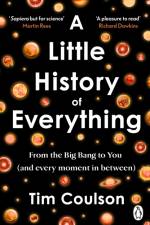
A COMPLETE, UNCOMPLICATED GUIDE TO THE SCIENCE OF LIFE, THE UNIVERSE AND EVERYTHING 'Most scientists know only their own field. Tim Coulson is at home with science as an integrated whole. A pleasure to read, and a lasting accomplishment' Richard Dawkins'Step aside Star Wars - ours is the most astonishing origin story you'll ever hear and its beautifully told by Tim Coulson' Professor Ken Norris, Deputy Director of Science at the Natural History Museum----Have you ever wondered why you exist?What had to happen for you - and all life on Earth - to come into being?What is the true answer to the ultimate question of life, the universe and everything?In A Little History of Everything, Tim Coulson - Professor of Zoology at Oxford - takes us back to the beginning of everything: the Big Bang 13.8 billion years ago. From there, he leads us step by step along the path to the most astonishing thing we have yet encountered - the staggering complexity of the modern human mind. Covering physics, astronomy, chemistry, geology, the emergence of life, evolution, consciousness and the rise of humankind, yet written to be understood by anyone with a child's curiosity, this book takes the biggest story of all and tells it simply, grippingly and, above all, entertainingly. It is the history of you, me and everything - of how we all came to be. In short, it is the greatest story ever told. ----'A highly readable and super enjoyable book . . . that takes us on a free-spirited intellectual romp through every aspect of what we know about our universe' Peter Hudson FRS Willaman Professor of Biology at Penn State'A charming, engaging and erudite account' David Christian, author of New York Times bestseller Origin Story (2018)'A gangbuster science book. A can't-put-down read. I don't think I have learned more from a single book' Douglas W. Smith, Former Senior Wildlife Biologist, Yellowstone National Park'Exceptional. A highly infectious read. From the first page I found it impossible to put down' Professor Baroness Kathy Willis, Professor of Biodiversity, University of Oxford'Achieves something almost impossible, lucid explanation without dumbing down . . . can read this for fun and accidentally you will know as much general science as any Professor' James H Naismith FRS FRSE FMedSci MAE, Head of the Mathematical, Physical and Life Sciences Division at Oxford, Professor of Structural Biology'With wit, wisdom and humility. The prose is of a perfect weight, and an absolute joy to read' Sunetra Gupta, Professor of Theoretical Epidemiology at the University of Oxford'Will appeal to a broad variety of readers and inspire new generations of scientists for years to come' Quentin Paynter
Originally published in 1958, as a third edition in 1967, and revised fourth edition in 1974, this established text discusses the challenges of physical and regional geography to planners and studies the relationship between geography, economics and change in both urban and rural settings.
This book addresses how water supply systems can be planned, designed and managed for sustainability by presenting unique approaches and methodologies in rural drinking water supply schemes. It synthesizes the findings of research studies undertaken by IRAP and pilot projects undertaken by RCUES of AIILSG, Mumbai.
Presenting a rich collection of insights into investment by foreign corporations into different types of cities around the world, Foreign Direct Investment and Cities uses original and revelatory case studies to help readers to turn theory into practice.
Presenting a rich collection of insights into investment by foreign corporations into different types of cities around the world, Foreign Direct Investment and Cities uses original and revelatory case studies to help readers to turn theory into practice.
This handbook provides a comprehensive overview of infrastructure financing from a global perspective. It encompasses a wide range of subjects, including different project types, financing options, and the functions performed by public and private sector entities in financing and overseeing infrastructure initiatives.
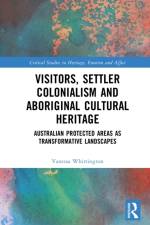
This book analyses visitor responses to the interpretation of Aboriginal cultural heritage in Australian protected areas, focusing on Uluru-Kata Tjuta National Park in the Northern Territory and the Greater Blue Mountains World Heritage Area in New South Wales.
This book concerns the urgency of thinking and acting in response to climate change through art and education. Events of Art and Education in Post-climate Times will be helpful for students studying art, education, environment and sustainability, and climate change. It will also interest researchers, practicing artists and teachers.
This book comprehensively analyses non-financial reporting, specifically sustainability reporting, in Central and Eastern European (CEE) countries. It identifies key trends and common practices among regional companies.
This book concerns the urgency of thinking and acting in response to climate change through art and education. Events of Art and Education in Post-climate Times will be helpful for students studying art, education, environment and sustainability, and climate change. It will also interest researchers, practicing artists and teachers.
This book presents digital placemaking as a new testing ground for urban democracy. Drawing on examples from Australia, China and Taiwan, it explores the participatory practices of digital placemaking and their implications on blurring formal and informal boundaries of decision-making and urban politics.
This book adopts an interdisciplinary approach to examine how diverse social and spatial behaviours within informal urban environments, particularly in developing countries, can provide fresh insights for robust urban planning and development. It positions informality as a dialogue for enabling resilience.
This book explores the multifaceted world of dark tourism and delves into the evolving perceptions and complex narratives surrounding tourism at sites of tragedy and historical significance. The chapters in this book were originally published in Tourism Recreation Research.
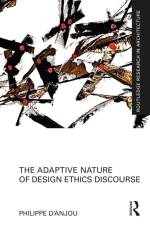
Delving into the dynamic and adaptable nature of ethical language and terminology in design, The Adaptive Nature of Design Ethics Discourse argues that it is intrinsically flexible-what can be described as chameleonic.
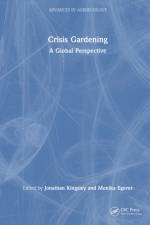
Gardening during times of crisis can have significant benefits to individuals and populations in terms of health, wellbeing, social and economic outcomes. In this book crisis gardening is explored to better define, describe and provide recommendations about this activity globally.
Abonner på vårt nyhetsbrev og få rabatter og inspirasjon til din neste leseopplevelse.
Ved å abonnere godtar du vår personvernerklæring.