





















Gjør som tusenvis av andre bokelskere
Abonner på vårt nyhetsbrev og få rabatter og inspirasjon til din neste leseopplevelse.
Ved å abonnere godtar du vår personvernerklæring.Du kan når som helst melde deg av våre nyhetsbrev.

If you enjoy vintage drag racing, then this is a "must have" issue for you! We have both the Nitro Revival from Monterey, California, and The Race of Gentlemen (TROG), from Wildwood, New Jersey. Two fantastic events, and we have the BEST photos of these two events that you'll ever see! Next we have coverage from Woodies on the Wharf from Santa Cruz, California and another great Northern California show near the water; the Benicia Classic Car Show! To round things out, we have the Winter Jam drifting competition from Sonoma Raceway.
Derek Warwick has been a popular and highly respected figure in motor racing for nearly 50 years, known for his tough and determined personality as well as his talent and bravery behind the wheel. Now, with characteristic honesty and humour, he tells his inspiring story in a memoir that holds nothing back.
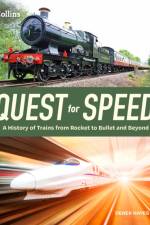
Hop aboard this fascinating journey through the early days of railway trains to the modern day superfast Maglevs which can reach speeds of 600km/h. Exquisitely illustrated with hundreds of photos, both archival and modern, the book is a visual feast for anyone even remotely interested in railways.
Ride where the adventure never ends!Adventure is calling as a new snowmobile season arrives in snow country! The Maine 2023-2024 Snowmobile Trail Atlas includes over 14,000 miles of groomed and backcountry snowmobile trails created from over 100 individual maps to show the most up-to-date and accurate trails possible! Discover new routes, plan scenic day rides, and epic multi-day adventures with the 2023-2024 Maine Snowmobile Trail Atlas. Now, you can plan the adventure of a lifetime for you and your crew!Unforgettable Rides and ExperiencesThe map shows ITS trails, snowmobile club trails, and ungroomed trails where you can lay first tracks after a fresh snowfall! Also included on the map are scenic and awesome hot spots and side trips like the Abandoned Locomotives, B-52 Crash Site, and Coburn Mountain Summit (the highest elevation you can reach by snowmobile in Maine). Now, you can plan ahead to see scenic views and unique landmarks instead of discovering them out on the trail when you're out of time! Maine's three legendary loop trails, the Moose Loop, Katahdin Loop, and Black Fly Loop, are clearly marked on the map for those who enjoy touring scenic and dynamic terrain. The Winter 2023-2024 edition includes marked trailer parking locations and fuel stops!2023-2024 Maine Snowmobile Trail Atlas Includes: ITS Primary Corridor TrailsITS Secondary Connector TrailsSnowmobile Club TrailsUngroomed TrailsLake Crossing TrailsTrail Route Numbers and NamesMore Detailed MapsGas StationsParking LocationsParts and Repair LocationsSnowmobile Club InformationMaine's Legendary Loop Trails: Moose LoopKatahdin Loop TrailBlack Fly LoopHot Spots and Side Trips: Grand FallsAbandoned LocomotivesCoburn Mountain (the highest elevation you can reach by snowmobile in Maine)Moxie FallsB-52 Crash SiteLow's Covered BridgeScenic OverlooksMany more remote historic sites and natural landmarks!Terrain Features & Elevations***PLEASE NOTE***These maps are intended for trip planning purposes only and are not for navigation. Maine's snowmobile trail routes can change daily due to weather conditions, logging operations, landowner requests, etc.Contact local snowmobile clubs for the most updated information on trail routes and closures.
Forget the jet set. Come back down to earth. There is another way to travel, see the world and truly be a part of it. Taking the slow road is about turning your back on the fast lane to make time for people, places and nature. Stopping to take a breath. Stopping to let the planet take a breath too. And the best way to do it? In your own home from home, of course - the humble camper van or motorhome.This book is about the very best driving routes around Scotland. But there's more to it than that. It's about the best places to stay, things to do and places to see and why it's vital that we experience it truly, madly, responsibly. Come with us as we meander around the Highlands, Lowlands and Islands of Scotland. Everyone will find something between the pages to start writing their own stories in Scotland. You don't even have to own a camper van or motorhome - full listings of camper and motorhome hire companies in Scotland are here too.This second edition has been thoroughly updated throughout and expanded and now contains full coverage of the new 'official' routes, including the NC500, the SWC300 and the NE250.Inside lie adventure, beautiful photos, handy maps and quirky travel writing from serial camper van traveller, Martin Dorey. Flick through the pages and travel with him to pastures, beaches, mountains and highways that make you want to turn the key and go, go, go!
The story of the destruction of the Scharnhorst and the clandestine activities around the German naval base in northern Norway are interwoven with the author's personal account of how he finally succeeded in locating and filming the wreck of the battle cruiser.
The railway system in Great Britain is the oldest railway system in the world, with the first locomotive-hauled public railways opening in 1825, which was followed by an era of rapid expansion. In direct contrast to this, the 1960s were a period of drastic reduction in the network where a desire for profitability led to the closure of many branch lines that were â¿uneconomicâ¿. However, the 1970s saw a renaissance in passenger services, with the introduction of InterCity 125 trains and other high-speed additions. In this book, illustrated with over 180 images, Arthur Wilson closely examines the period of 1974â¿78.
From the very beginnings of torpedo craft, all naval powers have seen the occasional need for larger, more powerful or in other respects special designs that stand outside the contemporary norms for flotilla craft. The driving forces were often different from country to country and varied over time, but all the resulting ships may be conveniently defined as â¿super destroyersâ¿. This book is a history of these out-of-the-ordinary vessels, the specific conditions that produced them, and their impact on naval warfare, especially during the two world wars. Notable highlights of this story include the introduction of â¿destroyer leadersâ¿ during the Great War, the Japanese â¿Special typeâ¿ of the late 1920s, the British â¿Tribalâ¿ class, German â¿Narviksâ¿, and the interwar Franco-Italian rivalry that produced some of the fastest of all super destroyers. By the end of the Second World War only the largest designs seemed adequate, so although built in quantity the US _Gearing_ class were effectively super destroyers by the standards of the day and pointed the way to the future.. A final chapter explores the way that after 1945 the big destroyer slowly evolved into the contemporary all-purpose warship â¿ whether described as cruiser, destroyer or frigate â¿ that has become the dominant surface combatant in the worldâ¿s navies. Although it concentrates on exceptional designs, in broader terms the book provides a valuable overview of destroyer development as a whole so will be of interest to any warship enthusiast and historian.
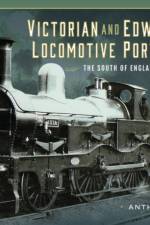
The Victorian and Edwardian periods saw the development of the steam locomotive in Britain from a comparatively simple machine to a powerful main line express capable of speeds of a hundred miles an hour. The book starts with an introduction dealing with the main line of development and that is followed by a picture section with over 190 photographs. Each illustration has an extended caption giving details of the engine and its history. The material is arranged geographically, starting with the railways of southern England and ending with Irish railways. The Channel Islands, the Isle of Wight and the Isle of Man are also included, and there is a section on English light railway. The photographs are all of the locomotives in their working days, many showing them in action on both passenger and goods trains. This splendid collection shows the rich diversity of Britainâ¿s railways and how different companies and their engineers produced engines of great individuality. This is a book that will be enjoyed by all lovers of the golden age of steam railways.
This book is a comprehensive history of all the 0-6-0 tender locomotives built by the Great Western Railway or by railways absorbed by the GWR from the very earliest broad gauge engines designed by Daniel Gooch to the Collett 2251 class of the 1930s some of which were still under construction at nationalisation. It includes the Joseph Armstrong â¿Standard Goodsâ¿ and the famous Dean Goods, many of which served overseas in the two world wars. The text of 40,000 words describes the design, construction and operation of eight GW and five â¿Absorbedâ¿ broad gauge classes, and thirteen GW and thirteen â¿Absorbedâ¿ standard gauge classes. The book has over 250 black and white and 30 colour photos, weight diagrams and drawings.
There has always been a romance around ocean liners, but this book looks behind the romance to show the reality of travelling the oceans of the world. The book starts with the first scheduled transatlantic crossings in the age of sail, then moves on through the development of the steamers and ends in the present day, when ocean liners have given way to airliners. All aspects of the subject are discussed. The experience of travelling by sea varied enormously from the luxury of first-class travel to the often brutal conditions endured by immigrants. Ship design developed in the race between competing companies to provide the most powerful ships. But while technology came into the fundamental design, when it came to décor, for many of the great liners the interiors looked back with a romanticised view of the past. It is not always realised that a great liner might have almost as many crew as passengers, and this looks at all those who kept the ships running, from the black gang in the engine room to the captain on the bridge. The result is a rounded view of what it meant to travel on some of the greatest ships ever built.
Barry Scrapyard in the Late 1970s and Early 1980s is a fond photographic tribute to this iconic part of Britain's railway history.
A photographic portrait of traditional signalling on British Railways from Nationalisation through to the 1990s.
Accessible and interdisciplinary in nature, this volume highlights the connections between media, tourism and place, bringing together the diverse perspectives, approaches and actors involved in critical issues relating to media tourism worldwide.
This book considers what the transition into the Asian Century means for some of the most urgent issues in the world today, such as sustainable development, human rights, gender equality, and environmental change. The book critiques Anglo-Western centrism in tourism theory and calls on tourism scholars to make radical shifts toward more inclusive epistemology and praxis. From the British Century of the 1800s to the American Century of the 1900s to the contemporary Asian Century, tourism geographies are deeply entangled in broader shifts in geopolitical power. In the shadow of the COVID-19 pandemic, the significance of shifts in tourism geographies and the themes addressed in this volume are more urgent than ever. That the world faces increasing turmoil is abundantly clear. Yet, amidst the disruption to the everyday, it is hope and compassion, but also political-economic restructuring that is needed to reset the tourism industry in more sustainable, equitable, and ethical directions. In no uncertain terms, the pandemic has forever changed the tourism industry as the world once knew it. This book, therefore, sets out to collectively build on the momentum of the inclusive scholarship that Critical Tourism Studies-Asia Pacific is renowned for, while also asking readers to pause and reflect on the possibilities and challenges of tourism in a post-pandemic Asian Century.The chapters in this book were originally published as a special issue of the journal, Tourism Geographies.
This engaging book presents nine empirical chapters that explore topics such as lifestyle entrepreneurship, lifestyle mobility, luxury experiences, and tourism-related well-being. Unlike most research focusing on Western contexts, several of the studies involve Asian regions (particularly China, including Hong Kong and Taiwan) and capture the growing popularity of Asian perspectives. This edited volume, authored by researchers across China, New Zealand, the US, the UK, and Portugal, provides researchers and practitioners in tourism and hospitality, along with readers interested in the general "travel and lifestyle" domain, timely and relevant knowledge. The editors hope that these carefully chosen chapters will inspire future studies and will give its readers a fresh insight in lifestyle's role in tourism.The chapters in this book were originally published as a special issue of the Journal of Travel & Tourism Marketing.
By introducing the new concept of alternative (im)mobilities, this collection draws attention to a different approach to mobility practices. In doing so, this ground-breaking volume explores a range of issues related related to (im)mobilities and the Covid-19 pandemic, transport and social practices, and media and urban tourism. Designed and organized in a legally or illegally way, alternative (im)mobilities are examples of those daily practices of displacement of people, objects, and information, which mobilize a multidisciplinary framework of urbanization, shedding light on important and long-standing issues of inequality and the lack of recognition of diversity in economics, social and culture urban life. This volume opens up a new set of research questions related to the complex ways in which informal actors cope with their everyday life experience, regarding dwelling, commuting, working, caring of vulnerable people, health issues, access to information, among other mobility practices, besides the lack of essential - and infrastructural - public services.This volume will be of great interest to researchers and scholars in geography and the social sciences interested in mobilities, transport, communication, tourism, mobility justice and inequality, public decision making and health studies.
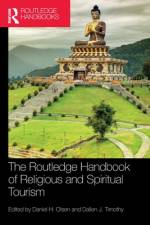
The Routledge Handbook of Religious and Spiritual Tourism provides a robust and comprehensive state-of-the-art review of the literature in this growing sub-field of tourism. This handbook is split into five distinct sections. The first section covers past and present debates regarding definitions, theories, and concepts related to religious and spiritual tourism. Subsequent sections focus on the supply and demand aspects of religious and spiritual tourism markets, and examine issues related to the management side of these markets around the world. Areas under examination include religious theme parks, the UNESCO branding of religious heritage, gender and performance, popular culture, pilgrimage, environmental impacts, and fear and terrorism, among many others. The final section explores emerging and future directions in religious and spiritual tourism, and proposes an agenda for further research. Interdisciplinary in coverage and international in scope through its authorship and content, this will be essential reading for all students, researchers, and academics interested in Tourism, Religion, Cultural Studies, and Heritage Studies.
DeLorean recounts auto industry titan John Z. DeLorean’s story, from General Motors executive, to the 1975 founding of DeLorean Motor Company, to its 1982 bankruptcy, and the DeLorean car’s subsequent rebirth as pop-culture star in 1985’s film Back to the Future as well as efforts to relaunch the brand in the 21st century.
This unique volume examines death from a socio-cultural events perspective. Drawing on the empirical and conceptual work produced by an international body of researchers, it is the first publication to look at death, dying, memorialization, and their mediation, from an events orientation.
This title offers a dynamic understanding of tourism, usually defined in terms of clearly circumscribed places and temporalities, to grasp its changing spatial patterns. This edited volume will be of great interest to upper-level students, academics and researchers in tourism, urban studies, and land use planning.
This book explores new forms of tourism in urban areas with their social, political, cultural, architectural and economic implications. By investigating various showcases of New Urban Tourism, the book offers insights into power relations and connections between tourism and cityscapes in various socio-spatial settings around the world.
This contributed volume examines ethical ramifications of the development and use of autonomous vehicles. From ethical emergencies akin to the classic trolley problem to more overarching effects on social and economic structures, this volume's discussion appeal to philosophers, social scientists, engineers, urban planners, and policy makers.
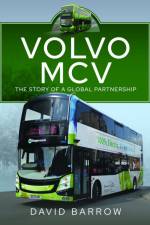
In 2022, Volvo Bus UK celebrated fifty years of trading in the UK and Ireland. The first right-hand drive B58 chassis arrived on these shores at the end of 1971\. The double deck front engine Ailsa came in 1973\. Over the next fifty years, the various different models have been upgraded, redesigned, lengthened and fitted with bigger more powerful engines. And now, in 2023, Volvo electric single and double deck models are beginning to appear on UK roads. Volvo Bus is a subsidiary of the Swedish Vehicle builder Volvo AB, with a global presence worldwide. MCV is based in Salheya in Egypt. It was established in 1994 and has the capacity to build up to 6,000 buses and coaches per annum., with up to 5,000 employees. MCV and Volvo are collaborating in the development and building of the electric bus for the UK marketplace.
Abonner på vårt nyhetsbrev og få rabatter og inspirasjon til din neste leseopplevelse.
Ved å abonnere godtar du vår personvernerklæring.