










Gjør som tusenvis av andre bokelskere
Abonner på vårt nyhetsbrev og få rabatter og inspirasjon til din neste leseopplevelse.
Ved å abonnere godtar du vår personvernerklæring.Du kan når som helst melde deg av våre nyhetsbrev.

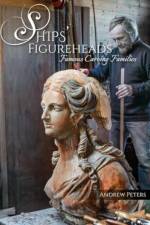
A beautifully illustrated book that will be of especial relevance and appeal to anyone with an interest in ships and sailing vessels, carving and maritime and social history.
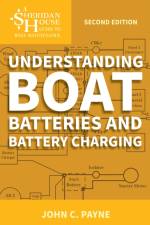
A concise, authoritative, and illustrated reference on boat batteries and charging, including general information on lithium batteries, lead acid batteries, AGM batteries, gel batteries, battery ratings and selection, safety and maintenance, installation, charging, alternators, and regulators.
Europe by Eurail has been the train traveler's one-stop source for visiting Europe's cities and countries by rail for nearly fifty years. Newly revised and updated, this comprehensive annual guide provides the latest information on fares, schedules, and pass options, as well as detailed information on more than one hundred specific rail excursions and sightseeing options.
A steamy Formula One workplace romance for fans of Hannah Grace, Lauren Asher and Kat Ransom. F1 superfan Ella Yearwood can't believe her luck when she lands her dream job at an up-and-coming racing team. Ella loves everything about working for Gold Dart . . . everything except their handsome driver, Kivi Jokkinen. Kivi is known around the paddock for his easy-going attitude, so why is he giving Ella the cold shoulder? Though confused, Ella's a professional, determined to avoid the devastatingly good looking driver at all costs. But when Ella's assigned as Kivi's Communications Rep there's just no getting away from him, his brooding attitude, or what it does to her. As the season unfolds and their worlds collide, can Ella keep her career on track, or will Kivi steer her off-course?
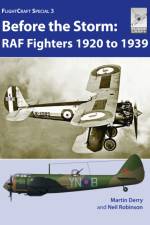
When the First World War ended the then recently established Royal Air Force was awash with aircraft of all descriptions. More surprising, perhaps, was the fact that despite an ongoing cull of obsolescing types, on the last day of 1919, the RAF still possessed 9,122 non-obsolete aircraft, with a further 1,100 more assigned to the Fleet Air Arm.Whilst the famous SE.5A and Sopwith Camel had by this time largely been consigned to history, the RAF possessed no less than 1,860 Sopwith Snipes which, from 1920, would become the RAF's standard single-seat fighter for years to come. Other core types on charge on 31 December 1919 included some 1,650 Bristol F.2B fighters and 1,250 de Havilland DH.9As, which, together with the Snipe, accounted for over fifty per cent of the RAF's inventory at that time. Avro 504 training aircraft accounted for a further 2,700 airframes.In this Flight Craft Special, the authors provide a detailed and informative pictorial history of those scout/fighter aircraft that served in an operational capacity with the RAF from January 1920 until the last day of 1939 - a period in which Britain once again moved from an era of peace to war with an old enemy, albeit this time Hitler's totalitarian National Socialist Germany as opposed to the Imperial Germany of old.As well as covering each of the fighter types used during the inter-war period, and featuring most of the squadrons, the photographs themselves convey the sense of the technical advances that rapidly took root within Britain's aero industries from the mid-1930s onwards, moving from the brightly-marked overall silver wood and linen biplanes to the dull camouflaged metal-skinned monoplanes.The progression of machine-gun development - from the Lewis and Vickers of the First World War to the later Browning - is covered, spanning the days of the biplanes' two fixed synchronised Lewis or Vickers .303-inch machine-guns mounted in the forward fuselage to eight wing-mounted .303-inch Browning machine-guns in the 'new' monoplane fighters. There is also a small, but fascinating, section on the monoplane 'also rans' - the monoplane fighters that were designed and had prototypes built but failed to reach the finishing post!
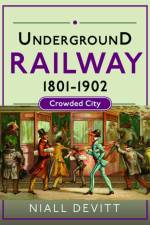
The London Underground, the very essence of a great metropolis, is a story which has fascinated and captivated generations since its first opening in January 1863. For many it is a very familiar narrative, a seemingly well-trodden story, with little new or significant additions, a direct and simple story of development and expansion, from the first trains from Paddington to Farringdon, culminating in today's Elizabeth line. What this book seeks to do is to revisit the seemingly familiar story, but utilising the full wealth of archive primary resources now available. These sources are honed by a highly experienced researcher and historical expert in the subject.The daunting engineering challenges from constructing tunnels under London, or designing Underground rolling stock, to the ever present battle to secure financial stability to expand and enhance the system, along with the unique design culture; are fully explored. The book, first of others, seeks to unify the at times disparate approach to writing on the subject. You will never think about the tube in the same way again.
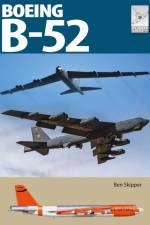
The Boeing B-52 Stratofortress revolutionized strategic bombing with its versatility and endurance, shaping American military power globally.First flown in 1952, the Boeing B-52 Stratofortress became the ultimate expression of Cold War very heavy bomber design. The last of the famous 'Fortress' series of aircraft produced by the legendary Seattle-based company, the B-52 was created over a weekend in a hotel suite in Ohio, resulting in a design that gave America's post-war Strategic Air Command, led by General Curtis Le May, an additional nuclear-capable edge.The B-52 was almost as big as Convair's B-36 Peacemaker, the largest serial-produced piston-powered aircraft ever built. The B-52 could carry a very similar bomb load, but flew it further, higher and faster. The turbojet-powered B-52 utilized techniques Boeing had learned from the Model 450 B-47 Stratojet and was designed to meet the Strategic Air Command's ever-changing needs in the nuclear age.Like its predecessors, Boeing's B-52 proved to be a highly flexible aircraft, capable of carrying increasing payloads, meaning it has remained in service well beyond its expected lifespan. Over the decades the B-52 gradually become a strategic and tactical airborne platform capable of delivering evermore deadly attacks against targets in various environments, from jungle to arid mountains. The B-52 had become the universal tool for commanders on the ground and a symbol of American military power, capable of striking a target anywhere in the world - as evidenced by its deployment in, for example, the Vietnam War and the Gulf War. Such was its potency, that the USAF and Boeing had developed an airplane of such importance that it now seems impossible to discuss conventional air power without including the B-52.This Flight Craft title offers the aviation enthusiast, historian and modeler an exciting selection of B-52-related resources through photographs, illustrations and excellent showcase examples to help build their own versions of this fearsome military aircraft.
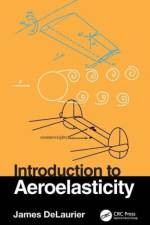
This book introduces the classical topics of aeroelasticity, beginning with elastic structural modeling and the way that wing and tail structures can diverge and deform due to aerodynamic, inertial, and control-surface deflections. It presents equation derivations in a step-by-step fashion, complemented by numerical and historical examples.
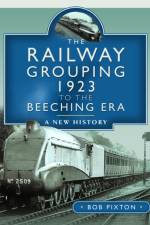
British railways evolved through wars and state control, facing innovations like diesel engines and challenges from road transport amid financial struggles.When King George V ascended to the throne in 1910, world trade was increasing and at home the country's private enterprise railways were booming with larger trains and more freight being carried than ever before. Over the next fifty years the country had experienced not one, but two world wars. Railways had been forcefully reorganized, not once but twice, eventually becoming state owned. With the Government now in control of the railway's finances, reformation was on the horizon in the medicine of Dr. Beeching.This volume sets out to chart the passage of the railways during these turbulent times.Contrary to popular belief, life on the railways during these times was not all doom and gloom but times of innovation, competition, new buildings, new lines and the spread of electrification. This was the era of faster, larger, non-stop expresses, streamlined trains: we even showcased our best trains abroad, not once but twice!More and more people were taking holidays by trains and holiday camps emerged. Challenging the position of steam engines were new diesel locomotives. The Festival of Britain (1951) and the Coronation of Elizabeth (1953) saw the country emerge from the devastation and crippling debt after World War 2. On the horizon were devastating rivals that wounded the previously unassailable position of steam trains: motor lorries and family cars.With looming unsustainable finances, the Government solicited external help to help sort out matters.
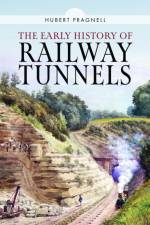
The early history of tunnel construction in Britain during the railway boom.To the early railway traveller, the prospect of travelling to places in hours rather than days hitherto was an inviting prospect, however a journey was not without its fears as well as excitement. To some, the prospect of travelling through a tunnel without carriage lighting, with smoke permeating the compartment and the confined noise was a horror of the new age. What might happen if we broke down or crashed into another train in the darkness? To others it was exciting, with the light from the footplate flickering against the tunnel walls or spotting the occasional glimpses of light from a ventilation shaft.To the directors of early railway companies, planning a route was governed by expense and the most direct way. Avoiding hills could add miles but tunnelling through them could involve vast expense as the Great Western Railway found at Box and the London and Birmingham at Kilsby. Creating a cutting as an alternative was also costly not only in labour and time, but also in compensation for landowners, who opposed railways on visual and social grounds having seen their land divided by canals.Construction involved millions of bricks or blocks of stone for sufficiently thick walls to withstand collapse. However, the entrance barely seen from the carriage window might be an impressive Italianate arch as at Primrose Hill, or a castellated portal worthy of the Middle Ages as at Bramhope.This book sets out to tell the story of tunnelling in Britain up to about 1870, when it was a question of burrowing through earth and rock with spade and explosive powder, with the constant danger of collapse or flooding leading to injury and death. It uses contemporary accounts, from the dangers of railway travel by Dickens to the excitement of being drawn through the Liverpool Wapping Tunnel by the young composer Mendelssoln. It includes descriptions from early railway company guide books, newspapers and diaries. It also includes numerous photographs and coloured architectural elevations from railway archives.
Celebrates a century of sidecar racing at the Isle of Man TT, highlighting technical innovation and the dominance of iconic teams like BMW, BSA, Yamaha, and Honda.The Isle of Man TT is arguably the most historic motorsport event on the planet. Its 37 3/4 mile Mountain Course is the world's oldest racing circuit that is still in use. Three wheeled machines first appeared in 1923, and were an instant hit with the spectators. Early pioneer Fred Dixon set the standard for technical innovation with his banking sidecar, but lack of manufacturer support meant that the class was soon dropped.When sidecar outfits made a comeback at the TT in the 1950s, it was West German BMW machines which dominated the podium places. The Munich factory supported World Championship contenders such as Max Deubel, Georg Auerbacher and Siegfried Schauzu, and it was not until the late 60s that BSA-mounted British riders began a fight-back.Through the 1970s Yamaha two stoke engines were the weapon of choice at the TT, and powered the likes of World Champions George O'Dell and Jock Taylor; that is until Mick Boddice secured the support of Honda UK. Boddice battled it out with the rising young star Dave Molyneux, who would go on to dominate the sidecar TT over three decades as the most successful driver in the history of the event.In recent years the pace at the TT has been set by the electrifying World Championship duo of Ben and Tom Birchall. Sidecar Century celebrates the technical innovation and sheer determination of all of these competitors, over 100 years of classic racing.
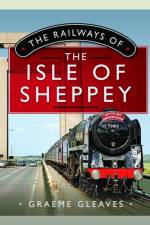
The Isle of Sheppey's railway network, built from 1860, supported its growth but declined due to economic challenges and closures.The Isle of Sheppey sits just off the north coast of Kent, where the Medway and Thames estuaries flow into the North Sea. Over centuries this was a place that was home to farmland, castles, a dock yard, an air station, industrial installations, calm beaches and a population of islanders who have taken a pride in their home. To serve the needs of all of this a small railway network was built up and even an urban tram network. Included in this was a fixed link that was the first to ever link the island to the mainland. From 1860 the network grew as the importance of the island grew. Continental boat passengers, dockyard workmen and day trippers, they were all carried on the trains and trams that shuttled about to, from and across the flat terrain of this often overlooked island. Being an island can create its own unique set of challenges and the railways on the island were certainly challenged by misfortune and circumstances, but the little network kept going until economics got the better of it and from there on it becomes a story of contractions and closure. The Island can still boast a railway today but it is far removed from the story of its past. This work seeks to tell the story of the railways on the island, how they came to be built, how they were run and how times changed over the following decades.
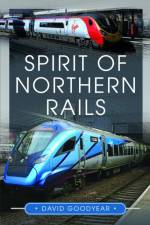
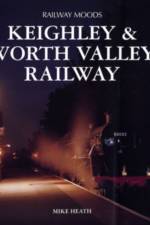
The essence of northern UK railways through photographs, illustrating their impact on the landscape and their historical and modern significance.This book endeavors to capture the very essence of the railways in the northern UK, exploring in photographs their imprint upon the landscape. Railways are illustrated as they traverse the bleak fells, pass by traditional cotton mills and industrial heritage, stride over iconic viaducts crossing vast windswept valleys and coastal estuaries, and as they share the grandeur of iconic cathedrals of both religious and railway station designs, while not forgetting the intricate network of canals intertwining with the rails that eventually carried the very traffic that kept these waterways in use. Here is a personal selection which I trust helps explore all that characterizes and reveals the moods and atmosphere which conjure the heart and "Spirit" of railways traversing our northern climes.Locomotives, train designs and liveries past and present will help recall the rails of the 1980's and 90's and offer an interesting contrast to the more modern images of the present millennium. With a mix of traction and train fleets, both in use on passenger and freight consists, this selection of images reveals their participation in capturing the heart of railways in the north. Readers are invited to share this fascinating adventure and indeed the inherent "Northern Spirit" which permeates throughout such a journey.
A brief history of the Class 22 diesel-hydraulic locomotives, from their introduction and technical aspects to their withdrawal by 1972.The British Railways 'Pilot Scheme' orders of 1955 included six Type 2 diesel-hydraulic locomotives built by the North British Locomotive Co., these being introduced during 1959 for use on the Western Region. Without operational experience, a further fifty-two locomotives were delivered between 1959 and 1962. The fleet survived intact until 1968, when approximately half of the class was withdrawn as a result of declining traffic levels across the UK, with successive National Traction Plans progressively selecting the less successful, non-standard and 'numerically challenged' classes for removal from traffic. All fifty-eight locomotives were withdrawn by New Years Day, 1972.This book, the first of two, sets the scene surrounding the short history of the Class 22s covering the introduction of the fleet, technical aspects, appearance design, delivery and acceptance testing, works histories and allocations. Detailed individual histories of each of the fifty-eight locomotives are included.
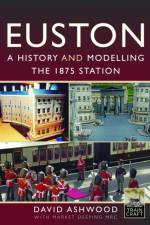
A guide for modeling Victorian architecture, inspired by a community restoration project.Euston Station was the first intercity railway gateway for London and with the famed Doric Arch became a major landmark of that city. Initially built for the London and Birmingham Railway, it became the terminus of the LNWR Premier Line, then HQ of the London Midland and Scottish. The controversial 1960's demolition of the site stimulated the building preservation movement. Latterly we have a challenging on / off love affair with the area through the High Speed Two project. This book contains both a background history of Euston and its environs, combined with a modellers review of building a 'OO' gauge mid Victorian station complex. A core model of the old station was kindly donated to the Market Deeping Model Railway Club (MDMRC) following the sad act of vandalism of their model railway show in 2019. This in turn served as a stimulus to expand, detail and research during the Covid isolation and lockdown years. This book is the end result of these endeavours. We use the model to underpin the history and allow a geographical walkthrough of the site, plus hints, tips and techniques on building a landmark model. It has been an enjoyable and eye opening challenge to unveil the story under, through and over Euston. Written and contributed to by members of the MDMRC, all royalties will go the club. Charity number: 1187779.
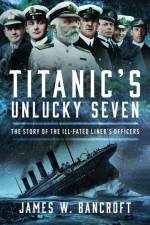
The Titanic disaster is examined through the experiences of seven officers, revealing their bravery and the mysteries surrounding the tragedy.The disaster which befell RMS Titanic has become one of the most investigated and analyzed maritime tragedies of all time. Yet there is much still to be untangled from the web of mystery which still surrounds this confused, catastrophic event.The people on board were proud to be part of the ship's highly-publicized first voyage, but as the first batch of officers reported for duty in Belfast to prepare her for her trial trip to Southampton and beyond, they could not have imagined the fate which awaited them. Titanic was, after all, 'unsinkable'.It is exclusively through the eyes of seven unlucky men - the small group of officers onboard for that doomed voyage - that the author reveals the tragedy as it unfolded that night in April 1912. From their assignment to the White Star liner through to their eventual fates.Each one of these seven men behaved with great courage and discipline in a situation beyond anything they had previously experienced and some of the officers left accounts of the horrors they witnessed. Of this small group, four were members of the Royal Naval Reserve; this included Charles Lightoller, who was the Second Officer and in charge of loading passengers into lifeboats on the port side. He was noted for strictly enforcing the 'women and children only' principle, allowing only those men needed for manning the boats to join them.Four of the seven officers survived the ordeal. As the author reveals, one of them had only been formally appointed to the crew the day before Titanic sailed on its climatic maiden voyage. This was Henry Tingle Wilde, who was scheduled to sail with Titanic's sister ship, Olympic, but who was switched to Titanic as the Chief Officer. He reported for duty on the very day the ship departed Southampton. This move meant a reshuffle of the officers and, as only seven officers were deemed necessary, Second Officer David Blair was removed from the crew list and sent ashore. He was certainly the luckiest of all. The unfortunate Wilde went down to the bottom with his ship.Of the many questions asked about that night is that of the fate of Captain Edward Smith. His body was never recovered and it had naturally been assumed that he too had been lost. In Titanic's Unlucky Seven, James Bancroft questions if this might not actually be the case. There is evidence that Smith may have survived the sinking, and was seen and spoken to months after the event by a man who had sailed with him, and who had known him personally for most of his life. Certainly, Smith had good reason to disappear into obscurity.For the first time, a clear picture of the incidents, actions and events leading up to and during the sinking of Titanic can be seen through the stories of the seven men in charge that night.
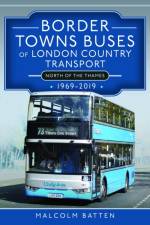
Explore London Transport's transformation from monopoly in 1933 to decentralized bus services, reflecting regional changes in Greater London and beyond.London Transport was created in 1933 with monopoly powers. Not only did it have exclusive rights to run bus (and tram and trolleybus) services in the Greater London area, it also ran services in a Country Area all around London. Green Line express services linked the country towns to London and in most cases across to other country towns the other side of the metropolis. This country area extended north as far as Hitchin, east to Brentwood, south to Crawley and west to Windsor.But what of the towns at the edge of the country area? Here the green London Transport buses would meet the bus companies whose operations extended across the rest of the counties of Essex, Bedfordshire, Buckinghamshire etc. In some cases the town was at a node where more than one company worked in. At Luton there was a municipal fleet. Elsewhere, such as at Aylesbury there were local independent operators who had a share in the town services.It would all change from 1970 when the London Transport Country Area was transferred to the National Bus Company to form a new company named London Country Bus Services. This would later be split into four separate companies. Deregulation in 1985 and privatization in the 1990s led to further changes in the names and ownership of bus companies. Consolidation since then has seen the emergence of national bus groups - Stagecoach, First Group, Arriva and Go-Ahead replacing the old names and liveries. But retrenchment by these companies has given an opportunity for new independent companies to fill the gaps.This book takes the form of an anti-clockwise tour around the perimeter of the London Country area, north of the Thames featuring a number of key towns starting at Tilbury and ending at High Wycombe, illustrating some of the many changes to bus companies that have occurred.
Heavy gun mountings dominated the design of larger warships, on account of their size, weight, protection and cost. In the 1890s, British gun mountings developed rapidly with new gun technologies (wire winding, cordite) and the rise of the two major ordnance companies, Armstrongs and Vickers, producing large numbers of weapons for the Royal Navy and for worldwide export. But by 1960, aircraft and guided missiles had made the big gun redundant, so the period from 1890s to 1950s covering the two world wars is the most historically significant. The focus of this book is on the larger mountings and those fitted in the larger ships - the massively engineered 'non transferable' mountings, whose complexities and associated magazines took up a huge volume of the ship, unlike the smaller calibre 'transferable' mountings mostly bolted to the deck. Such mountings could weigh over 1000 tons, take two years to build and make up a quarter of the cost of a battleship. Although they existed in many variants, there were only about forty basic mountings from 4.5in to 18in calibre fitted to the majority of the RN's larger ships so these take up the bulk of the book. For each, well illustrated handbooks with coloured plates were produced, but are largely inaccessible to the public, so about 50 of these highly detailed drawings are reproduced at large scale. The smaller mountings and the guns themselves each have a separate chapter. Although the impact of the book is largely visual, there is an expert account of the design, construction and installation of such mountings, and their manufacturers, supported by a range of internal and close-up photographs. The reference value of the work is enhanced by a comprehensive table of mountings and their characteristics, plus a list of all the mountings made by Vickers of Barrow between 1900 and 1950. Providing easy access to so much rarely seen material, this handsome volume will appeal to modelmakers, ship enthusiasts and technical historians.
The drone industry is developing at an exponential pace and as technological sophistication advances, their future application prospects are limitless. Managing Safety in the Drone Industry: A Practical Guide aims explores safety structures and practices to tackle the increased risk of accidents and incidents in drone operations.
This book highlights the developments, discoveries, and practical and advanced experiences related to responsive distributed computing and how it can support the deployment of trajectory-based applications in smart systems.
A superb edition with over 160 outstanding photographs and thoroughly researched, informative captions. Beautifully produced in hardback with rare and previously unseen images.
A superb edition with over 230 outstanding photographs and thoroughly researched, informative captions.Beautifully produced in hardback with rare and previously unseen images.
Charlotte Walker's life had always been a well-scripted story, until she took an unexpected detour. Pressing pause on her academic journey, she moves to London in an attempt to figure out what the hell she wants out of life. Just when she thought her path couldn't get any more uncertain, an intriguing offer comes her way from an unlikely source-her brother's best friend and driving partner. Lucas Adler, AlphaVite Racing's star driver, understands all too well that Charlotte Walker is a temptation he should avoid at all costs. Not only is she the younger sister of his best friend, but he's learned the hard way how meddling with the forbidden can ruin relationships. Yet, the charismatic Aussie challenges his resolve at every turn and as a secret relationship blossoms, Charlotte and Lucas must decide whether some risks are worth the reward of a happily ever after.
Abonner på vårt nyhetsbrev og få rabatter og inspirasjon til din neste leseopplevelse.
Ved å abonnere godtar du vår personvernerklæring.