












Gjør som tusenvis av andre bokelskere
Abonner på vårt nyhetsbrev og få rabatter og inspirasjon til din neste leseopplevelse.
Ved å abonnere godtar du vår personvernerklæring.Du kan når som helst melde deg av våre nyhetsbrev.

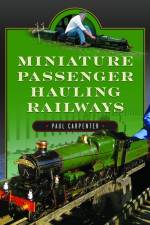
The objective of this book is to share the pleasures provided by miniature railways of all sizes and encourage anyone wanting to build an engine or railway to 'have a go'. The book describes how the author embarked on such projects with great enthusiasm and passion, but with little knowledge. It confirms that 'where there is a will, there is a way' and knowledge will follow. The author found himself on a 'voyage of discovery', supported by joining clubs, talking to people, asking questions and then simply 'having a go'. You don't need to be an engineer to make a start and many outstanding engines and railways have been built by people from all walks of life. How to choose the most appropriate design and what equipment will be required to succeed is discussed. Steps are presented for building a steam locomotive, an electric locomotive, rolling stock and finally track, all illustrated by photographs and drawings to inform, guide, and encourage. It reviews some published steam locomotive designs and shows how they can be modified to perform better, using modern analytical techniques. Operating a miniature passenger hauling railway is great fun. Lessons learned are shared through all the activities in the book. Everything can be achieved by enthusiasm, a willingness to learn and a commitment to overcome challenges. Have a read, join a club, cut metal and embark on your own 'voyage of discovery'!And remember -- Engineering is a great and exciting profession!
This innovative and insightful book critically explores how to recognize and generate the social, cultural, political and economic values of the heritage of urban peripheries and encourage new metropolitan development scenarios that protect and build upon that cultural heritage.
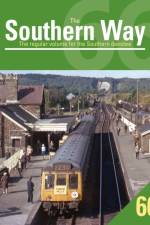
Since its first issue was published in 2007, The Southern Way has become the definitive journal on the history and heritage of the Southern Railway and the Southern Region of British Railways. Two more issues are scheduled for 2024, numbers 66 and 67. Each contains a mixture of articles and photo features on various aspects of the SR including rolling stock, infrastructure, operations and personalities. The Southern Way remains essential reading for all who interested in the SR and those modelling it.Among the features in this issue are:The LSWR ''700'' ClassClass 4LAV EMUsCranbrook & Paddock Wood Railway Southern Steam SurvivalSouthern Stations on the Withered Arm
The British Railways 'Pilot Scheme' orders of 1955 included ten English Electric Type 2 diesel-electric locomotives deploying Napier 'Deltic' engines. These locomotives, more colloquially known as the 'Baby Deltics', were introduced into traffic during 1959 for use on the Eastern Region of British Railways. This book looks at the history of the Class 23s, making extensive use of available but previously unpublished archive material, covering their introduction, technical idiosyncrasies, appearance design and performance. Issues with the original 'Deltic' engines were ultimately dealt with via a major rehabilitation exercise during the 1963-65 period; whilst various re-engining options were considered , including a new 'U' series English Electric high-speed engine design, the original Napier engines were ultimately retained. The work involved in the whole rehabilitation process is discussed in detail using internal English Electric archive material and forms a central focus of research. The fleet survived intact until 1968, when withdrawal commenced as a direct result of declining traffic levels across the UK, with successive National Traction Plans progressively selecting the less successful, non-standard and 'numerically-challenged' classes for removal from traffic. All ten locomotives were withdrawn by March 1971. Individual locomotive histories, allocations, fire and accident incidents, liveries and detail differences, storage and disposals are provided for each locomotive.
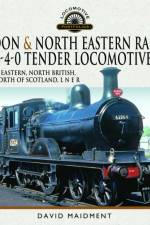
This second volume on the LNER 4-4-0 locomotives describes the design, construction, history, operation and performance of the North Eastern, North British, Great North of Scotland and Gresley LNER built examples, classified by the LNER at the Grouping as classes, D17 - D24, D25 - D36, D38 - D48 and D49 respectively. It covers from their emergence in the late nineteenth century to their demise in the mid or late 1950s and early 1960s with their performance at their peak operation times, mainly in the inter-war years of LNER ownership.
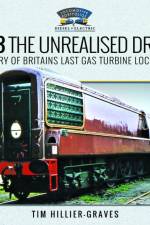
During the 1930s, with the end of steam locomotion being actively considered, many looked to develop engines powered by diesel and electricity. But for the coming of war in 1939, and the acute recession that followed, much more might have been accomplished. Nevertheless, the die had been cast and during the late 1940s and 1950s designers stepped up their efforts to find efficient and effective alternatives to steam. Amongst their number was John Hughes who, whilst working for English Electric designing turbine engines, saw how this power source might be used to drive locomotives. In part he was encouraged in these endeavours by William Stanier's 1935 introduced Pacific 'Turbomotive' and wished to continue this experiment and exploit its potential more fully. For some the development of diesel and electric engines was the only logical course to take, but not Hughes who doggedly pursued his dream of seeing gas turbine engines dominating Britain's railway network. Despite many setbacks, and lack of funds, he refused to give up and eventually saw his locomotive, GT3, built and then begin a prolonged period of trial running. But having finally achieved this ambition, the powers that be decided that the experiment had gone far enough and would go no further, much to Hughes' anger and frustration. This is a 'what might have been story' which, although ultimately unsuccessful, tells us much about the nature of design engineering and the need for determined, radical thinkers who are prepared to push back scientific boundaries. In this case GT3 came close to being the first of a type of engine that might have changed the direction Britain's railways took as steam came to an end. As such it is a near miss worthy of remembrance. To aid this work Hughes left a unique archive of documents, drawings and photos, in public and private hands, to help us understand the nature of his work and what drove him on despite the long odds he faced.
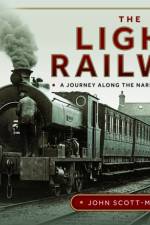
The light Railways Act 1896 marked the final phase in the development of the traditional railway in Britain, being designed to open up rural areas of Britain that had been bypassed by the larger railway companies. The promoting and construction of light railways allowed many parts of Britain and Ireland, to have an outlet to the outside world and major cities, which previously they had not enjoyed. The Light Railway is not designed to be a definitive history, but a pictorial tribute to the brave attempt to develop a rural network of lines to serve some of the areas of the British Isles and Ireland that had sadly been neglected by the large main line companies throughout the initial and later railway development period from 1825 to 1896. This volume looks at the railways themselves, motive power and infrastructure that made up these small but important lines, promoted by our Victorian and Edwardian ancestors.
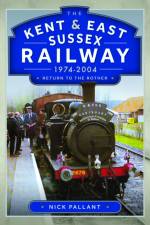
Over thirty years ago Nick Pallant told the story of the struggle to save one of Britain's best loved heritage railways in Holding the Line - Preserving the Kent & East Sussex Railway (Alan Sutton Publishing). That book concluded its detailed coverage with the partial reopening of the K&ESR in 1974. This new account continues the story over the thirty years which followed. The first 12 chapters mainly rely on secondary sources, particularly the K&ESR's house journal, the Tenterden Terrier. Later chapters describe the years after he returned as a volunteer following over two decades as an 'armchair' member and includes his subsequent experiences as a K&ESR employee and Company Secretary. The key points in the story are the extensions to the line which followed the reopening of a short section in 1974. There is also coverage of the scheme to rebuild the 'lost' section between Bodiam and the national network at Robertsbridge. The growth of passenger traffic is detailed along with all the problems and achievements encountered along the way. The narrative is intertwined with anecdotes of heritage railway life in all its hopes, frustrations, humour and comradeship. Having begun by briefly recalling the K&ESR's history prior to 1974, the book puts matters into further perspective by concluding with a summary of the major events from 2004 to the third decade of the 21st century.
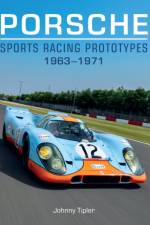
Between the 1950s and 1971, the halcyon days of long-distance endurance motor racing, Porsche embodied the up-and-coming manufacturer, progressing inexorably from reliable class-winner to outright victor - a platform they consolidated and never rescinded. This book focuses on the six distinct Porsche models that raced from 1963 to 1971. Porsche created a series of racing cars - the 904, 906, 910, 907, 908 and 917 - to run in the FIA-regulated International Sports Car Championship Group 6 Prototype class, the Group 4 World Sportscar Championship, and European Hillclimb Championship events held during that period. These races lasted either 24 hours, 12 hours or 6 hours, or were categorised by distance: 1,000km, 500km or 500 miles. Events took place annually at European tracks including Le Mans, Nürburgring, Monza, Spa-Francorchamps and Brands Hatch, and in the USA at Daytona and Sebring. Chronicling each season, this visually stunning volume records Porsche's multitude of successes. With over 300 outstanding images, many previously unseen, including professional photos and factory archive pictures, and featuring interviews with heroic Porsche racing drivers - with the Foreword written by two-times Le Mans winner Gijs van Lennep - this book tells the thrilling story of Porsche's rise from consistent class-winner to incontrovertible outright victor.
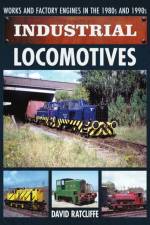
Railway historian David Ratcliffe documents the changing railfreight scene during the 1980s and 1990s and records the important role played by the numerous industrial locomotives to be seen in action at works and factories across Britain. Slow-moving yet powerful, they were very much the unsung workhorses of the rail industry and in Industrial Locomotives the author highlights some of the fascinating and often overlooked machines he encountered during his travels around the country. This volume includes more than 300 photographs, most in full colour, and provides an invaluable record of well-used industrial engines in action all over Britain.
An exploration of the golden age of car travel, looking at both its cultural and architectural impact on the world.
"What did America lose with the decline of the passenger train? Much more than most Americans think, observes Alfred Runte, a leading historian of our national parks. Including parks and wilderness, the greatest loss has been to the American land. No technology was ever more respectful-protective-of what it means to have a national landscape. In song and story we call it America the Beautiful. And yet we let our best beautifiers disappear. Now the landscape suffers in our mindless rush to get rid of old technology and blindly embrace the new. Wind farms and solar power plants cajole us to redefine beauty itself, allowing access even to protected wilderness. No railroad ever asked for that' Originally published in 2006 as Allies of the Earth: Railroads and the Soul of Preservation, the book today is even more timely, now we see what policy-makers have in mind as replacements for railroads. Offering a new preface and epilogue, Runte stands his ground. Absent restraint, no technology is practicing conservation. Railroads renew the hope that the trains, i.e., the restraint, we so carelessly threw away may still be restored to preserve the remaining glories of our continent"--
Derby days; Crewe - from aero-engines to cars; standardizing the marques; continental departure; gathering clouds; emerging from the shadows; nothing succeeds like success...; an unlikely alliance; oil on troubled waters; Mediterranean interlude; keeping up the spirit; the millennium and beyond.
Theauthor has made it one of his life missions to assemble a growing collection ofunique and fascinating Kodachrome images created in the mid of the lastcentury, that were spontaneous photographic captures of every day air travels,at a time when the vast majority of the population were still travelling thisgreat world by ocean liner.
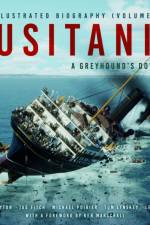
Before Titanic, there was Lusitania... This unprecedented two-volume set will bring Lusitania's history to life as never before
Michael Napier describes the naval air power deployed by NATO, Warsaw Pact and neutral countries throughout the Cold War. In 1949, an Iron Curtain was drawn across Europe, and the Cold War that ensued between the Western North Atlantic Treaty Organization (NATO) countries and the Soviet-dominated Warsaw Pact lasted through to the fall of the Berlin Wall in 1989. NATO and Warsaw Pact naval forces spread over the world's oceans, and the powerful forces of the US Navy's Second Fleet patrolled the North Atlantic, while the Sixth Fleet was positioned in the Mediterranean. The age of the nuclear-powered supercarrier arrived in 1957 with the USS Forrestal, while the Soviet Union's first aircraft carrier, the Kiev, was commissioned in 1975. In Over Cold War Seas, respected aviation author Michael Napier examines the naval air power of the major combatant forces as it developed from 1949 through to 1989. All the major naval aircraft types are covered, both fixed wing and helicopters, which entered service in the 1950s for light transport or rescue duties and evolved into multi-purpose machines capable of performing anti-submarine and airborne early warning missions. This detailed text is supported by a wide range of first-hand accounts of operational flying during the Cold War, as well as over 240 high-quality, contemporary images.
A pictorial survey of Diesel Multiple Units in the North of England from the late 1970s to the present day.
Contemporary Perspectives on China Tourism is an innovative and engaging collection which presents unique approaches and critical insights into the development and management practices of tourism in modern China.This book was originally published as a special issue of the Journal of China Tourism
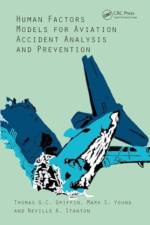
The investigation and modelling of aviation accident causation is dominated by linear models. This book addresses this issue by developing a new approach to investigating aviation accident causation through information networks. It presents a new model that offers many potential developments and some key areas are studied in this research.
The ageing population is a global societal issue. Policymakers, planners, and the public, third and private sectors must rethink the delivery of built environment and services to meet the needs of a changing demographic. This is the first book to systematically review the evolution, development and progress of age-friendly thinking in the UK.
This comprehensive, multidisciplinary and expert-led book provides insight into the most current and insightful topics within food and beverage tourism practice and research, elaborated by leading researchers and practitioners in the field.
Vehicular Ad Hoc Networks focuses on recent advanced technologies and applications that address network protocol design, low latency networking, context-aware interaction, energy efficiency, resource management, security, human-robot interaction, assistive technology and robots, application development, and integration of multiple systems.
Routledge Companion to Cycling presents a comprehensive overview of an artefact that throughout the modern era has been a bellwether indicator of the major social, economic and environmental trends that have permeated society.
Abonner på vårt nyhetsbrev og få rabatter og inspirasjon til din neste leseopplevelse.
Ved å abonnere godtar du vår personvernerklæring.