





















Gjør som tusenvis av andre bokelskere
Abonner på vårt nyhetsbrev og få rabatter og inspirasjon til din neste leseopplevelse.
Ved å abonnere godtar du vår personvernerklæring.Du kan når som helst melde deg av våre nyhetsbrev.

Speedlink was launched in 1977 as an attempt to arrest the decline in British Rail''s wagonload freight business. One of the things that distinguished Speedlink workings from almost all of the freight services that had preceded them was that all the wagons used were air braked. At its peak in the mid 1980s, it carried over 8 million tonnes annually. Despite this, Speedlink was never profitable, and in the run up to railway privatisation the service was abandoned in 1991. This is the second in a four-book series, each one complete in itself, which will provide a comprehensive survey of the whole Speedlink wagon fleet. This volume looks at the types on order in 1977 and delivered subsequently. It will also cover existing stock either fully or partially converted to be compatible on these services and include their former identities. Full coverage of each type is given, particularly livery changes and conversions where appropriate.Wagons produced under 15 Design Codes are covered in this second volume. Among the types included are; 100T Bogie Steel Carriers, 80T Bogie Plate Wagon, 49T Borail Wagon, Flatrol Nuclear Flask Wagon, 32.5T Hopper Coal Wagon, 31T Open Goods Wagon, 12T Pipe Wagon, 31T Plate Wagon, 45T Vanfit and14T Van (Ammunition). Written by wagon expert David Larkin and heavily illustrated throughout, this series is an invaluable source of reference for all those interested in the post steam era on Britain''s railways. Those modelling the railway scene from the 1970s to the 1990s will also find these books essential reading.
Harrier Boys, Volume One: Cold War Through the Falklands, 1969-1990, Bob Marston, who flew Harriers for many years, draws together accounts from others who worked with this unique jet through its history. The excitement, camaraderie and pride of Harrier operators shine through in the personal stories of those whose lives were changed by their experience of this iconic aircraft, both on land and at sea. In this first volume, events of the Cold War years are brought to life by contributors including Graham Williams, who flew the Transatlantic Air Race, Peter Dodworth, a member of the original Harrier Conversion Team, Peter Harris, a participant in the early defence of Belize, Sir Peter Squire, OC 1 (F) Squadron during the Falklands conflict, and Australian Dave Baddams, who commanded the Royal Navy Sea Harriers of 800 Squadron.The exceptional performance of this aircraft is evident throughout as is its well-renowned lengthy service life with the RAF and internationally.
The development of the Lockheed F-117 Nighthawk - the world's first in-service combat aircraft specifically designed to be undetectable by radar - was a huge leap forward in military aviation technology. It was followed by the stealthy F-22 Raptor and F-35 Lightning II; yet for every type that has entered service there have been dozens of secret projects and proposals for stealth fighters which never reached production. In US Stealth Fighter Projects, aerospace engineer Scott Lowther brings to light some of the fascinating might-have-been designs for fighters intended to attack and destroy their opponents before even being detected.
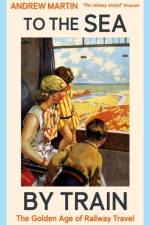
Throughout the summer months of the twentieth century, the seaside service posters of the London & North Eastern Railway promised fresh air and frivolity to millions with the phrase: 'To the sea by train'. The British seaside holiday is both a staple of modern life and a charming pillar of history. It is also intertwined with the railways, in whose compartments holidaymakers were shunted from gloomy inner cities to the sandy beaches of Yorkshire and Sussex - some of whom had never seen the sea before. With his signature wit and ear for anecdote, Andrew Martin captures an era defined by its railways: the development of supposedly health-giving spas like Brighton and Scarborough into pleasure resorts; Bank Holidays from 1871; the 48-hour weekend in the 1930s; the Beeching cuts of the 1960s and the coming of cheap flights and the decline of the seaside. Wayward, witty and atmospheric, To the Sea by Train is a joyful history of Britain's most iconic past-time.
In the early 1960s, Japanese firm Yamaha, previously known as a musical instrument maker, took their first faltering steps into the arena of top flight motorcycle racing. They were comparative latecomers in this world, but soon made stars of riders like Phil Read and Bill Ivy. Their two-stroke engines developed quickly, and within a few short years they were challenging rivals Honda for the top places in the world's most prestigious race, the Isle of Man TT. By the early 1970s, Yamaha had emerged from the shadow of their competitors to dominate Grand Prix motorcycle sport with their TZ models. More than this though, Yamaha democratised racing by building a machine that was both capable of winning, and also within the reach of any aspiring motorcycle racer. The engine was so versatile - and so effective - that it even lent itself to powering three wheeled machines, and a clutch of sidecar World Championships also fell to Yamaha as a result. The biggest names of the decade - Grant, Mortimer, Williams, O'Dell and Taylor - wrote their names in the TT history books under the Yamaha banner.
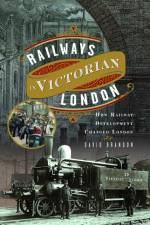
London has always been a major transport hub. Indeed, it owes its origins to being the location in ancient times of what was then the lowest bridging point of the River Thames. From the 1830s to 1914 it became the focal point of Britain's railway system. In that time a railway network of extraordinary complexity developed, serving the needs of London's citizens and providing access for huge numbers of visitors of all kinds. Here we consider some of the ways in which the railways contributed to London's transformation into a world city, perhaps THE world city of the Victorian and Edwardian period. With an emphasis on the social impact of the railways, the book examines, among other issues, how they contributed to the growth of suburbia, helped to provide London with vital supplies of food and fuel, the way in which the Underground made it quicker and easier to move about, produced huge, luxurious hotels and spectacular bridges and destroyed some of the capital's worst slums. London has always had an underbelly and the coming of the railways created new opportunities for criminal activity. In fictional crime, Sherlock Holmes made frequent use of the railways. Artists found in railways a source of inspiration for their works. Above all, the railways broke down regionalism and helped to develop and reinforce the domination of London over Britain's political and cultural life.
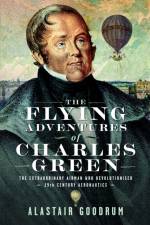
The action-packed flying career of aeronaut Charles Green (1785-1870), a working-class Londoner in the infancy of aviation, who defied death in a career of 35 years and over 500 balloon flights to make a unique contribution to world aeronautical history. His decision, in 1821, to use domestic coal-gas to inflate balloons ran completely contrary to perceived wisdom, but his success in doing so revolutionised flying for the remainder of the Georgian and Victorian eras. His innovation set the direction of aeronautics for the next 80 years - until the Wright brothers changed its course again. Inventor, innovative balloon constructor, shrewd businessman, flamboyant showman and a skilled and courageous pilot, he was the first to put into practice the concept of public air travel. Charles liked a 'tipple' in the air - but never compromised safety - and made sure his passengers enjoyed his in-flight champagne hospitality. This earned him not only the status of a national treasure - whose very name was a by-word for all things aeronautic - but also ensured he became an international legend in his own lifetime.
As the air travel industry begins to emerge from the COVID-19 restrictions, new research must be undertaken to survey the changing business landscape. This book examines existing air travel literature, illustrates the current theories in the field, and suggests research methods for integrating them in fieldwork.
Build the Miata of your dreams with this all-encompassing, photo-illustrated modification guide.Across four generations and for more than three decades, Mazda’s Miata MX-5 has proven itself one of the most popular and versatile sports cars ever created. Its ability to fulfill any goal from street cruising to on-track competition has spawned an extensive performance aftermarket, making it possible for owners to build their dream Miata. In fact, the selection of parts is so broad that it can be difficult for many would-be builders to select and tune the proper combination to achieve their MX-5 goals. Enter author, MX-5 expert, and Flyin’ Miata co-owner Keith Tanner and How to Build a High-Performance Mazda Miata MX-5. This thorough manual—revised and updated throughout to cover the fourth-generation Miata—will guide you through how to best modify your car to suit your goals. Key chapters in the book cover:Engine management systems, intake/exhaust, and forced inductionClutch and transmissionSuspension and handlingBraking, wheels, and tiresBody and chassisEngine swapsBeginning with a modification philosophy, Tanner then discusses which upgrades will help you reach your goals and how to tune your MX-5 to maximize its potential. From cross-country touring to autocross to track racing, the Miata can do it all and How to Build a High-Performance Mazda Miata MX-5 ensures you know how to make it happen!
Digital Transformation in Retail Supply Chain Management for Logistics 5.0 explains how these technologies are reshaping retail supply chain management. The book elucidates on the digital tools and strategies organizations can employ to optimize their retail supply chain management, minimize costs, enhance customer satisfaction, and achieve sustainability objectives through industry 5.0-enabled technologies. It innovatively blends the details of recent advancements across retail supply chains and supply chain-related digital transformations. Its cutting-edge perspective makes it an invaluable asset for industry professionals, policymakers, business owners, managers, researchers, practitioners, academicians, instructors, and students in retail, logistics supply chain management, digital business, and innovation.The book explores the nuances of the Supply Network 5.0, discussing the synergy between humans and machines, especially in the context of robotic process automation systems and artificial intelligence tools in the "new normal" of retail supply chain management. In addition, it specifically addresses textile products, FMCG, online products, construction, food and beverages, the shoe industry, SMEs, and other manufacturing sectors. Other sections delves into the often-overlooked environmental sustainability ramifications of the Fifth Industrial Revolution.
In this Chevrolet-official reference, relive the evolution of America’s legendary sports car, year by year, through stunning photography, technical specs, and engaging commentary.Revealing a legacy of speed and innovation over more than seventy years of continuous production, the Corvette has evolved from its 1953 sporty-car debut to today’s world-class supercar. Its fascinating development story and stellar competition record across eight distinct generations are detailed in The Complete Book of Corvette, spanning:The 1953 debut modelThe all-conquering L88 of the 1960sThe twenty-first century Z06The innovative E-Ray hybridThe 70th anniversary editionThe 1,064-horsepower, mid-engine Stingray ZR-1Prototypes, racers, Indy pace cars, and limited-edition production modelsThey’re all here as are the key designers and engineers. Every model year is discussed with insightful text, key technical specifications, and beautiful photography culled from the author’s own images and GM’s photographic archives. Chevrolet’s Corvette has consistently set the standard for American high performance and ingenuity, and The Complete Book of Corvette is the ultimate reference to that storied history.
Celebrate 75 years of Formula 1 racing, from 1950 through the modern era, with this riveting pictorial history.There is Formula 1, and then there are all other forms of motorsport. F1 is what every competition driver aspires to, whether they admit it or not. Top drivers, top teams, top racing cars, top tracks. It is the pinnacle of motor racing. Formula 1 marks its 75th anniversary in 2025. Established as the top motorsport category in Europe in 1950, its grand-prix roots go back to the earliest days of the automobile. There was the first car, then there was the second car. The racing commenced shortly thereafter. Written by top F1 journalists Stuart Codling and James Roberts, Formula 1 75 Years takes you on a thrilling ride through it all with: A full history of the teams and their cars, from the return of pre-war greats like Alfa Romeo, Mercedes, and Lancia to the rise of new specialists like Ferrari, Lotus, and Cooper up through today’s top competitors like Red Bull, Williams, and McLarenLegendary drivers, including Juan Manuel Fangio, Jim Clark, Jackie Stewart, Niki Lauda, Ayrton Senna, Alain Prost, Michael Schumacher, Lewis Hamilton, Max Verstappen, and moreSidebars highlighting key events, behind-the-scenes machinations, legendary cars, and every championStunning historic and contemporary photography, with image selection and captions by top automotive photographer James MannThis engaging and beautifully designed overview of the world’s greatest motorsport is a must-have for every fan’s collection.
Told in detail for the first time and based on exclusive interviews, get the inside story on the legendary rivalry between two of the greatest NASCAR drivers ever.The battle for NASCAR dominance was never more pronounced than when Richard Petty and David Pearson met on the track. In head-to-head competition beginning in 1960, they finished one-two an astounding 63 times (Pearson won 33, Petty 30). Petty vs. Pearson is the only book to examine this storied relationship, beginning with their pre-Winston Cup careers. Along the way, author and award-winning motorsports journalist Mike Hembree leaves no stone unturned, detailing:The drivers’ respective backgrounds—Petty earning his way up through a racing dynasty led by his father Lee; Pearson honing his chops as a DIY racer on local South Carolina dirt tracks The Carolinians’ first meeting in a Cup event in 1960The memorable battles between the two drivers, including their legendary wild finish at the 1976 Daytona 500Parallel careers that coincided with seismic changes to NASCAR, including: the advent of superspeedways, the “aero wars,” the injection of corporate money, and the arrival of a new generation of star drivers in the 1980sWhile their rivalry produced amazing finishes and tense moments, Petty and Pearson remained friends throughout. Petty vs. Pearsonexamines all aspects of the relationship, from their salad days in the sport to their respective retirements in 1986 (Pearson) and 1994 (Petty) and their lives in NASCAR beyond the driver’s seat. Throughout the riveting text, Hembree draws on original interviews with both drivers (including interviews conducted with Petty in early 2024), those who were there to witness the rivalry, and NASCAR figures who came later. The result is an entertaining and essential account of a storied rivalry—and friendship—that bridged the divide between NASCAR’s rollicking early years and the entertainment behemoth it is today.Featuring a foreword by Terry Labonte, a legendary NASCAR driver in his own right, Petty vs. Pearson is a must-have for every NASCAR fan’s collection.
This book takes stock of the position of motorsport in the 21st century and considers how it will continue to influence sport business, politics, and society in the future.
Gadjeva uses Kyoto as a case study to explore the innovative mechanisms being used to promote Japanese culture and cultural properties since the outbreak of COVID-19. A valuable read for professionals and scholars of cultural and tourism studies, that will be of particular interest to those specialising in Japan.
The aeroplanes of the Shuttleworth Collection span the first 40 years of aviation from the 1909 Blériot to the late 1940s; these rare and often unique machines are still regularly flown and displayed over the aerodrome at Old Warden in Bedfordshire. This book, written by the Collection's pilots, past and present, puts the reader in the cockpits of these amazing machines as they fly over the English countryside. THE SHUTTLEWORTH COLLECTION is a private collection begun by Richard Shuttleworth - pilot, racing driver, self-taught mechanic and heir to the Old Warden Park Estate in Bedfordshire. He had a passion for rescuing old aircraft and vehicles, which he brought to the Estate to restore and maintain. Richard died in 1940 whilst flying with the RAF; after the war his mother set up a charity to preserve his heritage.
Although it can seem daunting, constructing sheet metal panels by hand is very much within the scope of the amateur restorer working from their own home workshop with the minimum of equipment. Often panels that are sold to replace the originals on historic and classic vehicles are not a good fit. Therefore, to achieve a more accurate fit, making your own panels can be the best solution. This accessible book shows how to make, repair and fit sheet metal body panels for historic and classic vehicles.
The purpose of this edited book is to provide state¿of¿the¿art approaches and novel technologies for smart ships coving a range of topics in the areas so that it will be an excellent reference book for the researchers, students and professionals in these areas.
A pictorial history of what railways have left behind in Britain and a selection of European countries.
Colin J. Howat documents Class 43 locomotives in Scotland from the late 1970s in the BR era through to privatisation and beyond.
John Jackson traces the 40-mile section of line connecting England's second city of Birmingham with the strategically important railway centre of Derby.
Nigel Richardson describes the evolution, design and development of the A350 through to its entry into commercial service with several major airlines and how it may further evolve in the future with high-quality illustrations and technical information.
Royston Morris' vibrant images feature those tramcars that have been preserved (in one form or another) and can be seen across Britain.
Dave Hewitt's book illustrates a selection of North American steam and heritage railways traversing stunning landscapes.
In 1955, Ian Allan Publishing produced the first five books in a new series entitled, Famous Trains. Another three were added in 1956 to complete the set. The extent of these little booklets was around 30 pages and they were priced at 6 (old) pence each. They were similar in format and appearance to the abcs which were being produced and sold in vast numbers at the time when locospotting had become something of a national obsession for schoolboys in particular.Each of the books featured one of the well-known named express trains of that era; The Elizabethan, The Royal Scot, The Cornish Riviera Express, The Atlantic Coast Express, The South Wales Pullman, The Queen of Scots, The Royal Wessex and the Bournemouth Belle and The Irish Mail.They were all written by one of the most prolific railway authors of the 1950s and 60s, G. Freeman Allen, and followed the same format. A short introduction led to a description of the route traversed by the trains. This was illustrated with sketches of relevant portions of the route and photographs of the trains themselves. Major railway and topographical features, which could be seen by passengers along the journey, were also highlighted. All the covers carried a drawing by A.N.Wolstenholme of the train featured, similar in style to the covers of the 'abcs' of the time.Long out of print, we are republishing facsimiles of all eight titles in one combined volume. This book will transport the reader on a wonderful nostalgic journey back to those years that, seen from the perspective of the twenty first century, represents the golden age of British Railways and the apogee of steam traction on the network.
Abonner på vårt nyhetsbrev og få rabatter og inspirasjon til din neste leseopplevelse.
Ved å abonnere godtar du vår personvernerklæring.