













Gjør som tusenvis av andre bokelskere
Abonner på vårt nyhetsbrev og få rabatter og inspirasjon til din neste leseopplevelse.
Ved å abonnere godtar du vår personvernerklæring.Du kan når som helst melde deg av våre nyhetsbrev.

Road Work presents 500 of Andrew Holmes' Los Angeles Polaroids, capturing the machines that deliver people and goods to different parts of the city each day.
Containerization in Maritime Transport addresses challenges to maritime transport and containerization, beginning with economic and managerial factors, through organizational, technical, operational, information and IT challenges, and ending with ecological challenges- to lessen the environmental impacts of maritime transport.
Explores the history of Chinese car manufacture, looking at some of the key cars in that journey, the false starts and missed opportunities
&b>A celebratory look at the world of Formula 1, featuring the incredible stories that made this magnificent sport what it is today, both known and never-before-told.&/b>
The student workbook is designed to help you retain key chapter content. Included within this resource are chapter objective questions; key-term definition queries; and multiple choice, fill-in-the-blank, and true-or-false problems.
A wealth of stunning rail images from across the North American continent, coupled with amusing anecdotes and intriguing insights.
An illustrated guide to the heyday of American Grand Prix racing. This book is an essential guide for all formula 1 fanatics.
An indispensable concise guide to one of the British armed forces' most loved Second World War vehicles.
Historian Robert Hendry documents an illustrated view of the Southern railway lines in Devon and Cornwall.
Commercial aviation author Charles Woodley charts the rise of Britain's largest independent airline, British United Airways, during the 1960s.
The latest volume in the popular series exploring some of Britain's greatest journeys by rail. This time from London Victoria to Brighton and the South Coast.
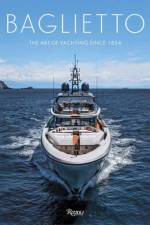
Passion for beauty and craftsmanship: a proudly Italian style that inhabits the world of yachting. This is the story of 170 years of Baglietto.Where does craftsmanship end and art begin? What makes something—a product, a brand—impervious to time and fashions? These are the questions posed while strolling between the past and the present of Baglietto, the Italian shipyard that has been building world-class yachts for 170 years.Success is not built in an instant. Being good, looking to the future, imposing a style that lasts over time is the gamble every entrepreneur takes. There are not many who succeed, which is why those who reach the age of 170 deserve to be studied, as well as celebrated. Baglietto is now a kind of great international club, access to which serves the right mix of passion for the sea, refined taste for boats that is never over-the-top but rather soberly chic, and, of course, the right spending capacity for objects that cost.Experience and tradition merge in an encounter between past and present and look to the future for a history of the greatest achievements.
A comprehensive pictorial history of all MG cars that were produced from 1930 up to those in production in 2006 when the Rover group collapsed. This is the 'go-to' reference book if you want to compare your Magnettes, MGAs, Midgets or Maestros!
This essential guide distils first-hand experience and knowledge of the Chevrolet Corvette C6 from specialists and owners, to provide invaluable expert advice that will help you on your quest to buy one of the world's most versatile, two-seater sports cars.
Written by well-known aviation historians Guy Warner and the late Ernie Cromie, this is the first book to reveal the full story of Nutts Corner. It shares the history of the airfield, involving the RAF, RN and USAAF and many early, long-gone airlines such as BEA, Silver City and BKS.
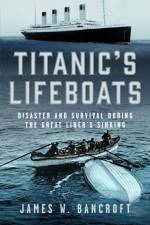
Foot by foot Titanic's lifeboat No.11 slowly jerked its way down the sides of the great ocean liner as it slipped beneath the cold, dark waters of the Atlantic. For the fifty or so men, women and children crammed into the lifeboat, survival was all that mattered. Even then, though, the American fashion designer Edith Rosenbaum Russell ferociously clung to her pig-shaped music box until she was rescued, its tunes helping to quell the fears of the frightened children onboard. Unlike so many of those onboard Titanic that fateful night in April 1912, everyone in lifeboat No.11 would be rescued.Bridget McDermott had brought a new hat before she set off for America. Bridget climbed into one of the lifeboats, believed to be No.13, before realising she had left her precious purchase behind. She climbed out of the lifeboat, retrieved her hat from her cabin, ran back to the open deck and jumped fifteen feet from a rope ladder onto the lifeboat. Other garments played an important part in the survival of one of the lifeboats which sprung a leak, with the people onboard using clothes to plug the hole.Charles Joughin, the head baker aboard Titanic, floated in the near-freezing ocean for around two hours before being pulled out of the water onto one of the lifeboats. He had not succumbed to the cold due to the amount of alcohol he had drunk.Masabumi Hosono, a civil servant from Tokyo, was the only Japanese passenger onboard Titanic and, being a man, he accepted that the women and children first policy had sealed his fate. However, when a crew member shouted that there were two spaces left in a lifeboat, No.10, Hosono jumped in. As Japanese honour considered it far better for a man to suffer an honourable death than to survive in a shameful manner, when he reached his homeland he was ostracized by his family and lost his job.When it sailed, Titanic carried twenty lifeboats that, between them, could accommodate 1,178 people, a little over half of the 2,209 on board the night the liner sank. Eighteen of these life-saving craft were used that night, but tragically only 706 people found a space in them. This is the dramatic and moving story of the men, women and children who made it into the lifeboats that fateful night in April 1912.
This report focuses on the future of the bus industry following the change of government in July 2024, setting it in the context of the changes that have taken place since the last Labour government left office in 2010. It contains analysis of:Where we have come fromThe bus market as it has evolved since 2010, looking at income, service levels, patronage, fare levels, costs and financial performanceBus RegulationCurrent status of the National Bus Strategy, BSIPs, Franchising and Enhanced Partnerships, including funding allocationsThe Key Tasks AheadA detailed look at the four key tasks that the government, local authorities and operators need to deliver over the next few years, including: Improving performance, Increasing Service Levels, Decarbonising the Fleet, Net Zero and Modal Shift, featuring estimates of costs and other indicators.Alongside this, it provides the latest update on the Bus Industry Monitor methodology for suggesting what level of profits operators need to earn in order to sustain themselves and meet their financial obligations.The report also features five detailed Appendices to support the 100-page text, which is illustrated with 18 charts and 24 tables.
MOTOCOURSE is the ultimate record of the motorsport year, majoring on the MotoGP and World Superbike series
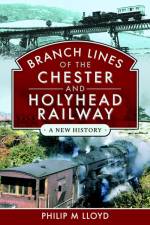
Explores the history and decline of branch railways in north Wales, focusing on their construction, operation, and eventual closures.This book complements the author's previous book on the Chester and Holyhead Railway and completes the story of railways associated with the London and North Western Railway in north Wales. It does so by breaking down developments to three districts working from east to west across the region. The book examines the background to the construction of the branch lines in the context of relevant wider railway developments. It provides an account of the operation of each of the lines with reference to significant incidents on the railway and the relationship of the branch to the communities it served.The dominance of railways peaked around 1914 so the book analyses the process of decline from that status. That decline was relatively rapid and featured several rounds of closures of stations and branches, culminating in the notorious Beeching cuts of the 1960s that eventually left north Wales with fewer than fifty miles of branch railways - under 20% of the original total.The book has maps and tables that provide an overview of the detail contained in the text and the 150 photographs. The book concludes with an overview of the railway system in north Wales. It reflects on how reductions might have been made without depriving so much of the region of a presence on the network, and how the railway policies adopted by private companies and the later nationalized industry paid too little attention to the relationship between the region and its trains.
Abonner på vårt nyhetsbrev og få rabatter og inspirasjon til din neste leseopplevelse.
Ved å abonnere godtar du vår personvernerklæring.