

















Gjør som tusenvis av andre bokelskere
Abonner på vårt nyhetsbrev og få rabatter og inspirasjon til din neste leseopplevelse.
Ved å abonnere godtar du vår personvernerklæring.Du kan når som helst melde deg av våre nyhetsbrev.

Philip Wallis chronicles the great variety of operators and buses to be found in Essex before National Bus Company standardisation set in.
Life lessons from living on a narrowboat, and the wonders that the waterways brings, from Adam Lind, of the popular Instagram and TikTok account, @adam.floatinghome.
Buses Yearbook 2025 follows a proven format with a mixture of articles on current and historic developments, strictly factual ones and others of a more whimsical or personal nature, all of them accompanied by a wide selection of photographs.
The Highway Capacity Manual provides guidance on evaluating highway capacity and performance in a comprehensive framework, focusing on methodologies, modeling techniques, and real-world applications.
Following on from the success of the first three books on the Tale of the Unnamed Engine, Great Western Glory and The Original Stories Part 1 we journey back to the late nineteen forties, to experience Britain's steam railways like never before with this wonderful fourth companion book.
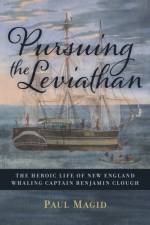
Based primarily on original sources and contemporary accounts, this book is an account of the life and times of Benjamin Clough. Set in the golden age of whaling, the book follows him from the time he first went to sea in 1835 as a teenager to his retirement from whaling in 1867 as a veteran whaling captain and his life thereafter. It crosses the world’s oceans, providing the reader with an understanding of whaling from a first-hand perspective over a thirty-year period from the South Atlantic to the northern Pacific and then on into the Arctic Ocean. It is a gritty portrayal of the hardships, dangers, and harsh working conditions endured by whalers during this period. Clough’s life ashore during the intervals between voyages and after retiring from the sea featured its own unique experiences, offering a window into nineteenth-century life in Martha’s Vineyard.
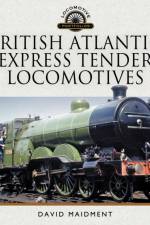
The British Atlantic locomotive flourished in the first decade of the nineteenth century especially on the relatively level stretches of the East Coast mainline. This book describes the design, construction, history, operation and performance of the Great Northern, Great Central, North Eastern and North British Atlantics and the London Brighton & South Coast engines that were developed from the GN design. More unusual were the Lancashire & Yorkshire 'Highflyers' which were some of the earliest and also included are the most powerful of all, Churchward's Great Western Atlantics (converted to 4-6-0s later) and his three French Compounds. Most had been replaced by 4-6-0 and 4-6-2 designs by the 1920s and were withdrawn before the Second World War, though a few lingered to the post-war period and just reached the era of British Railways, though only the Brighton Atlantics survived longer. The last of all, 32424 Beachy Head, was withdrawn in 1958 and has been recreated for the Heritage industry. The book concludes with a brief look for comparative purposes at some of the most influential Atlantics on the rest of the world's railways.
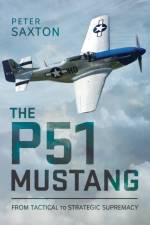
The P51 Mustang, a single-engine warplane fighter, although a late arrival in the Second World War, proved vital in the crucial air-war conflict in Europe. It was first envisaged in a tactical role - a low to medium level reconnaissance fighter-bomber supporting army ground operations. It did well but was rejected by RAF Fighter Command as a high-level dogfighter as being out-performed above medium levels of altitude. RAF Bomber Command had abandoned day-time raiding over Germany because of the vulnerability of its bombers to fighter attack beyond the range of escort limit range of Fighter Command Spitfires. The waiting Me 10lis and FW 190s would pounce causing huge losses. Bomber Command then continued to take the fight to Germany under cover of darkness. The US Eighth Army Air Force renewed daylight bombing with tactics of attacking in large formations of Boeing B17 Flying Fortresses with heavy machine guns for defensive cover but against experienced Luftwaffe pilots losses again mounted to unsustainable levels. The author gives a stunning picture of air crew experience in which the reader can feel personally involved. Development of the P51 continued and this must be one of the success-stories of the air-war. Rolles-Royce approved the admirable air frame and substituted the RR Merlin engine for the inadequately supercharged Alison engine. Merlin engines had been fitted in the Hawker Hurricane, Supermarine Spitfires, de Havilland Mosquito and Avro Lancaster. The result was the Mustang as a virtually unbeatable high-altitude dogfighter with large fuel tanks giving a huge radius of action. So here was a world-class strategic fighter which could protect strategic bombers to the target and home again. The P51 Mustang was the single engine fighter with strategic capability that transformed strategic bombing as a war-winning campaign in Europe. Here is the essential difference between strategy and tactics and connection with concepts of 'offensive' and 'defensive' and the unique role of the P51.
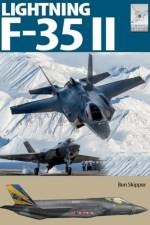
The Lockheed Martin F-35 Lightning II is heralded as the ultimate fifth-generation fighter, merging advanced engineering with multinational collaboration. Developed during a time of military reorganization and technological mergers, it integrates the best features of previous generations into a versatile platform for varied operational roles across military branches. The F-35 is the first fifth-generation multi-service aircraft designed for continuous technological evolution. Despite funding delays and complexities, it remains the largest defense contract in history. Its three variants serve diverse roles: the F-35A for conventional take-off and landing (CTOL), the F-35B for short take-off and vertical landing (STOVL), and the F-35C for carrier operations with Catapult-Assisted Take-Off But Arrested Recovery (CATOBAR). Since its inaugural flight on December 15, 2006, the F-35 has demonstrated exceptional capabilities, becoming a cornerstone of air forces worldwide. Designed to maintain air superiority into the 2070s, it represents the pinnacle of stealth and multi-role combat.
With the era of British Railways' transition from steam to diesel and electric influencing the country-wide fleets of trains beyond the 1970's, the Southern proved no exception to such, integrated within its flotillas of commuter electric trains. Southern Region motive power was territorial, thanks to the requirement for electric trains to remain within the live third rail network. Remaining pockets of non-electrified routes provided the last bastions of diesel-electric units and locomotive hauled trains, not only in Dorset, Sussex and Hampshire but also especially along the South West mainline to Exeter. Although with a limited range of Class 33, 47, 50 and 73 locomotives serving the passenger sector in the 1980's, there remained interesting passenger workings to note such as that along Weymouth Quay or through the rural tranquillity of Devon's countryside to Barnstaple. Railfreight ensured a wider variety of locomotives within in the Region. Standard colours of B.R. blue and grey livery may have been monotonous but the bright and clean Network SouthEast colours were welcomed, along with the much needed emphasis on running clean and punctual services as part of the Network SouthEast ethos. Brand new fleets of trains in the Southern area continue to offer the railway enthusiast and photographer the chance to study the impact of privatisation in the modern railway. Fortunately we have several preserved lines in the Southern area which perfectly capture the character of the traditional Southern branch line in the days of heritage diesels.
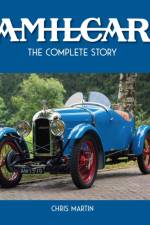
With over 250 stunning illustrations this book covers: - The changes in the French motor industry that led to the cyclecar boom of the 1920s - How the chance meeting of a few individuals with a common goal started the marque - The continuing development, innovation and drive to improve the breed - The problems of the later years and models that were not so successful - Historic photographs from the era and detailed images of surviving cars today - Technical data and related ephemera
The life, times and extraordinary history of the Windrush: the vessel that created modern Britain
High-quality photographs of Concorde aircraft throughout the history of the aircraft in service
In Destroyers at War Adm. James L. Holloway III, the twentieth Chief of Naval Operations, recalls his early life and service on destroyers during the final campaigns of the Pacific War in World War II. As the assistant gunnery officer in USS Ringgold (DD 500) and the gun boss on USS Bennion (DD 665), he took part in shore bombardment and anti-air radar picket missions during the assaults on Saipan, Tinian, Peleliu, and Leyte. He provides detailed explanations of how gunnery systems worked on small combatants as well as gripping accounts of combat events, including the climactic battle of Surigao Strait—the last battleship-vs-battleship clash in history—where a Bennion torpedo scored a fatal blow against the Japanese battleship Yamashiro. This book also explores the relationship between Holloway and his father, James L. Holloway Jr.—the only father-son combination to serve on active duty as four-star admirals—and highlights the senior Holloway’s career as his son worked his way through the ranks. Holloway will be one of the last members of the Greatest Generation to publish a firsthand account of World War II.
The 1960s was the golden age of European motorsport, with two countries leading the saloon car field: Britain with the Mini and Italy with the Fiats 500 and 600. As their rivalry was further ignited by the creation of the Mini Cooper and Fiat Abarth, there was a fervent need for tuning and 'go faster' component companies - and here, one of Britain's most iconic, Radbourne Racing, was born.In this captivating memoir, Lincoln Small - the last surviving co-founder of Radbourne Racing - shares the untold story of how a small company, fuelled by ingenuity, left an indelible mark on British motorsport history. Through a retelling rich with anecdotes of both rivalries and triumphs, Small brings to life the glamour, grit and camaraderie of those unforgettable halcyon days, offering a heartfelt tribute to the people, cars and innovations that shaped motorsport's most exhilarating era.Featuring rare, personal photographs and comprehensive appendices, Abarth, Radbourne Racing and Me is both a nostalgic celebration and a vital record of a team and a time when every lap was a leap into the unknown. For petrol-heads and racing enthusiasts alike, this is a story of inspiration and legacy that will resonate long after the final page.
Revolution Racing has its first ever all female team, and rookie Savannah Hart is ready to prove herself. Even though Savi grew up on a ranch in Wyoming, she's happiest on the racetrack. But can she stop her secret relationship with country music megastar, Jesse Motalvo, from distracting her from winning the championship?Marco De Luca is an all-star driver, and a hopeless romantic at heart. He agrees to be in a fake relationship with Savi to keep the press off the scent of her famous boyfriend, but he certainly couldn't have predicted how hard it would be to push his feelings aside when he falls for her for real.Things start to go wrong between Savi and Jesse, and Marco is there to steer her in the right direction. But will Savi ever realise that she and Marco could be a winning partnership, both on and off the track?
A heartwarming story of love, connection and an extraordinary secret from the past waiting to be uncovered
Abonner på vårt nyhetsbrev og få rabatter og inspirasjon til din neste leseopplevelse.
Ved å abonnere godtar du vår personvernerklæring.