
















Gjør som tusenvis av andre bokelskere
Abonner på vårt nyhetsbrev og få rabatter og inspirasjon til din neste leseopplevelse.
Ved å abonnere godtar du vår personvernerklæring.Du kan når som helst melde deg av våre nyhetsbrev.

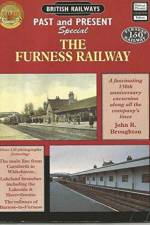
With its lake and coastal steamer fleet and its branches forming the ideal 'Gateway to Lakeland', this book shows how the Furness Railway is remembered with affection by both local people and holidaymakers.
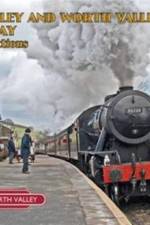
The KWVR preservation scheme was ideally placed to attract large numbers of visitors eager to witness steam's return to this 5 mile line set in the heart of the Pennines, running as it does on steep gradients from industrial Keighley to the moorland towns of Haworth, home of the Brontes, and nearby Oxenhope.
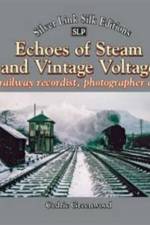
This is a vivid, contemporary account of the sights and sounds of the last two years of steam on British Railways from the detailed diaries of a journalist, photographer and sound recordist in north-west England in that final theatre of steam operations.
Were the Austronesians hapless travelers on fragile craft, drifted at the mercy of the waves to the far-flung islands of the Pacific? Or were they intrepid seafarers whose exploratory voyages covered much of the great ocean on seaworthy canoes capable of being sailed against the wind? This book addresses these questions in one of the most thorough discussions of Austronesian sailing canoes ever attempted. The canoes themselves are described in detail, and similarities and differences in hull configuration, sails, and sailing techniques are noted. A review of earlier writings on the canoes repeats the earlier understanding of their origins: that the earliest canoes were the double-outrigger type and that single-outrigger canoes came later, followed by the double canoes in which the great voyages from Central Polynesia to such extremities as Hawaii and New Zealand were made. Another chapter summarizes the great advances of recent years in anthropological and archaeological studies of the Pacific. At the heart of the book is a thorough examination of canoe seaworthiness. Doran's conclusions are that Austronesian canoes were amply seaworthy and fully capable of intentional voyages of discovery, and that previous views on the ages of canoe types are just the opposite of the probable sequence. Double canoes seem to be the oldest type; single-outrigger canoes probably were devised somewhat later; and much later, possibly only about 2,500 years ago, double outriggers were developed. Maps showing the distribution of canoe types, sail types, sailing techniques, and the like, illustrate these ideas.
Nature never intended the Brazos River for navigation, but before the coming of the railroads Brazos steamboats were a necessary, if always erratic, form of transport. And there were men to meet the challenge. One captain, heedless of shallows, shoals, snags, and falls, boasted that he could tap a keg and run a boat four miles on the suds. Based on rich archival sources, this authoritative and entertaining book tells of the men and boats that braved the river from the earliest days to the late 1890s. Steamboat captains and plantation aristocrats, business tycoons and empire builders, mud clerks and river rats, all were obsessed with a single idea: to open the Brazos for steamboats from its headwaters to the Gulf of Mexico. The river was dredged and snags were removed, boats were designed with shallow draft, and boat owner, captain, and pilot (often one and the same) pitted their skills against the river. But the Brazos was recalcitrant. Seasonal rises silted in manmade channels and left behind new snags to catch the unwary. And as railroads inched their way across the state, the need for river transport dwindled. Railroad bridges across the Brazos finally created barriers that even a steamboat riding a "red rise" could not negotiate. By the turn of the century, the dauntless Brazos paddlewheelers were only a memory, but, even today, the dream dies hard along the river.
In 1956, the era of tail-finned cars and nineteen-cents-a-gallon gasoline, the Missouri Pacific Railroad emerged on the corporate scene as a private company after twenty-three years in a receivership. In its past lay a collapsed rail empire, a sensational bankruptcy struggle that shattered dreams and betrayed trusts, an emotional battle over stockholders' interests, and the flamboyant maneuvers of the railroad's overseers. In its future lay two computerized, merger-dominated decades in which the railroad business would serve as a classic example of a tradition-bound industry forced to adapt to "future shock." The transition from crippled line to prime property would become, as one politician later put it, "a lawyers' paradise, and a security-holders' nightmare." H. Craig Miner, using a wealth of oral and written primary sources, with the cooperation of the company and complete access to records and personnel, describes and critically analyzes, the physical and financial revolution of the Missouri Pacific.
This highly illustrated manual is your hands-on manual for getting your Honda, Yamaha, Suzuki, or Kawasaki back on the road. From basics to complex subsystems, it’s all here!
Policing in Britain was changed fundamentally by the rapid emergence of the automobile at the beginning of the twentieth century. This book seeks to examine how the police reacted to this challenge and moved to segregate the motorist from the pedestrian in an attempt to eliminate the 'road holocaust' that ensued.
This book attempts to illustrate, in words and pictures, the various elements which went to create the Southdown style and to explain why, almost fifty years after the 'true' Southdown was swallowed up by the National Bus Company, it is still held in such high regard by enthusiasts, former employees and the general public alike.
In Formula 1 today, there are drivers who have won a great deal more, but Gilles Villeneuve cannot be evaluated by numbers alone - simply because there is no way of measuring the level of excitement that he brought to racing. This book relives the legend, with previously unpublished pictures and authoritative.
Having this book in your pocket is just like having a real marque expert by your side. Benefit from the author's years of Jaguar XK8 & XKR association, learn how to spot a bad car quickly and how to assess a promising one like a professional. Get the right car at the right price!
Having this book in your pocket is just like having a real marque expert by your side. Benefit from the author's years of Mustang ownership, learn how to spot a bad car quickly, and how to assess a promising car like a professional. Get the right car at the right price!
Complete coverage for Pit Bikes with 4-stroke air-cooled horizontal (lay-down) engines, specifically the Lifan semi-automatic IP52FMH, and 4-speed Lifan IP52FMI, Lifan IP56FMJ (YX140), Zongshen IP60YMJ (ZS155):--Routine Maintenance and servicing--Tune-up procedures--Engine, clutch and transmission repair--Cooling system--Fuel and exhaust--Ignition and electrical systems--Brakes, wheels and tires--Steering, suspension and final drive--Frame and bodywork--Wiring diagrams--Reference SectionWith a Haynes manual, you can do it yourselfâ?¦from simple maintenance to basic repairs. Haynes writes every book based on a complete teardown of the vehicle. We learn the best ways to do a job and that makes it quicker, easier and cheaper for you. Our books have clear instructions and hundreds of photographs that show each step. Whether you''re a beginner or a pro, you can save big with Haynes!Step-by-step procedures--Easy-to-follow photos--Complete troubleshooting section--Valuable short cuts--Color spark plug diagnosis
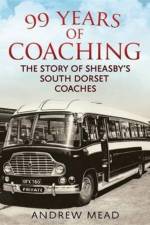
Ernest Sheasby arrived in the small village of Corfe Castle in Dorset around 1896. After ten years in employment, he set up shop with a horse and carriage business. The Story of Sheasby's South Dorset Coaches lists most of the 120 vehicles that were operated during the company's ninety-nine years as well as a biography of the Sheasby family.
Boatbuilding has been a traditional skill in Cornwall for many hundreds of years. Pasco's Boatyard at St Just in Roseland has been in the forefront of this tradition of boatbuilding, repairing, mooring and storing boats for well over a quarter of a millennium. So much so that it is part of the fabric of the south-west area of Cornwall.
By linking Ohio's two major bodies of water - the Ohio River and Lake Erie - Ohio's canals, built in the early nineteenth century, caused unprecedented growth and wealth for the fledgling state. This book details the history of the canal system.
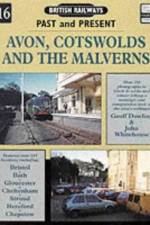
From the BRITISH RAILWAYS PAST AND PRESENT series, a collection of archive railway photographs from Avon, the Cotswolds and the Malverns, together with recent photographs of the same views.
For many the GWR was synonymous with holidays by the sea in the West Country, but it was built to serve as a fast railway line to London, especially for the merchants and financiers of Bristol.
Covers the history and evolution of the automotive ignition system, and how to fit, modify and maintain your system for optimum timing and maximum performance. This is an essential guide to ignition and timing, for classic car owners and restorers.
Provides a record of the last operational mechanical signalling and infrastructure on Britain's railway network as it was applied to the former Great Western Railway. This book also includes a comprehensive explanation of what mechanical signalling is and how it works.
Abonner på vårt nyhetsbrev og få rabatter og inspirasjon til din neste leseopplevelse.
Ved å abonnere godtar du vår personvernerklæring.